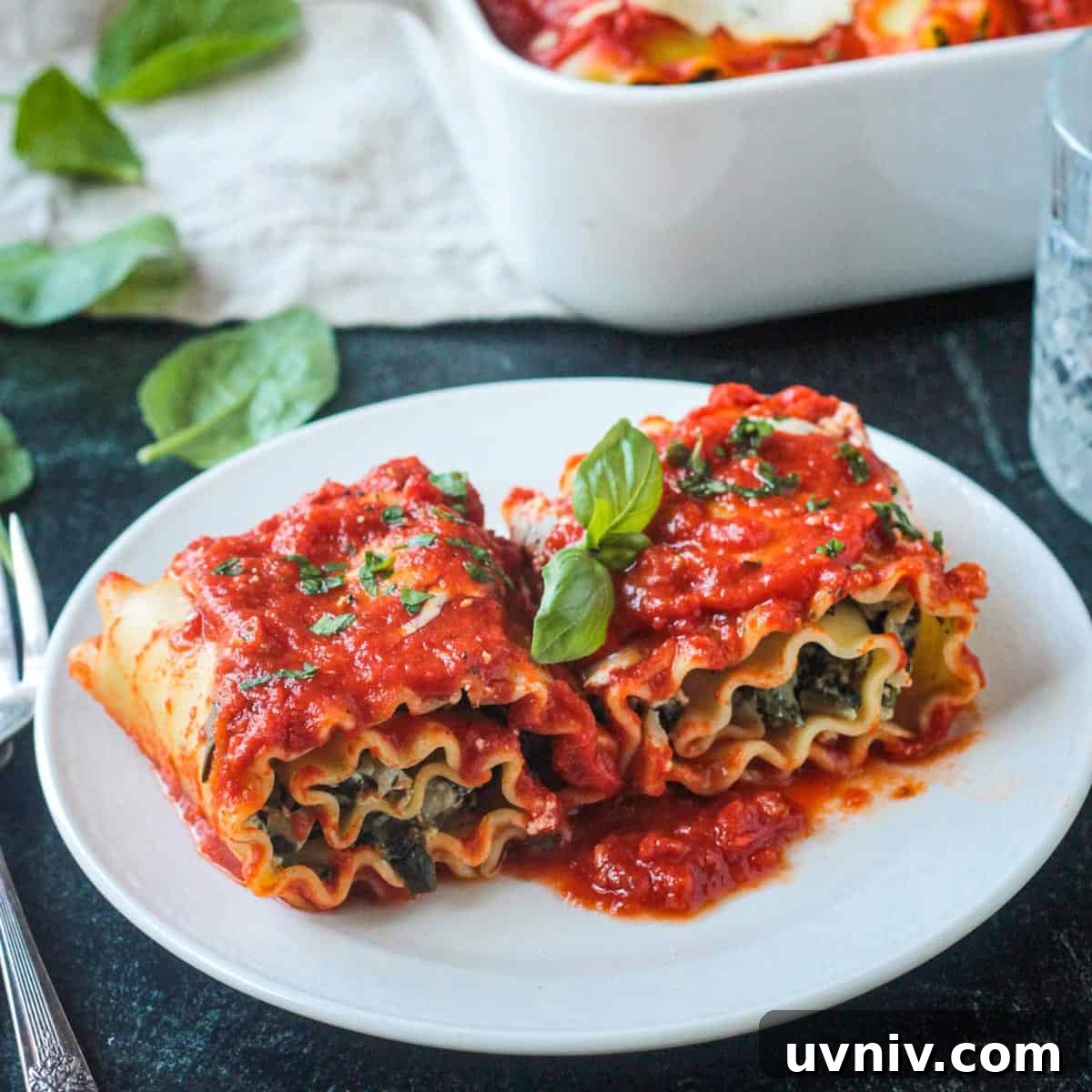
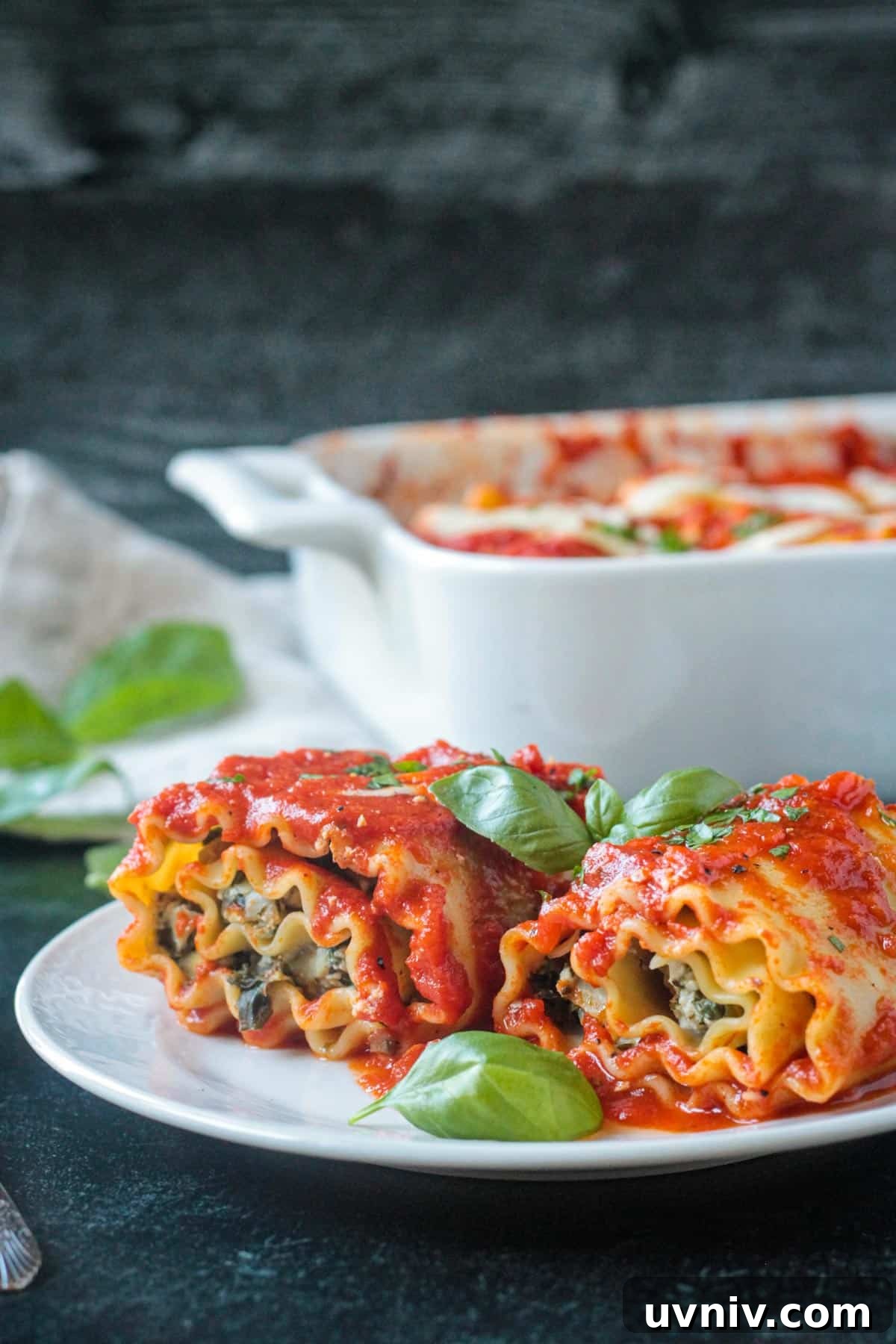
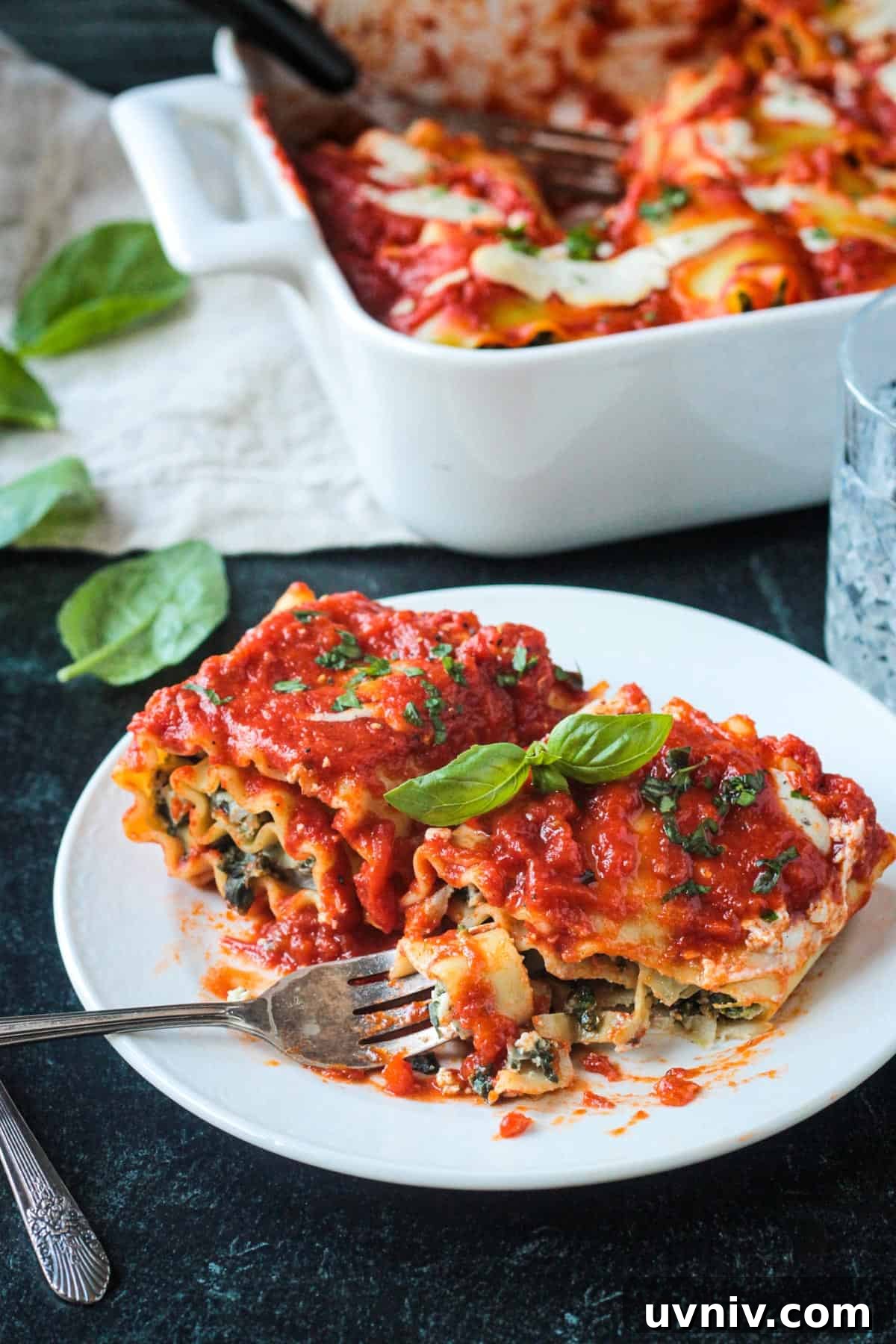
With a lighter, protein-packed spinach and artichoke filling plus a simple marinara, these Vegan Lasagna Roll Ups are an easy, dairy-free take on classic comfort food. They assemble quickly, can be made ahead, and freeze well for convenient meals.
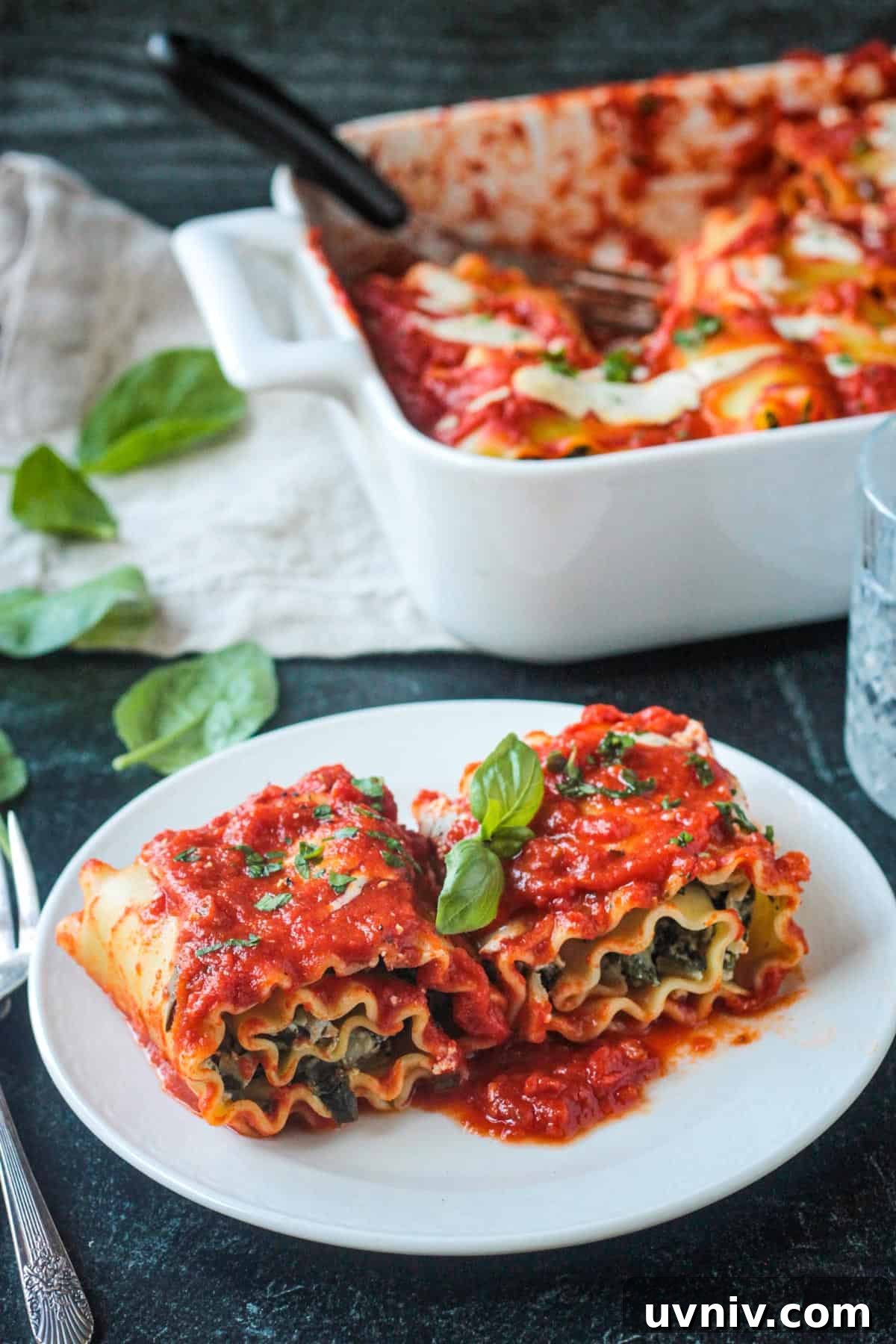
The components can be prepared in advance and stored in the refrigerator. This recipe takes under an hour, making it ideal for a busy weeknight or a cozy weekend dinner.
Ingredients you need
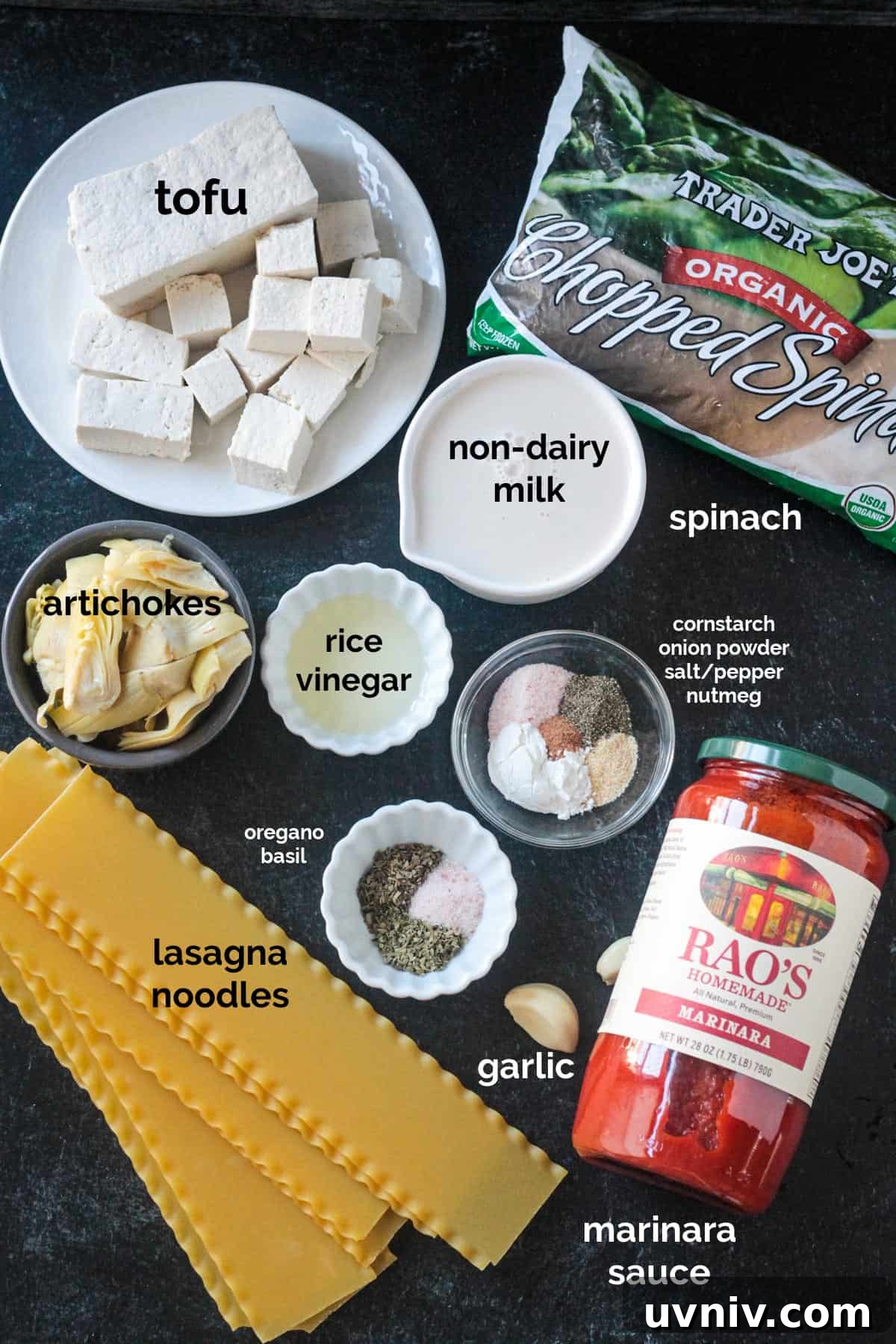
Ingredient notes and substitutions
Spinach — Frozen spinach is convenient and works well; thaw and squeeze out as much liquid as possible. Fresh chopped spinach can be used instead if preferred.
Artichokes — Use canned or jarred artichokes packed in water (not oil). Drain and chop before adding to the filling.
Milk — Any unsweetened plant milk (almond, soy, oat, rice) is fine.
Spices and herbs — Dried oregano and basil give classic Italian flavor. Season the white sauce with salt, pepper, and a small pinch of nutmeg if desired.
Tofu — Firm tofu provides a creamy white sauce and a ricotta-like texture in the filling. Drain and press the tofu to remove excess moisture. One 14–16 ounce block is used: half for the white sauce and half for the filling.
Marinara sauce — Homemade or store-bought marinara both work; check labels to ensure the store-bought option is dairy-free.
Pasta — Use lasagna noodles; gluten-free lasagna noodles can be substituted if needed.
How to make the recipe
See the recipe card below for exact ingredient quantities and step-by-step instructions.
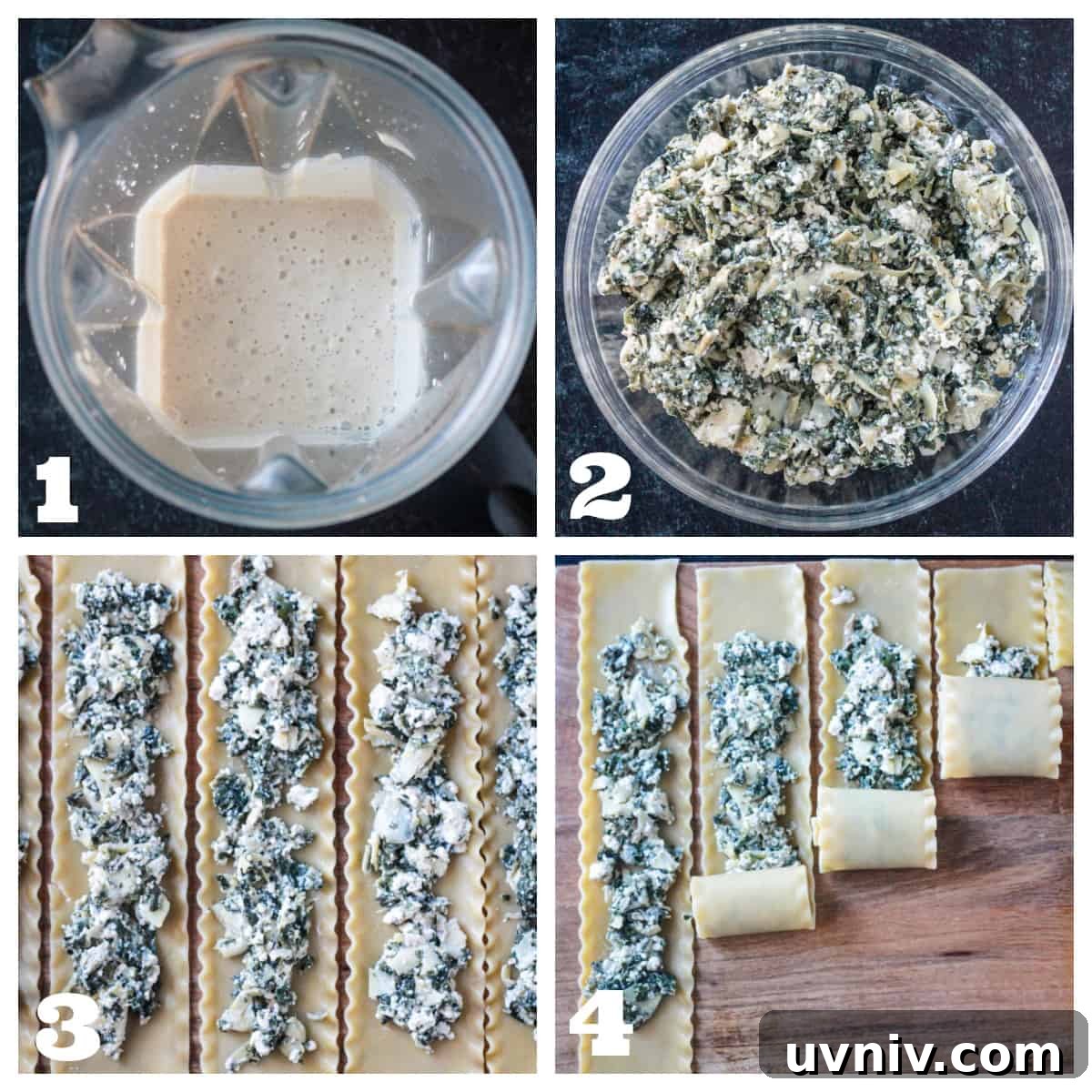
Make the white sauce: Blend the white sauce ingredients (tofu, plant milk, garlic, mirin or rice vinegar, onion powder, arrowroot or cornstarch, salt, pepper, and nutmeg) until smooth. This can be done while the noodles cook.
Prepare the filling: In a large bowl, combine thawed, drained spinach, chopped artichoke hearts, the remaining pressed tofu, dried oregano, dried basil, salt, and one cup of the white sauce. Mix until evenly combined.
Cook the noodles: Boil the lasagna noodles according to package instructions until just al dente — flexible enough to roll but still slightly firm. Drain and lay them flat on a clean surface in batches.
Assemble: Spread about 2 to 3 tablespoons of filling along each noodle, leaving about an inch at the ends. Roll each noodle gently to avoid squeezing the filling out.
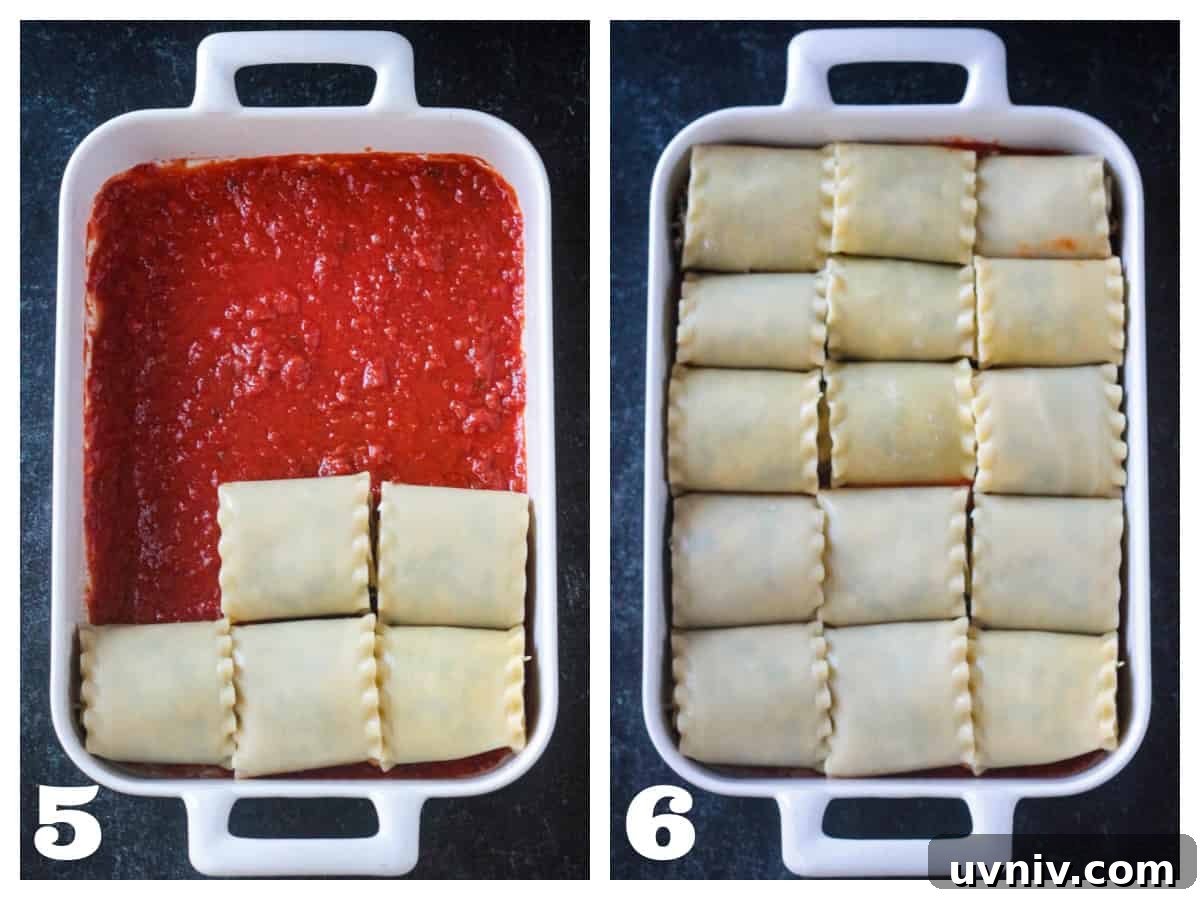
Pour about one cup of marinara into the bottom of an 8 x 11 baking dish. Arrange the lasagna roll ups side by side in the dish.
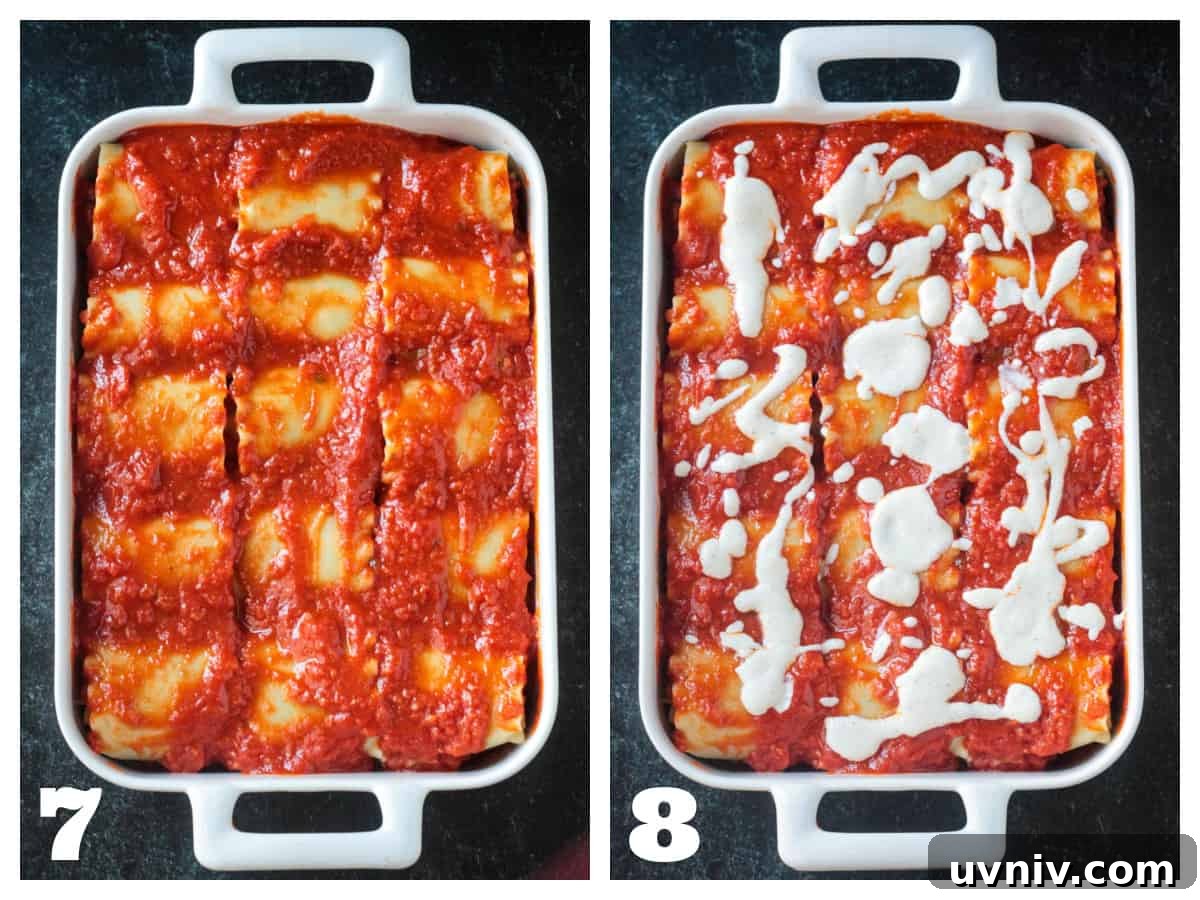
Top the rolls with the remaining marinara and drizzle the remaining white sauce over the top.
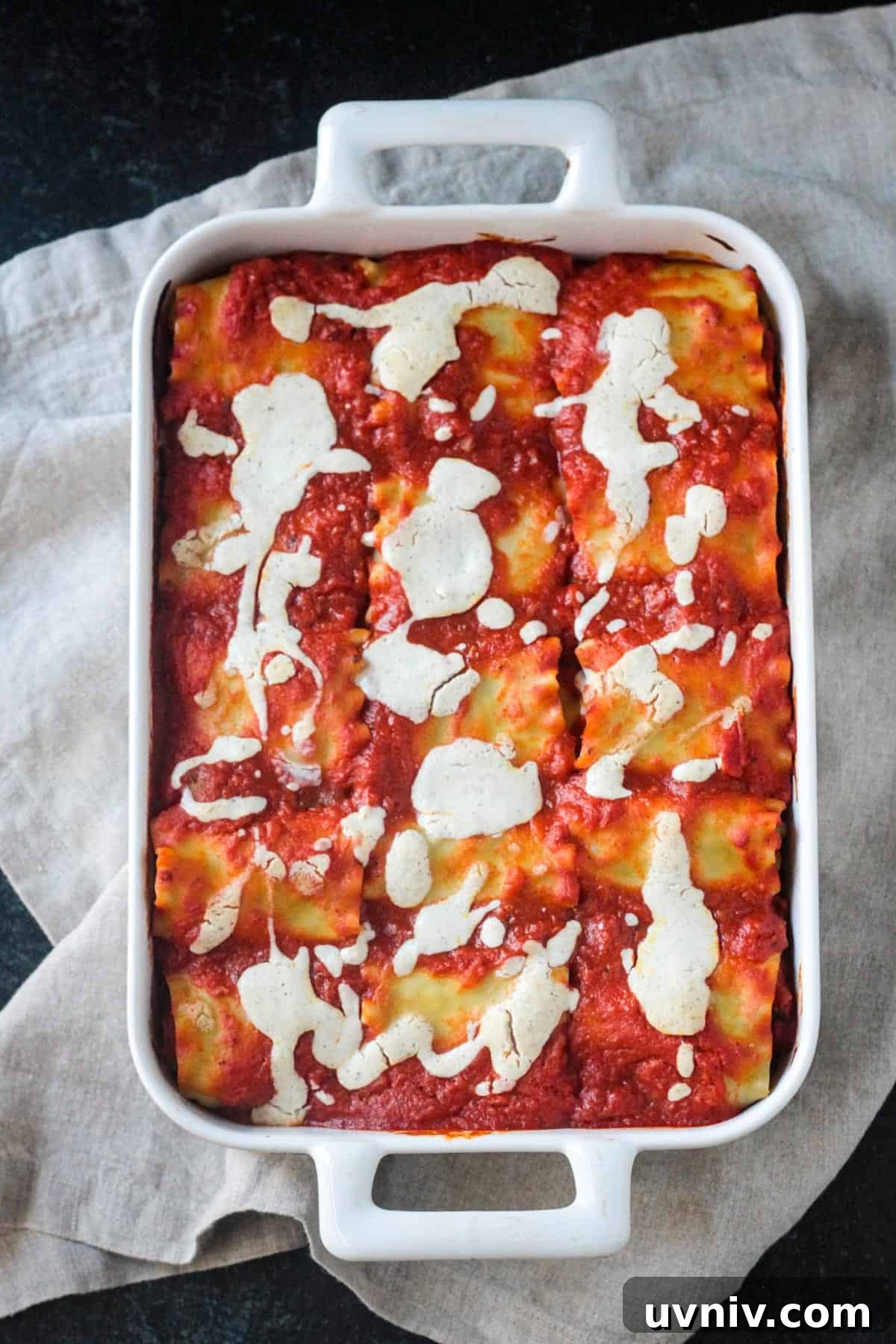
Bake at 350°F (175°C) for about 30 minutes, until heated through. Serve immediately.
How to serve
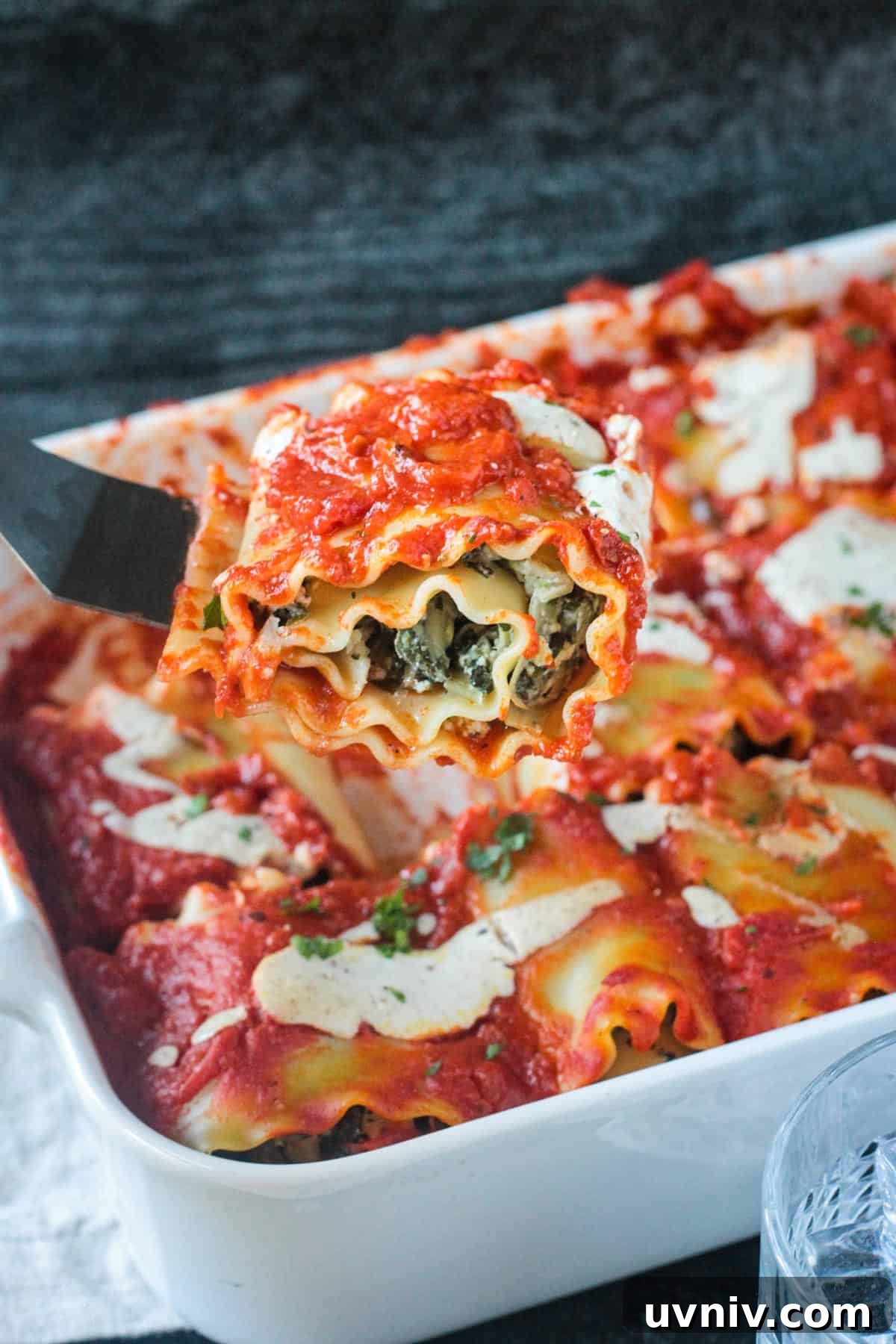
Serve the lasagna roll ups with a sprinkle of vegan Parmesan and fresh chopped parsley or basil. Pair with a side salad, garlic green beans, or vegan garlic bread for a complete meal.
Storage and freezing
Prep ahead: The filling keeps covered in the refrigerator for 2–3 days. You can also assemble the entire pan and refrigerate overnight before baking.
Refrigerator: Store leftovers in an airtight container for 4–5 days.
Freezer: After baking and cooling, wrap the whole pan or individual portions tightly in plastic wrap and foil. Freeze for 2–3 months.
Reheat: Thaw overnight in the refrigerator, then reheat in a 350°F oven for 30–40 minutes until warmed through.
Pro tips and tricks
~ Cook lasagna noodles just until al dente so they’re flexible but not mushy; they’ll finish cooking in the oven.
~ Drain and press tofu thoroughly to remove excess moisture for a creamier sauce and firmer filling.
~ Thoroughly squeeze liquid from thawed frozen spinach before adding to the filling.
~ Roll the noodles gently and avoid packing them too tightly to prevent filling from escaping.
~ For a gluten-free version, use gluten-free lasagna noodles.
FAQs
Lasagna roll ups contain the same components as traditional lasagna but are assembled by spreading filling on individual lasagna noodles and rolling them up instead of layering them.
Yes. Chop fresh spinach and stir it into the filling. If using fresh, briefly sauté or blanch and squeeze out excess liquid for the best texture.
Absolutely. Try vegan ground meat, mushrooms, cooked lentils, pesto, or other vegetable mixtures in place of the spinach-artichoke filling.
More vegan pasta recipes
- Vegan Mac and Cheese
- Vegan Bolognese
- Vegan Stuffed Shells
- Vegan Hummus Pasta
- Vegan Creamy Mushroom Pasta
- Roasted Vegetable Pasta
- Garden Veggie Pasta
I hope you love this recipe! If you try it, please rate and leave a comment in the recipe card with your feedback. For more family-friendly plant-based recipes, consider exploring the author’s cookbook or other recipe collections.
Vegan Lasagna Roll Ups
Recommended Equipment
-
Pasta pot
-
8 x 11 baking dish
Ingredients
- about 15 lasagna noodles
- 3 cups marinara sauce (homemade or store-bought, dairy-free)
White Sauce
- ½ package (8 ounces) firm tofu, drained and pressed
- 1 cup unsweetened non-dairy milk
- 1 clove garlic, minced
- 1 tablespoon mirin or rice vinegar
- 1 tablespoon onion powder
- 1 tablespoon arrowroot powder or cornstarch
- 1 teaspoon salt (or to taste)
- ½ teaspoon black pepper
- pinch ground nutmeg (optional)
Spinach Artichoke Filling
- 1 package (16 ounces) frozen spinach, thawed, drained, and pressed
- 1 can (14 ounces) artichoke hearts, drained and chopped
- ½ package (8 ounces) firm tofu, drained and pressed
- 1 teaspoon dried oregano
- 1 teaspoon dried basil
- ½ teaspoon salt
- 1 cup White Sauce (from above)
To serve
- Fresh chopped parsley or basil
- Vegan Parmesan cheese
Instructions
-
Preheat oven to 350°F (175°C).
-
Bring a large pot of water to a boil and cook lasagna noodles according to package directions until just al dente. Remove immediately to prevent overcooking.
-
While the noodles cook, prepare the White Sauce by blending all white sauce ingredients until smooth. Set aside.
-
In a large bowl, combine all filling ingredients, including 1 cup of the White Sauce, and mix well.
-
Pour about 1 cup marinara into the bottom of an 8 x 11 baking dish.
-
Lay drained noodles flat and place 2–3 tablespoons of filling along the length of each noodle, leaving about an inch at the ends.
-
Gently roll each noodle and place seam-side down in the baking dish.
-
Cover the rolls with the remaining 2 cups marinara and drizzle the remaining White Sauce over the top.
-
Bake for about 30 minutes until heated through. Serve hot.
Notes
~ Press tofu well to remove extra moisture for a creamier sauce and proper texture.
~ Squeeze as much liquid as possible from thawed spinach before mixing into the filling.
~ Roll gently to keep the filling inside each roll.
~ Substitute gluten-free noodles for a gluten-free dish.
Nutrition
|
Carbohydrates: 72g
|
Protein: 22g
|
Fat: 13g
Nutrition values are estimates and should be verified if you need precise data.