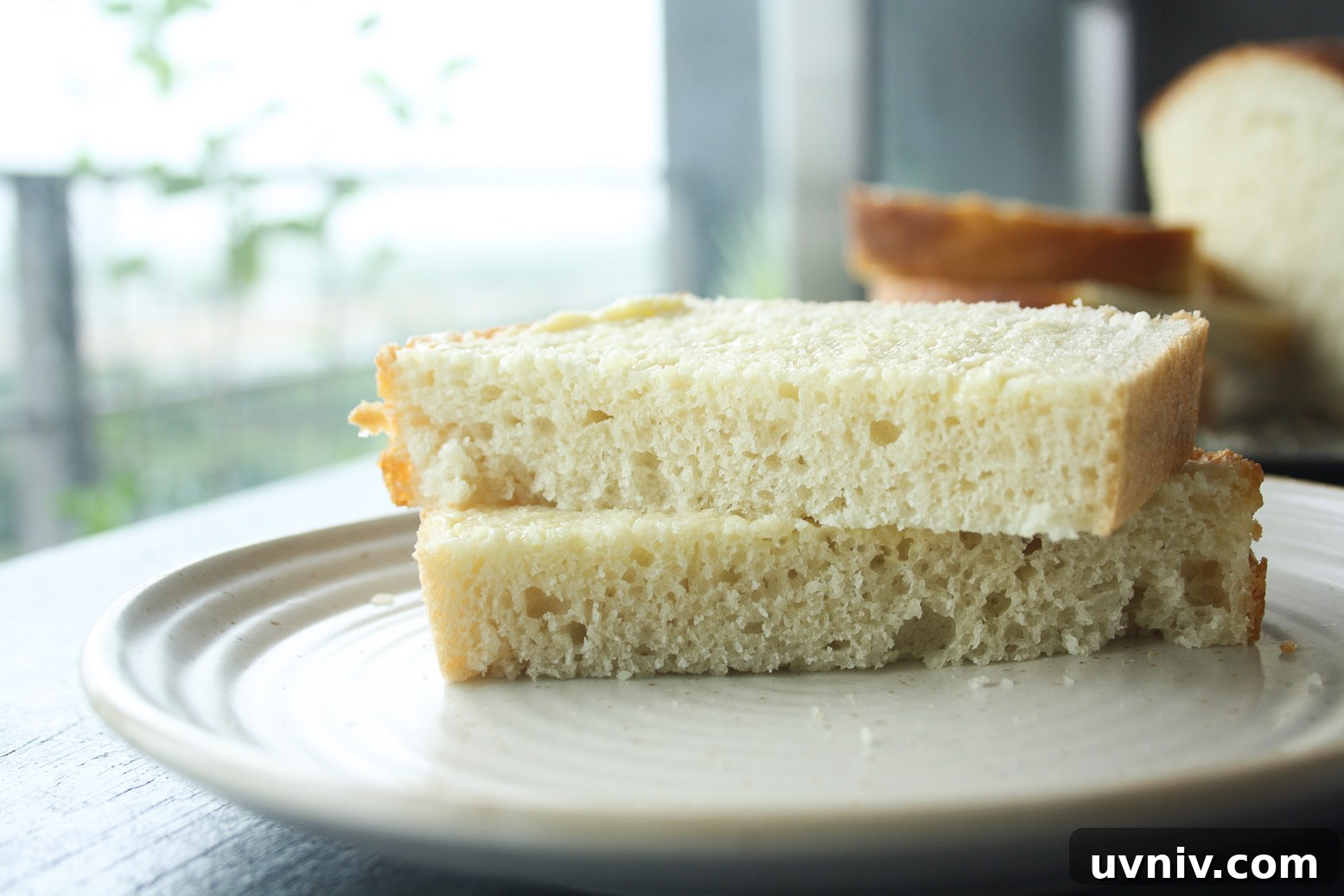
Carb overload day is here! A tender, chewy, crusty loaf of homemade white bread is one of the most rewarding things you can bake at home. Your kitchen will fill with the warm aroma of an old-fashioned bakery, and there’s nothing quite like hot buttered toast made from a fresh loaf. Once you try this recipe, you’ll want to bake it again and again.
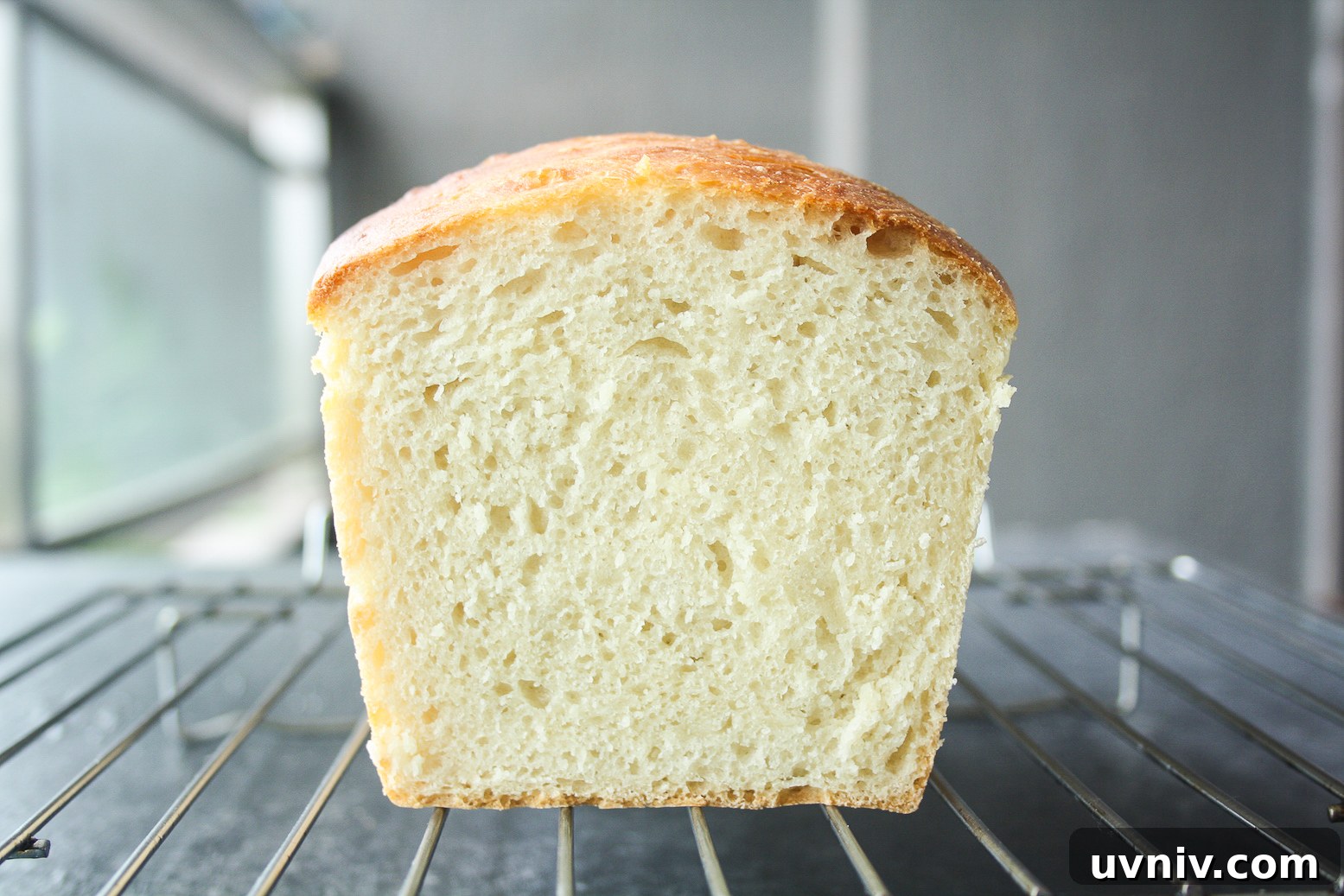
If you follow me on Instagram, you may have seen my recent bread-making experiments. This loaf is adapted from a Brown Eyed Baker recipe, but I tweaked it to suit a hot, humid climate and to work with the yeast I had on hand. The first bake taught me a few lessons: I added a touch too much flour and—embarrassingly—forgot the salt. Even with salted butter in the dough, adding measured salt to the flour is essential. It can truly make or break the loaf.
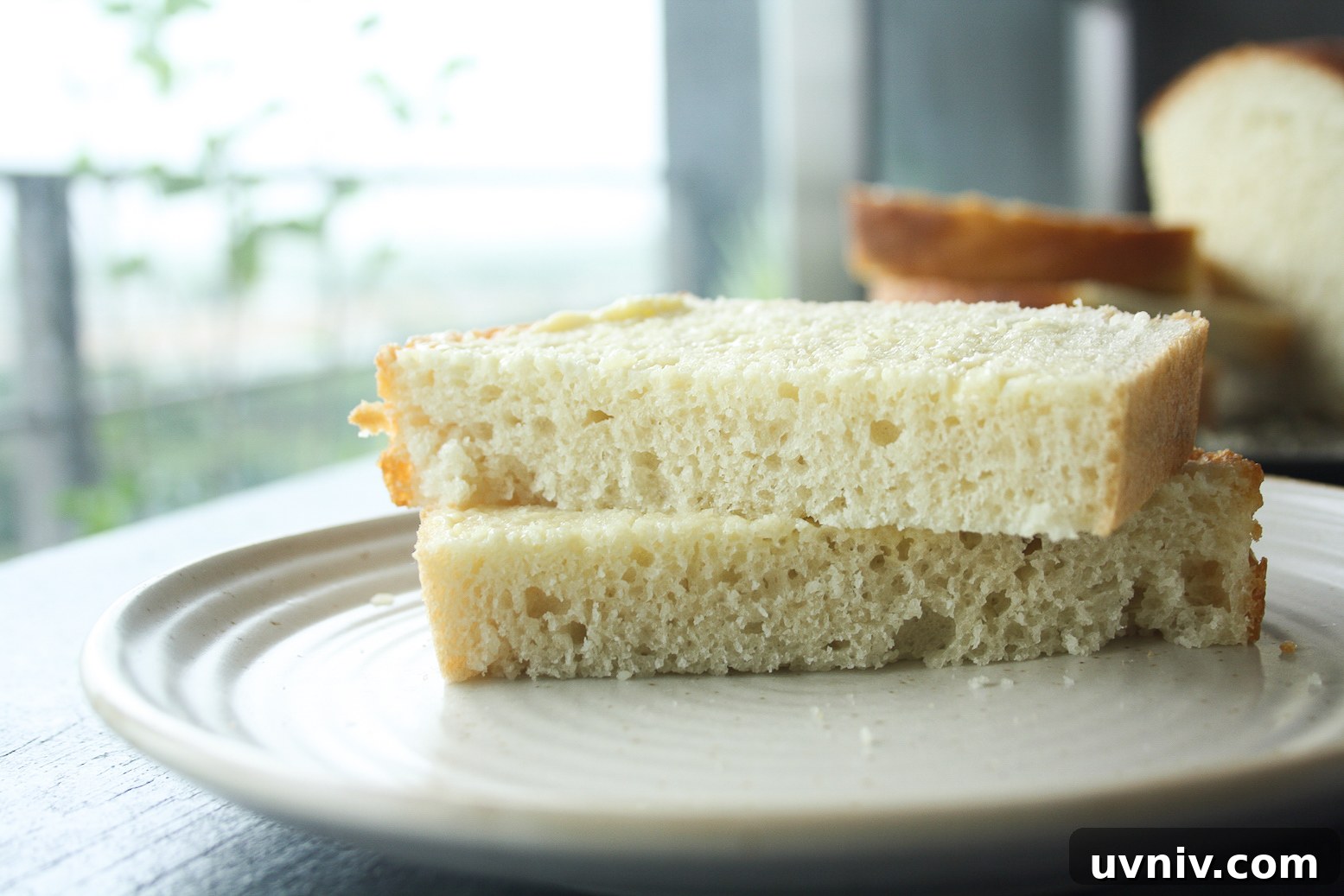
On my second attempt I measured more carefully, added the salt, and took small notes as I went. That loaf was lighter and softer—subtle differences you can taste even if the appearance is similar. Small adjustments matter when baking bread.
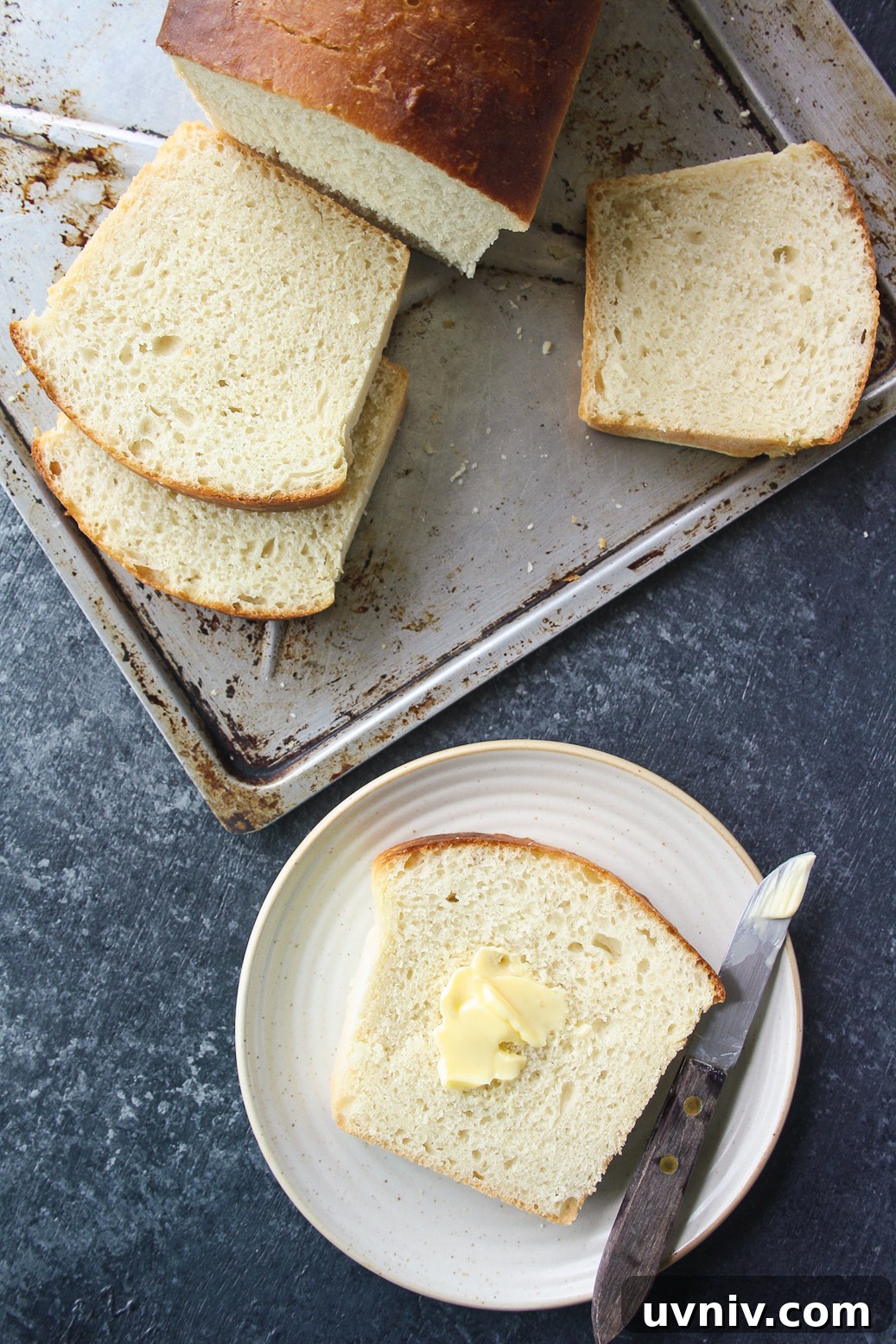
This bread is packed with flavor. It’s perfect for tearing off big chunks and spreading with butter. The crumb has a gentle chew and the crust bakes up beautifully. While the texture softens on day two, toasting revives it wonderfully.
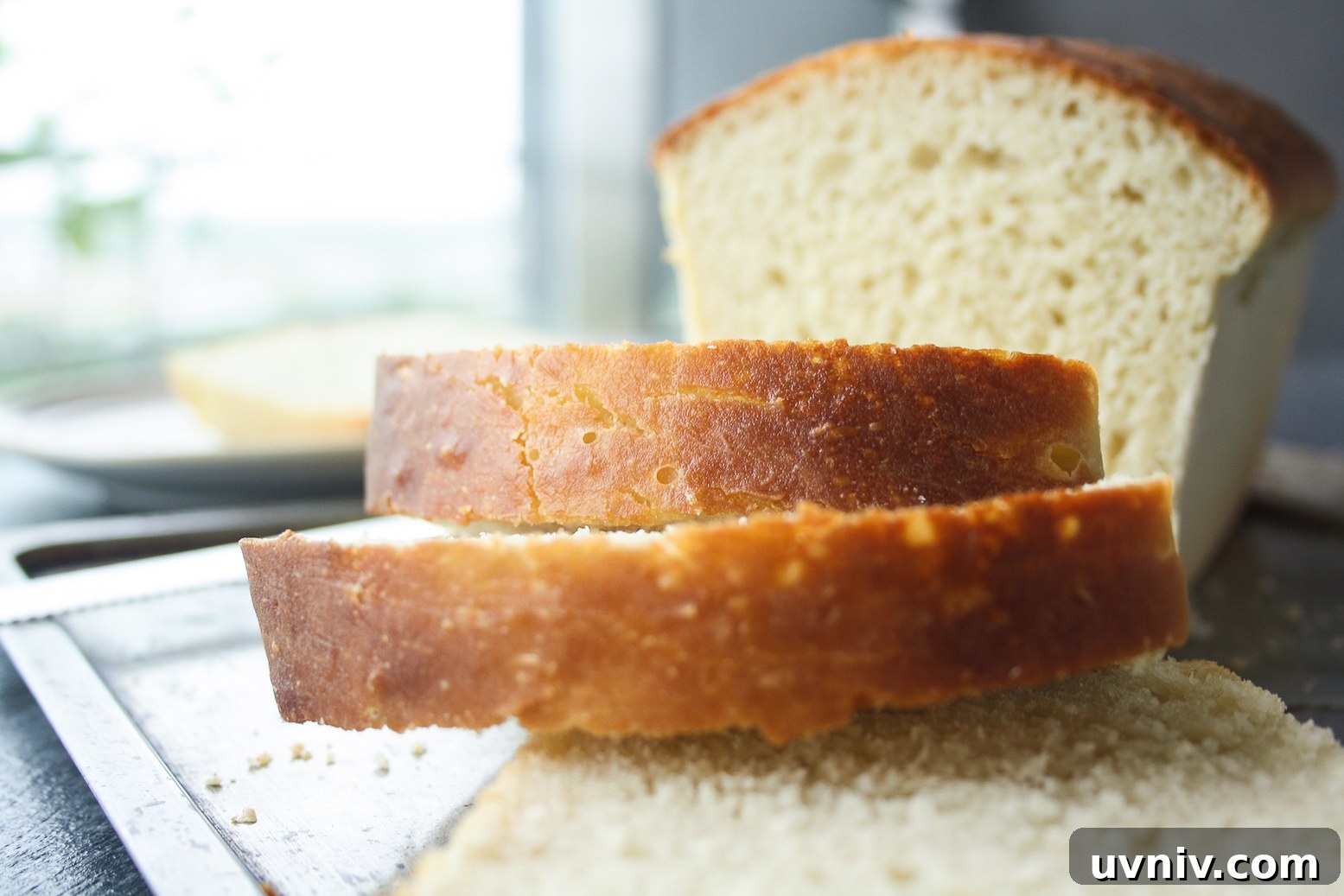
Bread baking has become a new and enjoyable journey for me, and I’d love for you to try this recipe and share feedback, especially if you live in a similar climate. I’ve aimed to make the method adaptable for warmer, more humid kitchens.
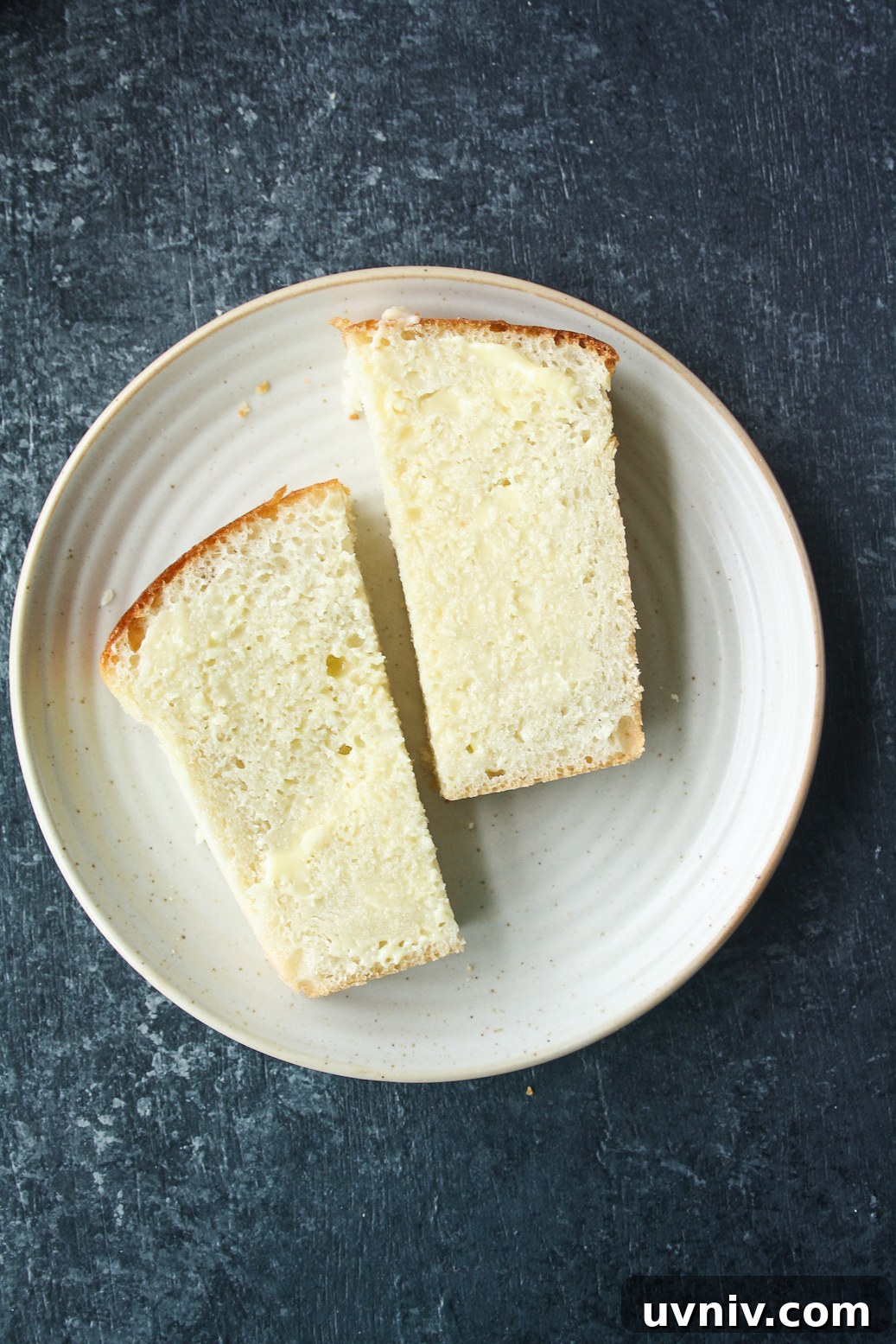
Storage: wrap the cooled loaf first in baking paper and then in a layer of aluminium foil. At room temperature it stays fresh for one night; after that I store it in the fridge for a few days and toast slices to bring back the texture. Freezing should work too, though I haven’t tested it myself.
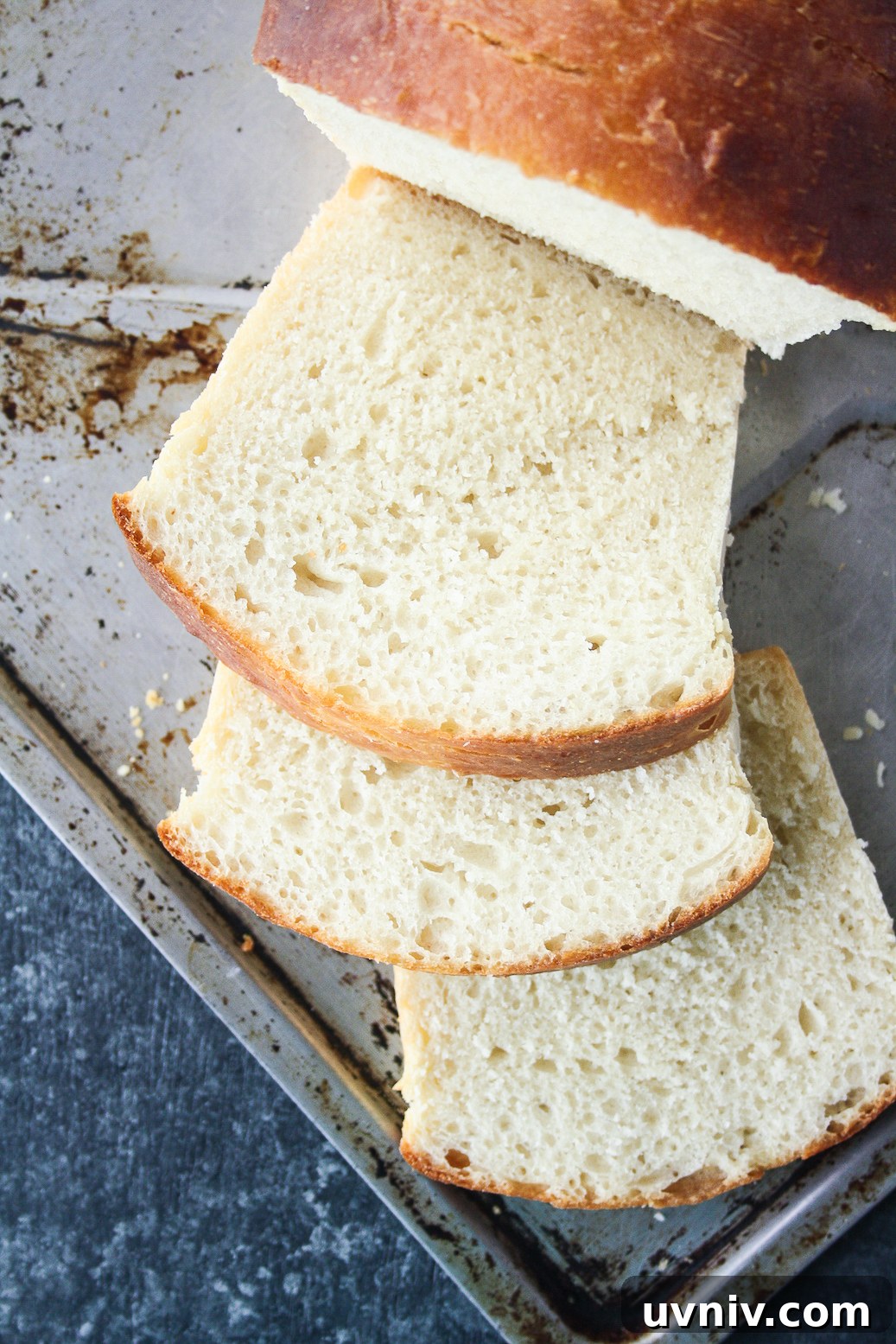
One step you must not skip: brush the loaf with melted butter immediately after it comes out of the oven. This softens the crust and adds flavor; skipping it can leave the crust overly hard.
Making the bread isn’t difficult. Active involvement is minimal—the rises take the most time—so plan to set aside most of a day if you use active dry yeast (the original recipe calls for instant yeast). Most of all, enjoy the process—baking bread is satisfying and delicious.
Please read the recipe notes and the instructions below before you begin.
Update: I’ve also tested a half wholewheat version that turned out well. See the recipe notes for details.
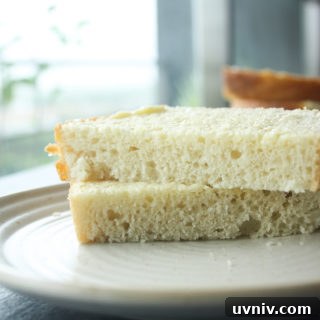
Homemade White Bread
Ingredients
- 2 and 1/4 tsps active dry yeast
- 6 tbsps warm water just hot enough that you can dip your finger in comfortably
- 1/8 cup caster sugar
- 1 and 1/2 tbsps butter at room temp
- 2 tsps salt*
- 4 to 5 cups all-purpose flour
- 1 and 1/3 cup water at room temp
- 1 and 1/2 tbsps butter melted
Instructions
-
In a small bowl, mix the yeast and warm water, then cover and set aside for about 10 minutes until frothy.
-
In a large mixing bowl or in the bowl of a stand mixer fitted with a dough hook, combine the sugar, butter and salt. Mix lightly, then pour in the yeast mixture and mix again.
-
Add 4 cups of flour and the 1 1/3 cups water. Mix on low to bring the dough together, then add the remaining flour a little at a time to form a soft, slightly tacky dough. I used about 4 1/2 cups total; you may need more or less depending on humidity and flour brand.
-
Knead with the mixer for about 10 minutes or by hand for 10–12 minutes. If the dough is very sticky, sprinkle on a little more flour. The dough should be smooth and soft, with a slight stickiness and a slow bounce-back when poked.
-
Turn the dough onto a lightly floured surface. Lightly oil the mixing bowl, return the dough, and turn to coat all sides. Cover with clingfilm and let rise for 1–2 hours until doubled. To speed this in a cool kitchen, briefly heat the oven to 100 C, turn it off, and place the bowl inside; repeat as needed.
-
Lightly grease a 9×5-inch loaf pan. I prefer oil for greasing, as butter can sometimes make the sides damp.
-
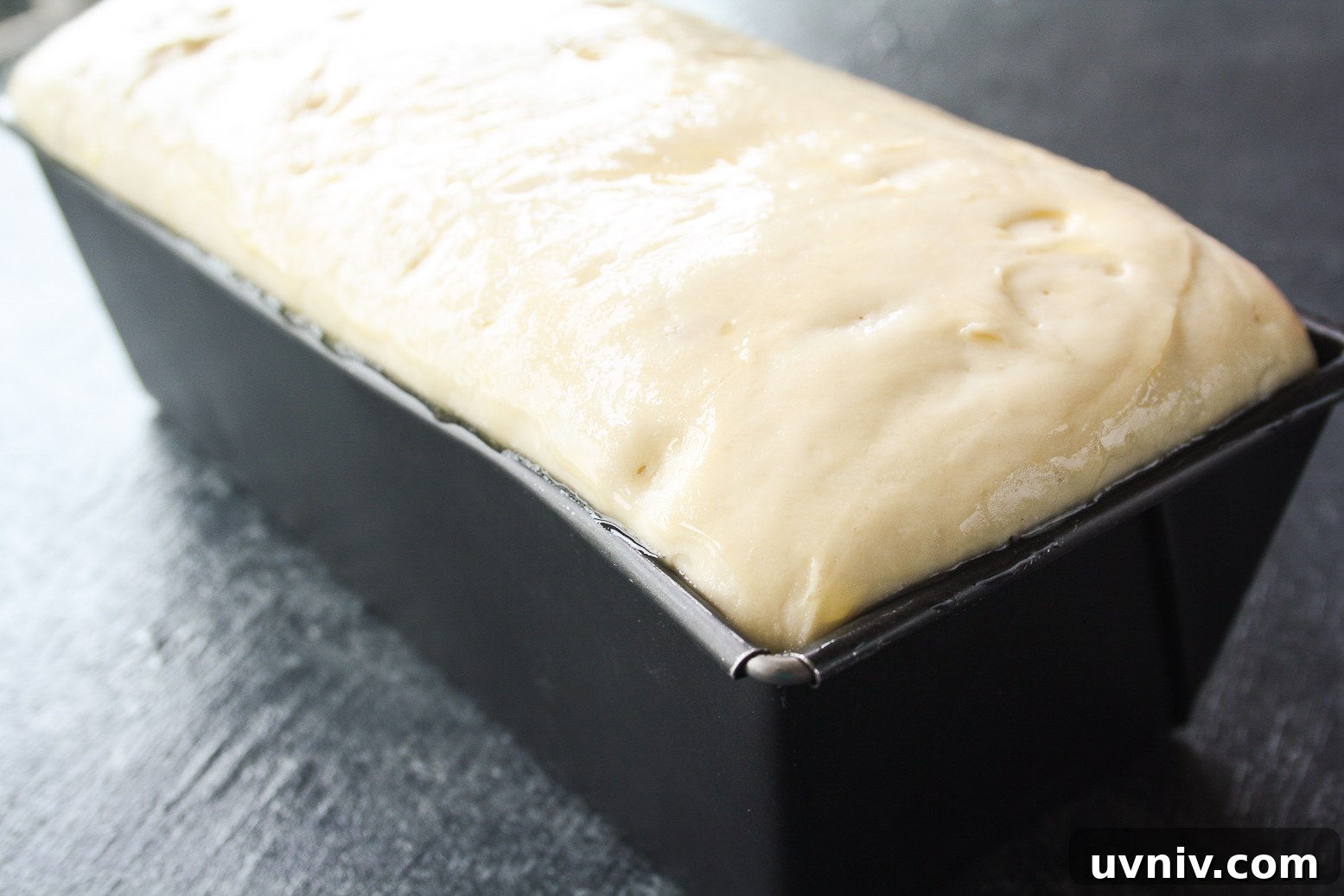
After the dough has doubled, gently punch it down and turn it onto a floured surface. Pat it into a 9×12-inch rectangle with the shorter side nearest you so the shaped loaf fits the pan.
-
Starting at the short edge, roll the dough tightly into a cylinder, tuck the ends under, then place it seam-side down into the prepared pan.
-
Cover the pan loosely with clingfilm and let rise another 1–2 hours until doubled. Use the warmed-oven trick if desired.
-
Near the end of the final rise, preheat the oven to 200 C.
-
Remove the clingfilm, brush half the melted butter on top of the loaf, and set the pan on a baking tray placed in the lower half of the oven to prevent over-browning on top.
-
Bake for 15 minutes, rotate the tray, then bake another 15 minutes. If the loaf browns too quickly, tent it loosely with foil.
-
When the loaf is done, it will have a dark, firm crust. Brush immediately with the remaining melted butter to soften the crust and enhance flavor.
-
Allow the loaf to cool in the pan for 15 minutes. Run a blunt knife around the edges to loosen it, then turn the loaf out onto a wire rack and cool completely before slicing. The result should be a soft, slightly chewy loaf to be proud of.
-
Store wrapped in baking paper and foil for one night at room temperature. On day two, toast slices to refresh them; refrigerate if keeping longer.
Notes
*If using unsalted butter, increase the salt to 4 teaspoons.
*Prep time listed does not include rise time, which can total about 6 hours depending on room temperature.
*Half wholewheat version: Replace 2 cups of all-purpose flour with 2 cups wholewheat flour. Use 3 tablespoons butter, 1 cup water and 1/3 cup milk in the dough. Keep the 6 tablespoons of warm water for the yeast the same. I didn’t need more than 4 cups of flour while kneading; add all-purpose flour if necessary to avoid a dense loaf. The extra butter keeps the dough soft and easy to work with.