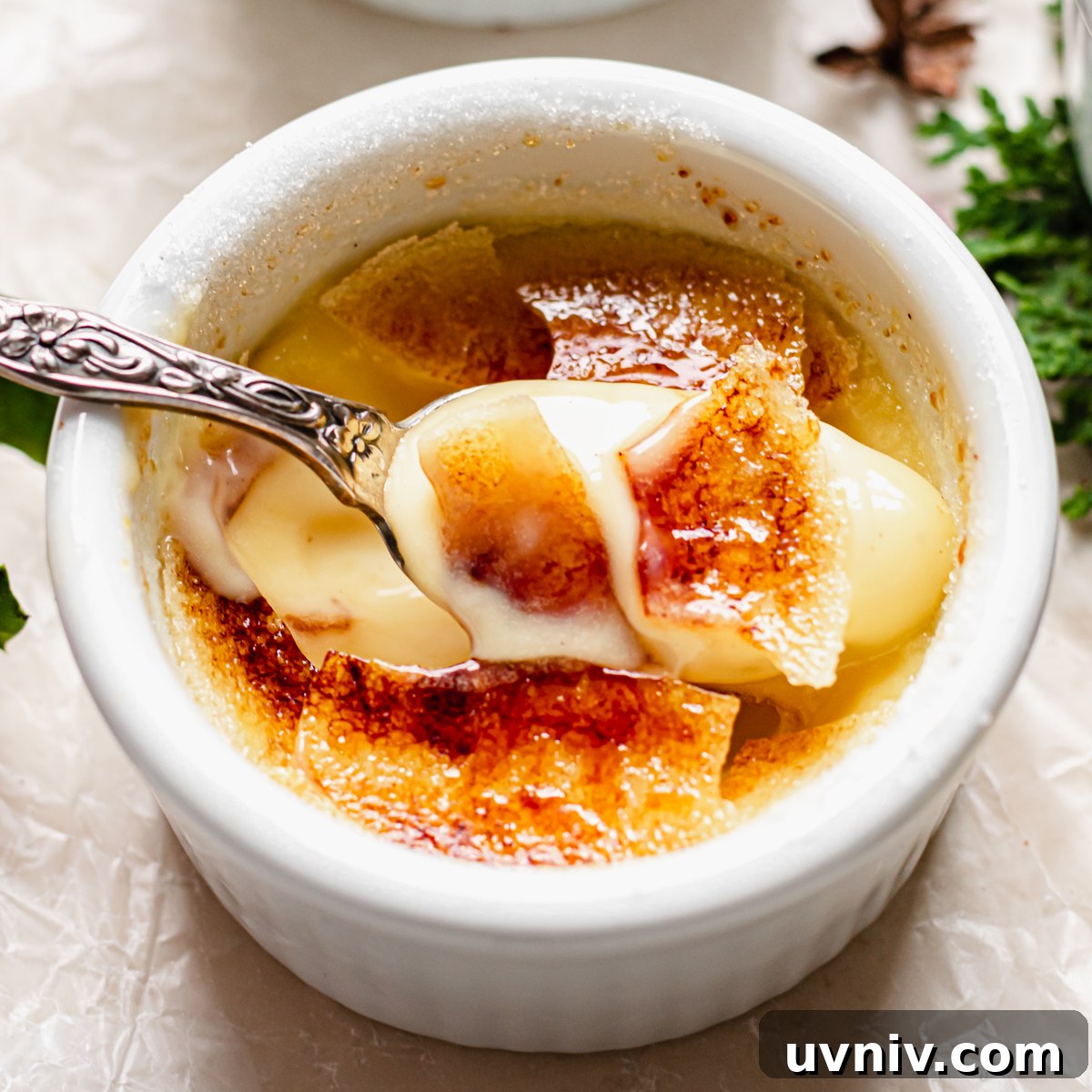
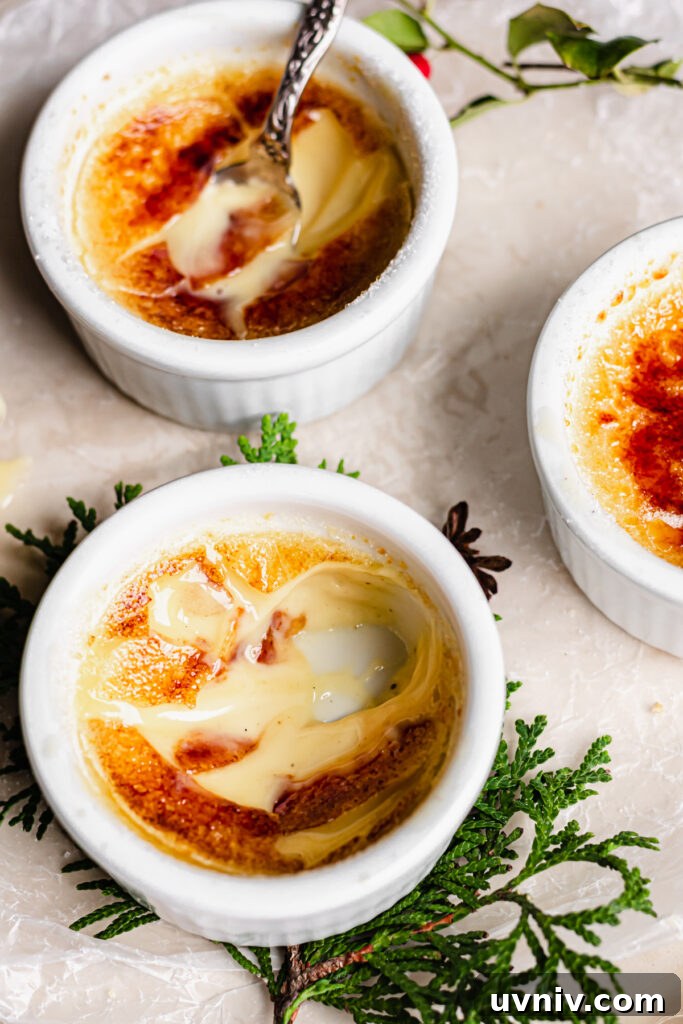
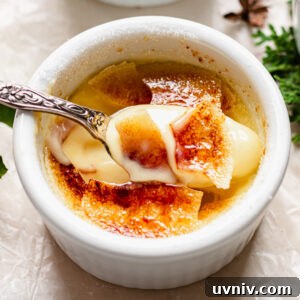
Creamy, luscious crème brûlée meets the classic holiday taste of eggnog in this Eggnog Crème Brûlée. Smooth custard is infused with eggnog and warm spices, then finished with a caramelized sugar crust that makes the perfect crack.
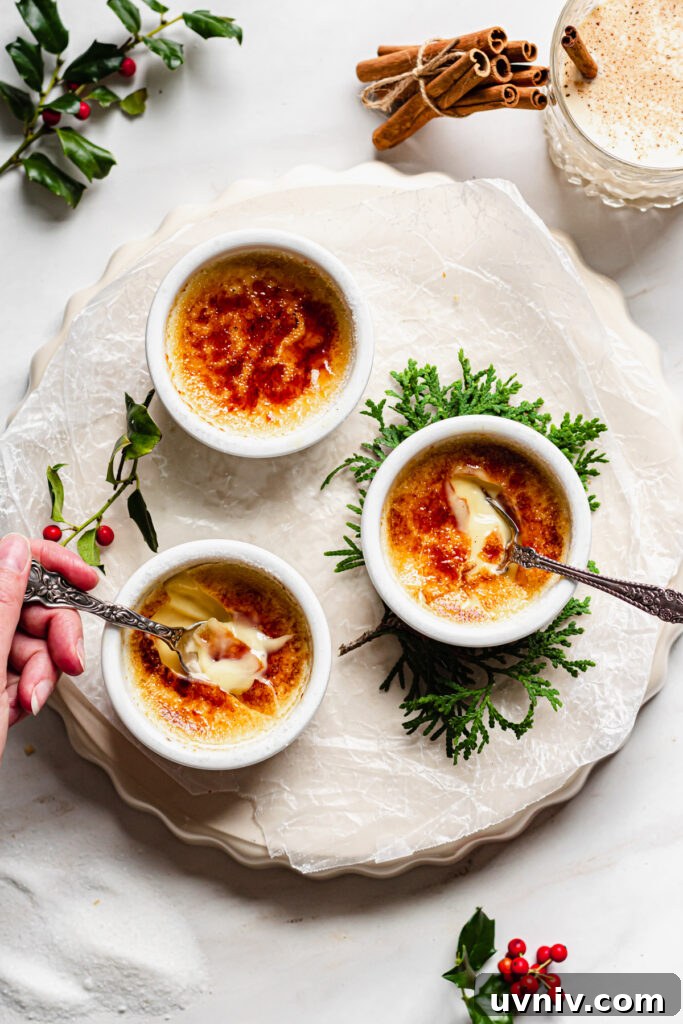
If you love both crème brûlée and eggnog, this recipe delivers a rich, velvety custard that highlights seasonal flavors. The custard is made with equal parts eggnog and heavy cream, seasoned with nutmeg and vanilla, and sweetened to balance the warm, spiced notes. The caramelized sugar topping complements the eggnog beautifully.
Ingredient & Tools Notes
- Large egg yolks. Four yolks at room temperature provide richness and body.
- Granulated sugar. Used in the custard and for the brûlée topping.
- Eggnog. Choose a thick, flavorful eggnog for best results—this is the star of the dish.
- Heavy whipping cream. Balances the eggnog so the custard remains creamy and not overly sweet.
- Nutmeg. Ground or freshly grated to emphasize the eggnog profile.
- Vanilla paste or extract. Adds depth and rounds out the flavors.
Key Tools
- Ramekins or baking vessel. Six 4 oz ramekins work well for individual portions. If using a single baking dish, fill to about 1.5 inches and adjust baking time as needed.
- Kitchen torch. The quickest way to caramelize the sugar and achieve an even, crisp top. If you don’t have a torch, a hot oven broiler can be used (see FAQ).
How to make Eggnog Crème Brûlée
Preheat the oven to 325°F (163°C) and place empty ramekins in a 13×9-inch baking dish or pan. This recipe yields six servings but can be scaled.
STEP 1: In a medium saucepan over medium heat, combine the eggnog, heavy cream, sugar, salt, and nutmeg. Stir occasionally until the mixture just begins to simmer at the edges.
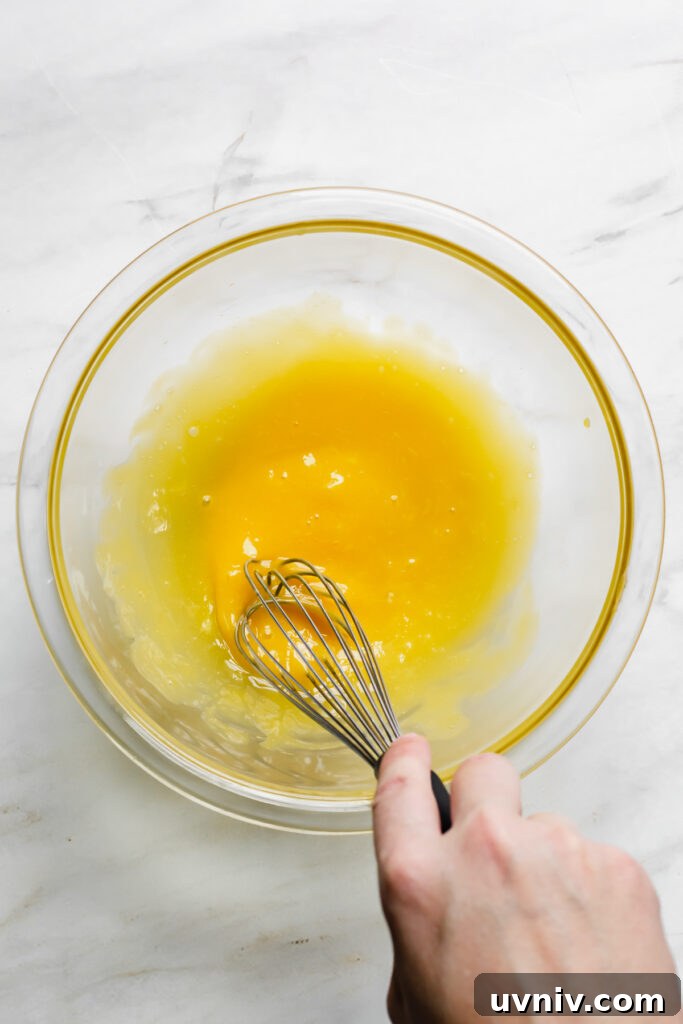
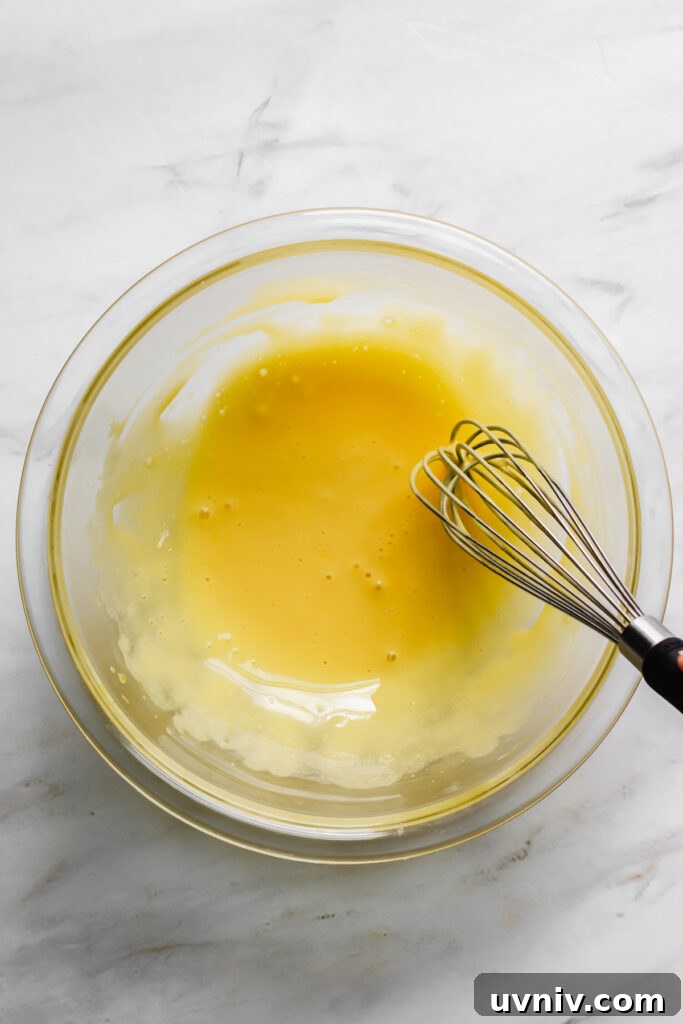
STEP 2: Separate four eggs and reserve the whites for another use. Whisk the egg yolks vigorously in a medium bowl for about one minute until lighter in color and slightly airy.
Tempering the Eggs & Water Bath
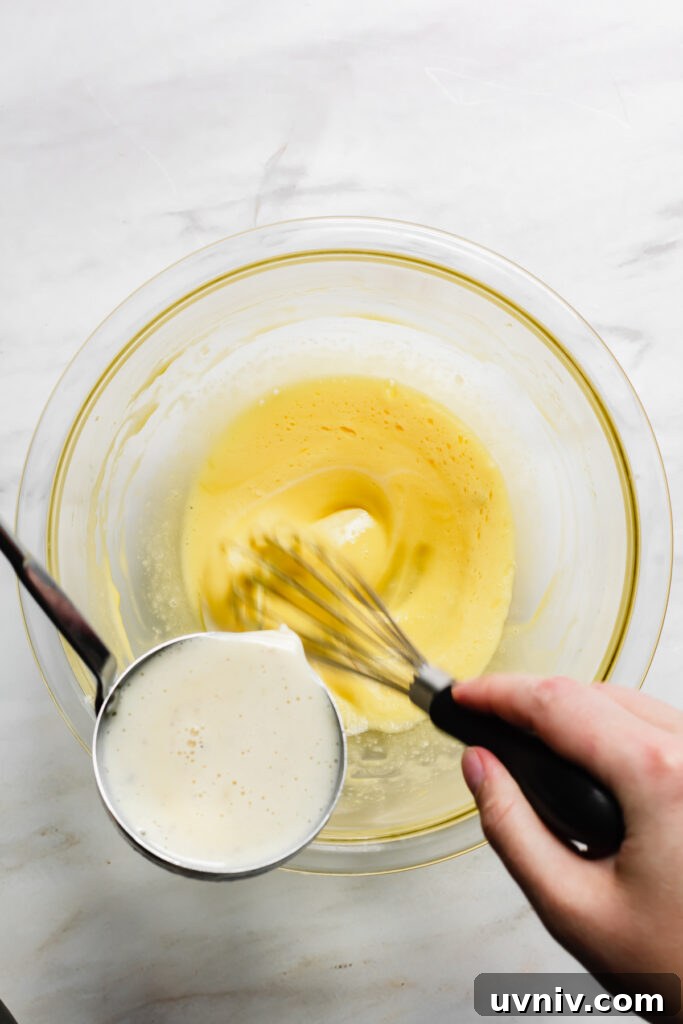
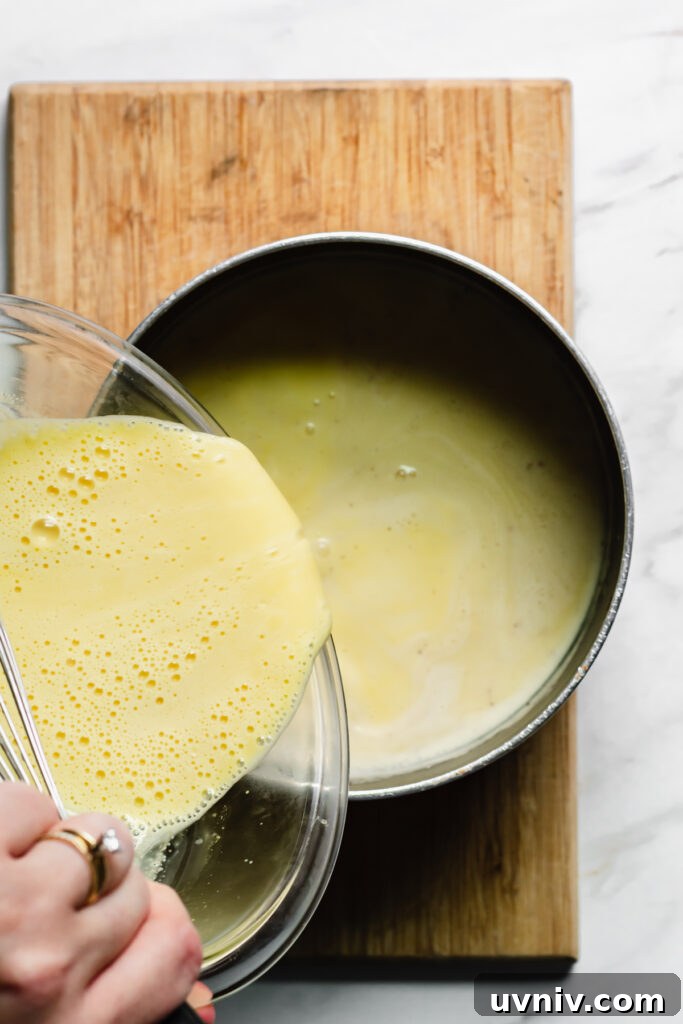
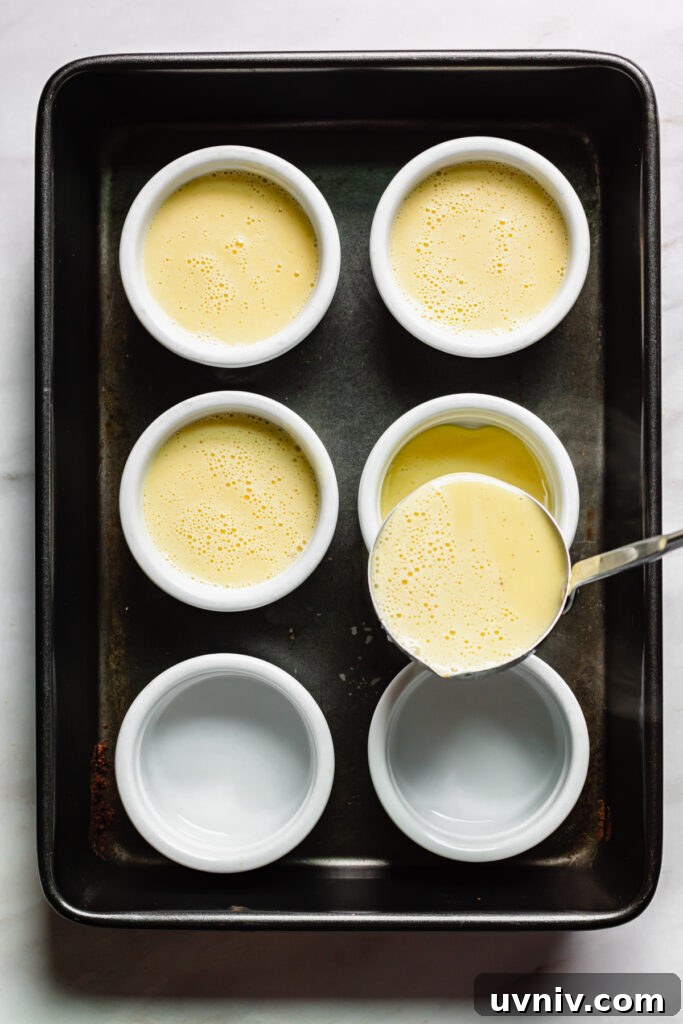
STEP 3: When the cream mixture simmers, temper the yolks by adding one ladle of hot cream to the yolks while whisking. Repeat with a second ladle, then pour the yolk mixture back into the saucepan and whisk until fully combined. Add the vanilla and whisk again. Distribute the custard evenly among the ramekins.
STEP 4: Bring water to a boil and carefully pour it into the baking pan around the ramekins, filling about halfway up the ramekin sides. The water bath helps the custards bake gently and evenly. Bake for 20–30 minutes.
Pro tip: Pull the oven rack out, place the filled pan on the rack, then pour in the hot water. This avoids risky transfers and prevents water from splashing into the custards.
STEP 5: Test doneness by gently tapping the pan while wearing an oven mitt. The edges should be set and the centers should still wobble slightly—this indicates the right creamy texture. A thermometer will read between 160–170°F when the custards are done. Remove immediately if they appear puffy.
Carefully transfer ramekins to a wire rack to cool (do not leave them in the water bath). Cool 30 minutes at room temperature, then refrigerate uncovered for at least 4 hours, preferably overnight.
How to Torch Crème Brûlée
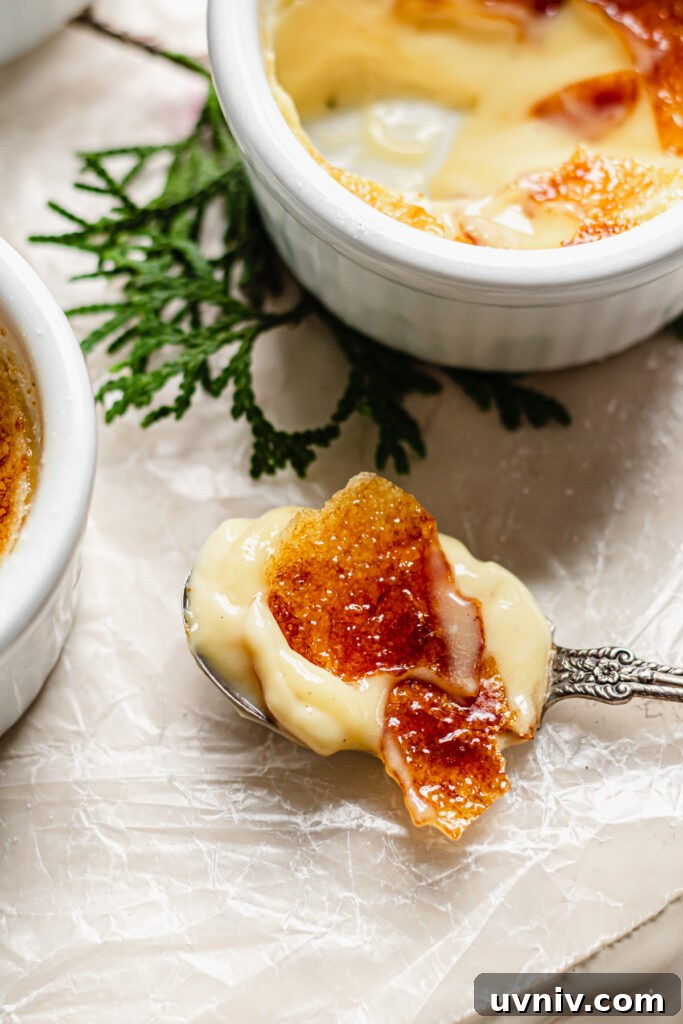
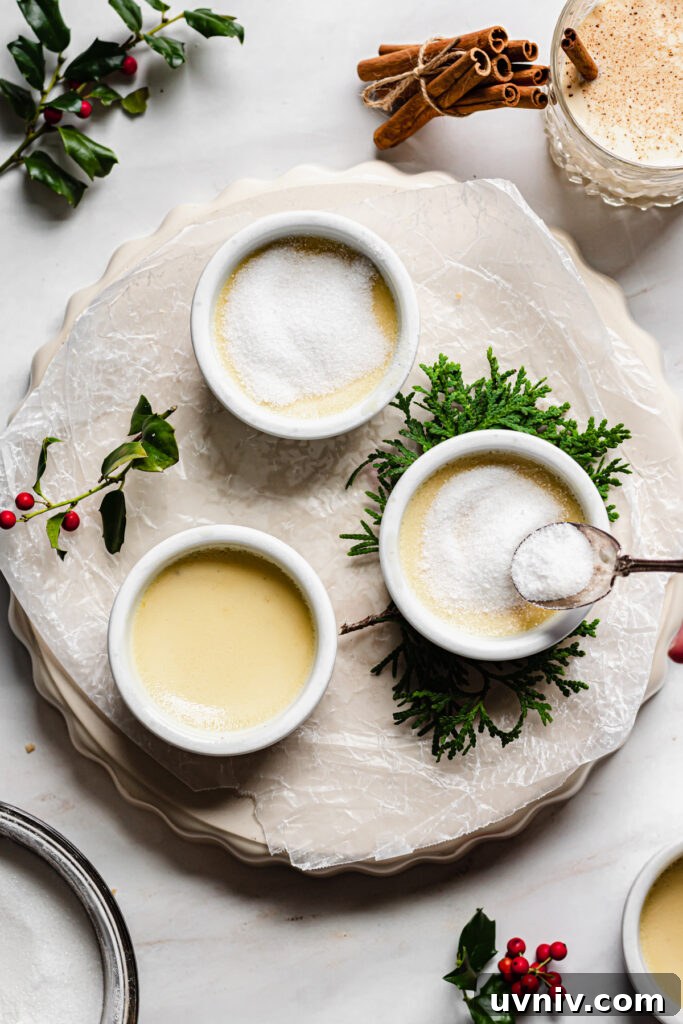
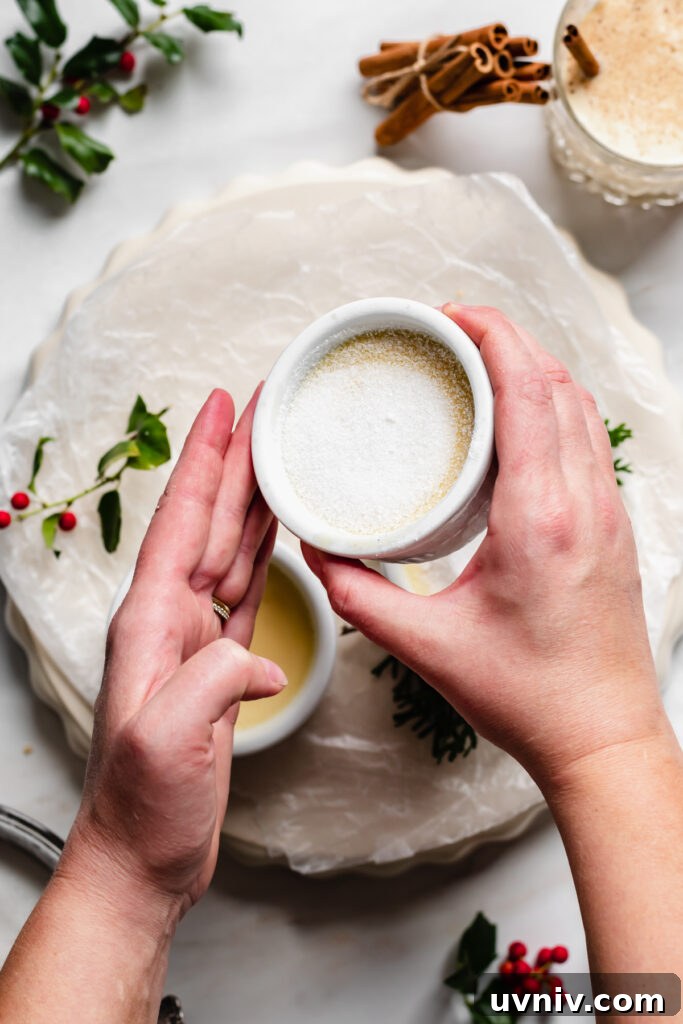
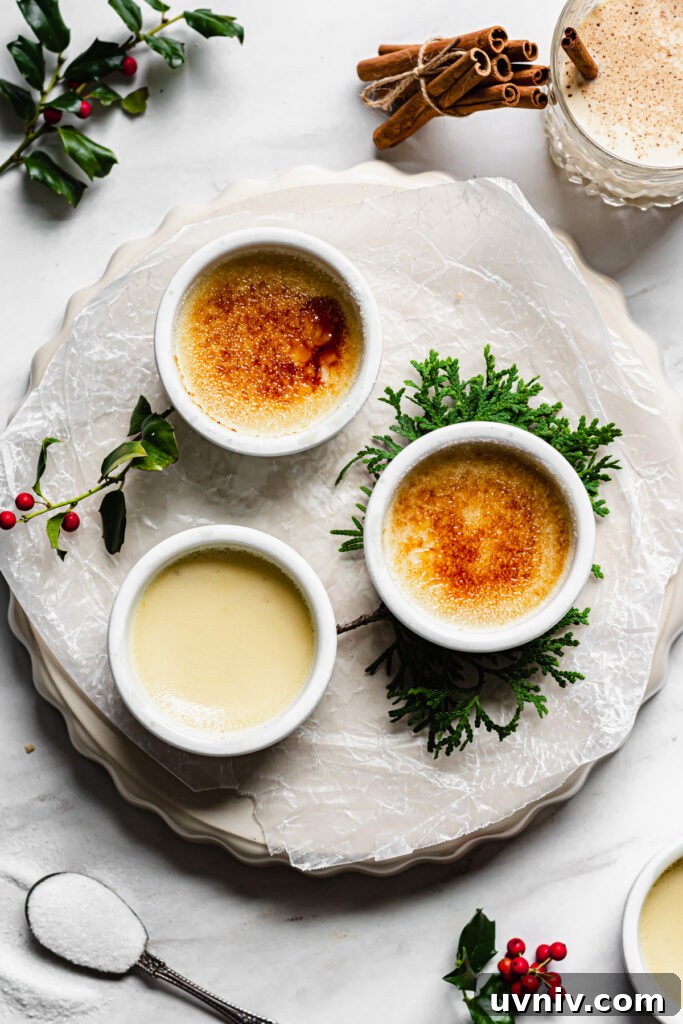
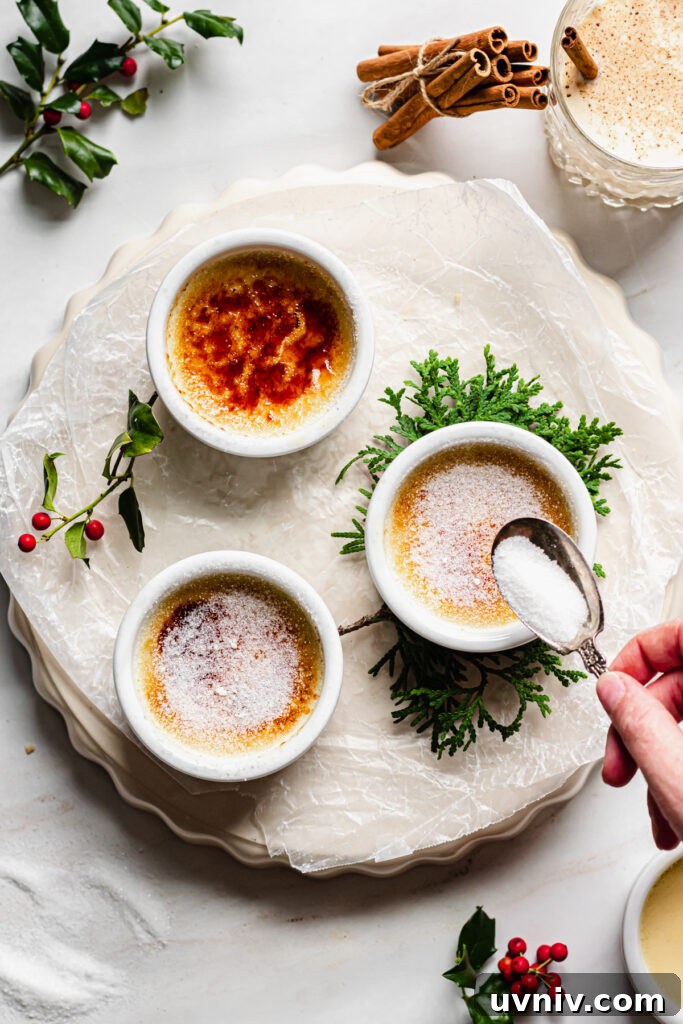
STEP 6: When ready to serve, sprinkle a thin, even layer of granulated sugar over each chilled custard. Use a kitchen torch to caramelize the sugar until it melts and turns golden brown. Work quickly, moving the torch to avoid overheating any one spot.
Pro tip: After the first torching, chill the ramekins in the freezer for about 5 minutes to firm the top before adding a second thin sugar layer and torching again. This double brûlée produces a superior crust and satisfying crack.
Crème Brûlée Flavors and Variations
Crème brûlée is versatile—infuse the cream with tea, espresso, citrus zest, chocolate, or other spices for different interpretations. The eggnog variation is ideal for holiday menus, but you can adapt the same method to any flavored cream.
Storing
Store unsugared custards covered in the refrigerator for up to three days. Only caramelize the number of servings you plan to eat, as the sugar crust will become soft if stored. If you do store brûléed ramekins, refresh the crust by sprinkling more sugar and torching again shortly before serving.
FAQs & Tips
Visually, the edges should be set while the center remains slightly jiggly. For accuracy, aim for an internal temperature of 160–170°F. Under 160°F it may be too runny; above 170°F it can become grainy. The custard will continue to set as it cools.
No. A torch is fastest and most precise, but you can broil the sugared ramekins: set the broiler to high, move a rack close to the heat, place ramekins on a baking sheet, and broil while watching carefully. After broiling, chill for 5–10 minutes to firm the top.
It’s usually underbaked, or the caramelizing process overheated the custard and caused it to liquefy. Ensure the custards reach the recommended temperature and work quickly when torching.
A grainy texture indicates the eggs were overcooked and the yolks began to coagulate. Remove custards from the oven as soon as they’re set at the edges and still slightly wobbly in the center.
More Holiday Inspired Recipes
- Eggnog Oatmeal Creme Pie Recipe
- Ginger Molasses Lace Cookies
- Christmas Shortbread Cookies
- Cookie Butter Cookies
- Eggnog Bundt Cake
Share your creations on Instagram @thecozyplum and tag #TheCozyPlum. I love seeing your versions of this recipe.
Recipe
Eggnog Crème Brûlée
Callan Wenner
Equipment
- Six 4 oz ramekins
- 13×9-inch casserole dish
- Large measuring cup or bowl
- Ladle
- Whisk
- Kitchen torch (broiler can also be used)
Ingredients
- 1 cup (240 ml) eggnog
- 1 cup (240 ml) heavy whipping cream
- 1/2 cup (100 g) granulated sugar
- 1/8 teaspoon kosher salt
- 1/4 teaspoon ground nutmeg
- 4 large egg yolks, room temperature
- 2 teaspoons vanilla paste or extract
- 1/3 cup (67 g) granulated sugar for brûlée
Instructions
- Add eggnog, heavy cream, 1/2 cup sugar, salt, and nutmeg to a medium saucepan over medium heat. Stir occasionally until the mixture just begins to simmer at the edges.
- Preheat the oven to 325°F (163°C) and place empty ramekins in a 13×9-inch baking dish.
- Separate 4 eggs and reserve the whites. Vigorously whisk the yolks for about 1 minute until slightly lighter and airy.
- When the cream mixture simmers, temper the yolks by whisking in one ladle of hot cream, then a second. Pour the yolk mixture back into the saucepan, whisk to combine, then add vanilla. Ladle the custard evenly into the ramekins.
- Boil water and carefully pour it into the baking pan around the ramekins until it reaches about halfway up their sides. Bake 20–30 minutes; the edges should be set while the centers remain slightly jiggly. Internal temperature should read 160–170°F if using a thermometer.
- Remove from oven and transfer ramekins to a wire rack to cool. Cool 30 minutes at room temperature, then refrigerate uncovered for at least 4 hours or overnight.
- To serve, sprinkle a thin layer of sugar on each custard and caramelize with a kitchen torch. Chill briefly, then repeat with a second thin sugar layer and torch again for the best crust.
- Serve immediately.
Notes
Only sugar and torch the number of servings you plan to eat. Unsugared custards keep in the fridge for up to three days. If storing brûléed custards, the sugar top will soften; refresh by adding sugar and torching again before serving.
To use a broiler instead of a torch: set the broiler to high and position a rack close to the heat source. Place sugared ramekins on a baking sheet and broil while watching closely—rotate as needed to prevent burning. Chill briefly after caramelizing to re-set the custard.
Nutrition (per serving)
- Calories: 321 kcal
- Carbohydrates: 33 g
- Protein: 5 g
- Fat: 20 g
- Saturated Fat: 11 g
- Cholesterol: 210 mg
- Sodium: 92 mg
- Sugar: 31 g
Nutrition is an estimate and may vary.