Sourdough starter feeding ratios are one of the easiest tools to control your baking schedule. Understanding how to adjust the amounts of starter, flour, and water is a major mindset shift for home bakers.
By changing the feeding ratio you decide how quickly the starter becomes active and when it will peak. Once you learn to do this, sourdough baking becomes predictable and much easier to fit into your day.
It’s not complicated — just a practical way to make your starter work for your schedule instead of the other way around.
What is a Sourdough Starter Ratio?
A sourdough starter ratio expresses the weight relationship between starter, flour, and water (always use weight, not volume).
Common examples:
- 1:1:1 — equal weights of starter, flour, and water
- 1:2:2 — twice as much flour and water as starter
- 1:10:10 — a small amount of starter refreshed with a large feed
The ratio you choose determines how quickly the starter will rise and when it will be ready for baking.
Why Feeding Ratios Matter
Feeding ratios control how quickly your starter becomes active:
- more starter → faster rise
- less starter → slower rise
That means you can adjust your feeds to match your day instead of rearranging your schedule around the starter. A larger carryover of starter speeds the process, while a very small inoculation with more flour and water lengthens the time to peak.
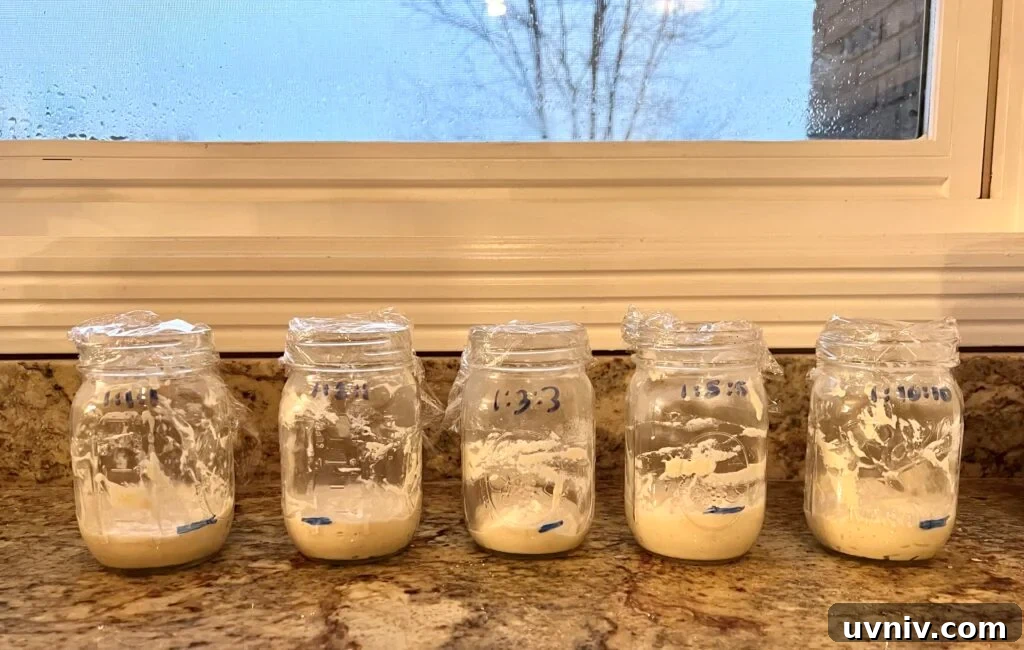
This image shows jars used to compare different feeding ratios during tests.
How Temperature Impacts Feeding Ratios
Temperature strongly influences starter activity:
- cooler temperatures → slower fermentation
- warmer temperatures → faster fermentation
You can increase the proportion of starter in a feed to speed things up, but a cold environment will still slow activity. Wild yeast and beneficial bacteria prefer warmth, so temperature and feeding ratio together determine when your starter will peak.
How Flour Impacts Feeding Ratios
The type of flour you use also affects fermentation speed:
- whole wheat or rye → faster fermentation
- all-purpose or bread flour → more moderate fermentation
Whole grain flours provide more nutrients and wild microbes, which can boost activity. If your starter is sluggish, mixing in some whole wheat or rye at feedings can help. If it’s fermenting too quickly, using predominantly white flour can slow it down.
Choosing the Right Feeding Ratio
Decide when you want your starter to be ready and work backward to select a ratio and feeding time. A simple baseline is helpful.
A reliable minimum is a 1:1:1 ratio (equal weights of starter, flour, and water).
Avoid carrying over too much starter relative to feed, which can lead to excessive acidity, and avoid too much water relative to flour, which can leave the starter overly loose and less able to rise well.
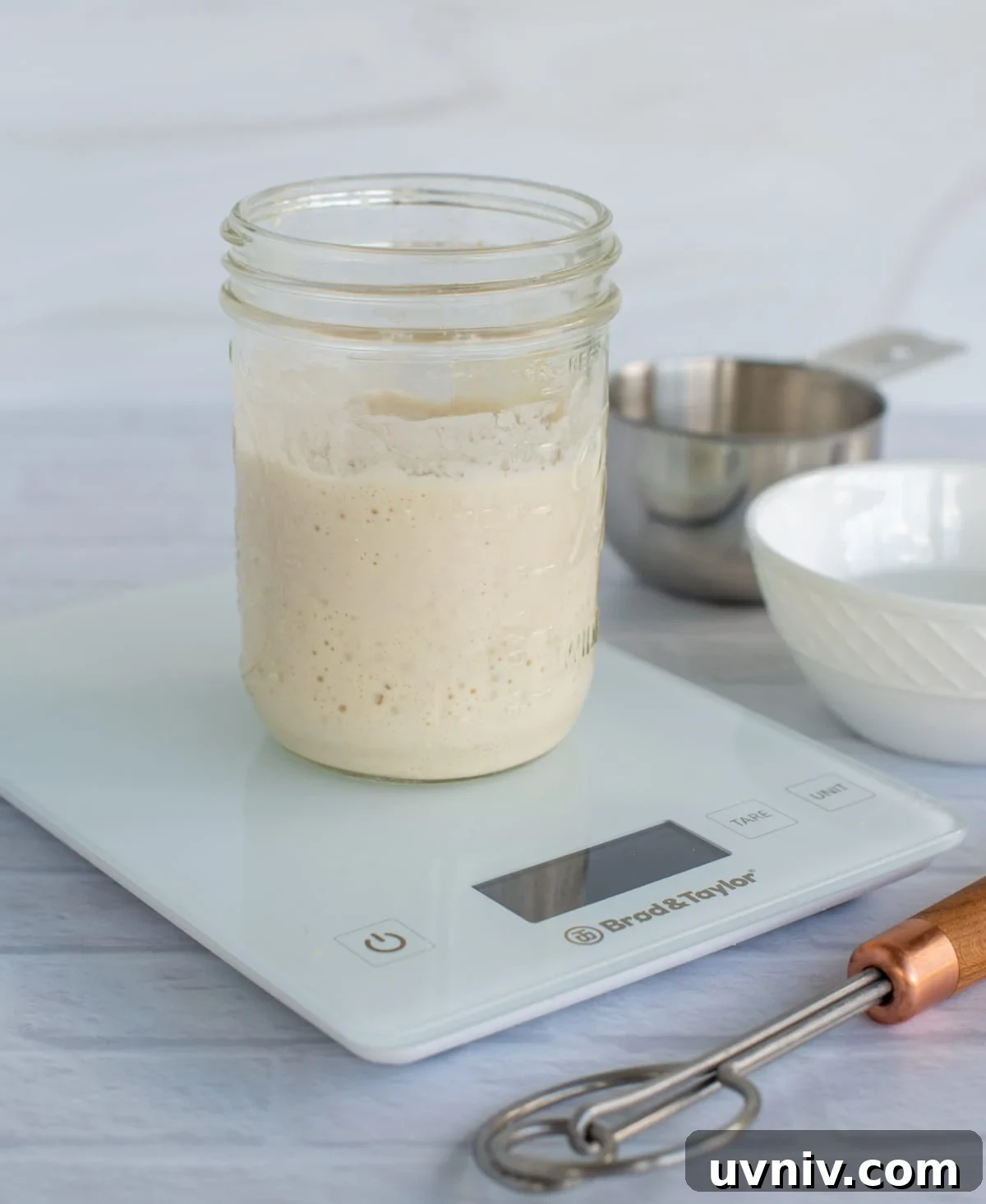
How to Choose the Right Ratio
Adjust the ratio to control timing:
- more starter → faster rise
- less starter → slower rise
- more flour and water → longer fermentation window
Approximate timings at about 78ºF with a healthy starter:
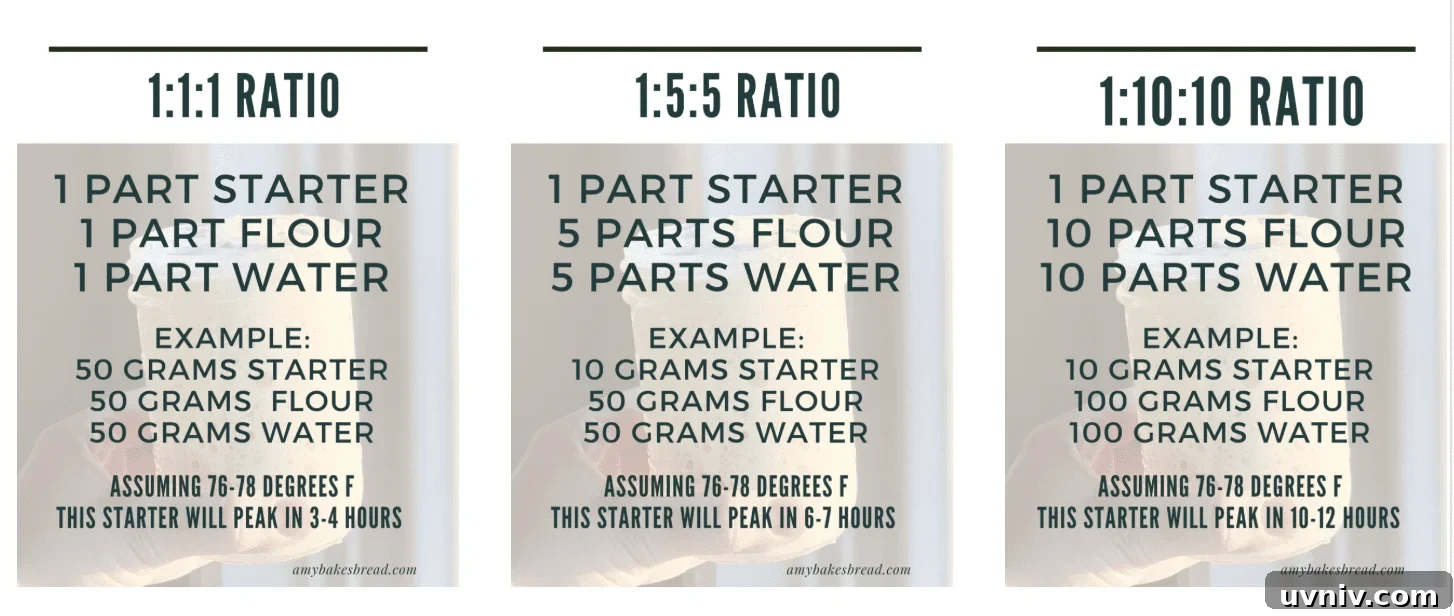
- 1:1:1 — ready in ~3–4 hours (same-day baking)
- 1:2:2 or 1:5:5 — ready in ~5–8 hours
- 1:10:10 — ready in ~10–12+ hours (overnight)
These are estimates and assume a warm environment and an active starter.
What About a Stiff Starter?
Hydration matters: a stiffer starter (less water) ferments more slowly, while a looser, liquid starter ferments faster. A stiffer starter can extend the fermentation window, which is useful when you want more time before the starter peaks. Many recipes use 100% hydration (equal weights of flour and water), but slightly stiffer starters can be helpful for enriched doughs like brioche and cinnamon rolls.
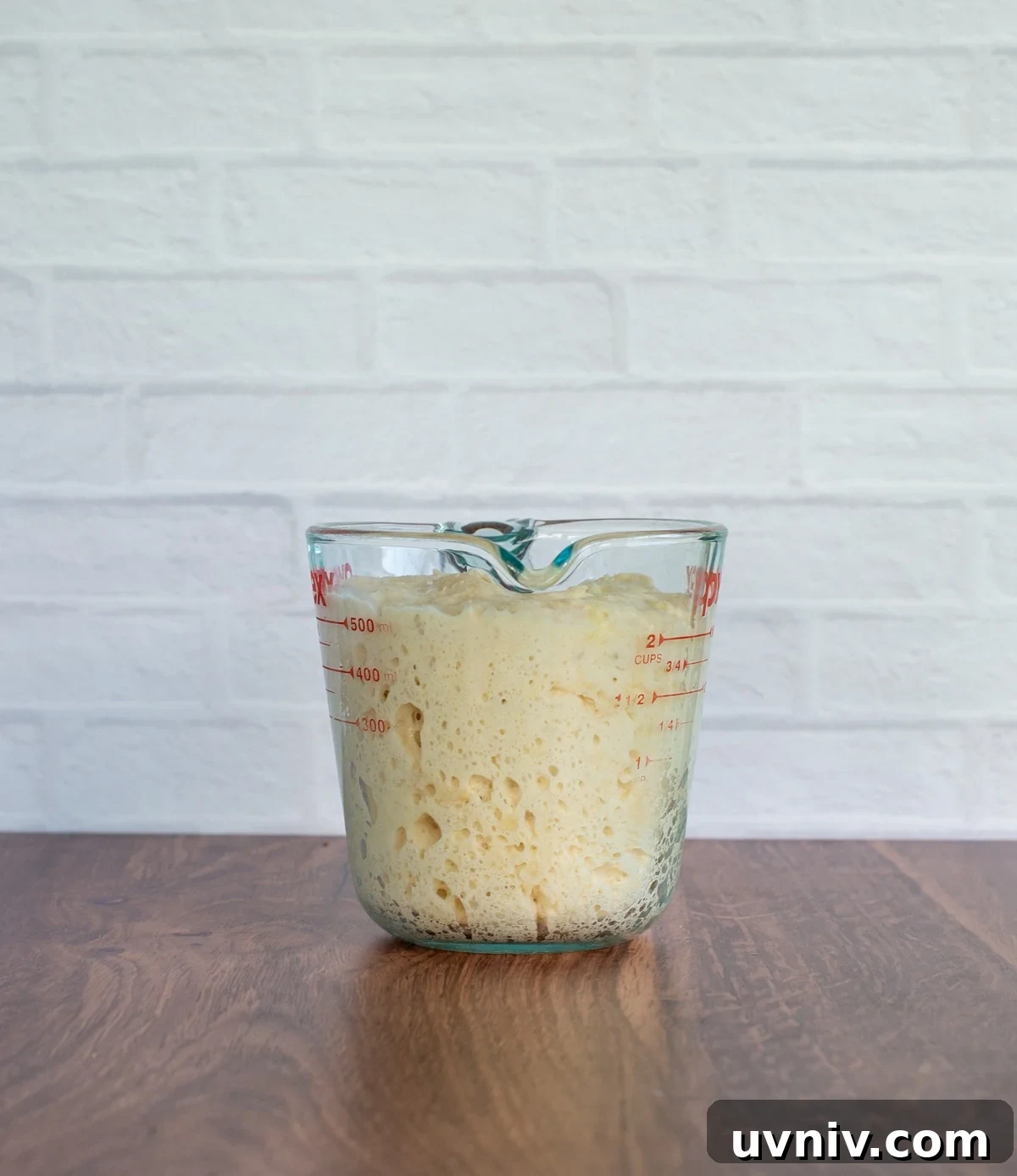
Sourdough Starter Ratio Chart
The following table summarizes common feeding ratios and their typical timing. These examples assume about 78ºF and a healthy starter fed with bread or all-purpose flour.
Use this as a general planning guide; actual times will vary with temperature, flour, and starter vigor.
| Ratio | Example (grams) assuming 78ºF |
Ready to Use | Over-ripe (needs feeding) |
| 1:1:1 | 10 g starter + 10 g flour + 10 g water |
3–4 hours | 7–8 hours |
| 1:2:2 | 10 g starter + 20 g flour + 20 g water |
~5 hours | ~10 hours |
| 1:5:5 | 10 g starter + 50 g flour + 50 g water |
6–7 hours | 12–14 hours |
| 1:10:10 | 10 g starter + 100 g flour + 100 g water |
10–12 hours | ~24 hours |
Timing varies with conditions; using a kitchen scale provides the most consistent results.
Maintaining a Healthy Sourdough Starter Using Ratios
Regular, consistent feeding makes a starter more reliable. Changing feeding ratios occasionally can strengthen the culture and give you better control over timing.
Understanding ratios helps you plan your bakes instead of guessing when the starter will be ready. With experience you’ll predict peaks and plan feeds so your starter is ready exactly when you need it.
Ratios in Your Dough
The same ratio principles apply to dough. The amount of starter you add influences dough fermentation speed and how long it takes to rise.
That’s why different recipes call for different starter amounts: it affects whether a dough can be baked the same day or needs an overnight rest.
- more starter → faster fermentation
- less starter → slower fermentation
If you plan an overnight rise, use less starter and keep the dough cool to avoid over-proofing. Adjust starter quantity to match your timing and temperature.
Amy’s Real Life Ratio Tip
You don’t have to be perfect every time. Aim to feed more flour and water than starter. That simple habit keeps the starter healthy and predictable without overthinking measurements.
Frequently Asked Ratio Questions
Yes. Varying ratios can strengthen the starter and give you flexibility. Many bakers change ratios according to their schedule.
1:1:1 is an excellent starting point — simple, predictable, and suitable for same-day baking. Once comfortable, adjust ratios to fit your timing.
No. Ratios are guides. Small variations won’t ruin a starter. Learn how ratios affect timing and adapt as needed.
Yes. The same ratios work to build a levain. Different ratios will reach peak at different times, so choose based on when you need it.
A small weight loss is normal due to moisture evaporation and gas release during fermentation. Mixing a little extra levain can account for losses if needed.
What to Do Next
Now that you understand feeding ratios, use them to plan your baking instead of guessing when your starter will be ready.
If you’re new to sourdough, start with a step-by-step beginner guide and practice feeding at 1:1:1 until you’re comfortable. As you gain experience, vary ratios, temperature, and flour to suit your routine and recipes.
Popular Sourdough Recipes

Sourdough Croissant Bread
Soft Sourdough Sandwich Bread

One Hour Sourdough Discard Rolls