
Learn how to store fresh herbs properly to keep them flavorful and usable for longer. If you’re tired of buying or growing herbs only to watch them spoil, this guide explains practical methods for storing herbs in the fridge, freezer, or by drying them so you waste less and enjoy more.
The Best Way To Store Herbs
Herbs add bright flavor to meals but often deteriorate quickly if stored incorrectly. After learning the hard way that tossing wilted herbs into the trash is wasteful, I researched and tested the best storage methods. The main takeaway: tender, delicate herbs and woody, hardy herbs need different handling to retain flavor, aroma, and texture. Proper storage preserves nutrients and extends shelf life so you get the most from each bunch.
Treating herbs according to their type will keep them fresher longer and reduce food waste. Below are simple, actionable methods based on whether an herb is tender or hardy, plus tips for freezing and drying to preserve herbs for months.
How to Store Tender Herbs
Examples of tender herbs (delicate leaves and soft stems) that do well with the bouquet method:
- Cilantro
- Parsley
- Mint
- Dill
- Chives
- Tarragon
- Basil (see special note below)
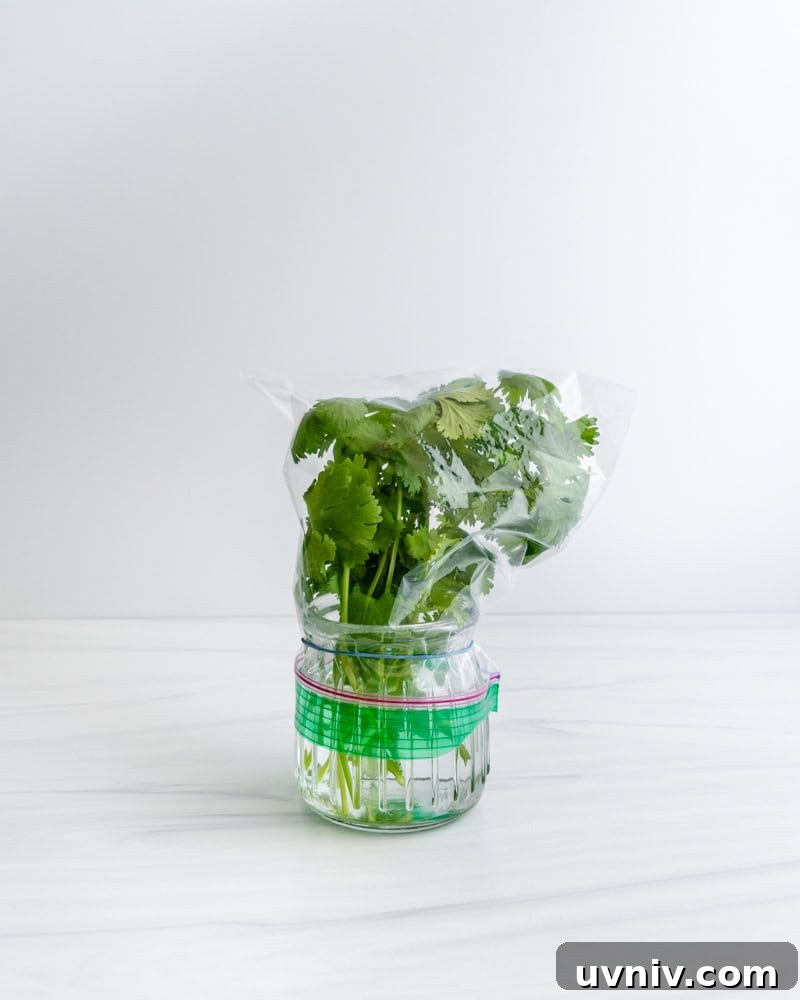
Storing tender herbs in the fridge works best when you treat them like a fresh flower bunch:
- Clean the herbs: Remove rubber bands or ties, gently swish herbs in a bowl of cold water to remove dirt, then dry thoroughly using a salad spinner or clean kitchen towel. Excess moisture accelerates spoilage, so remove as much water as possible.
- Trim the stems: Cut about ½ inch off the bottom of the stems to refresh them for water uptake.
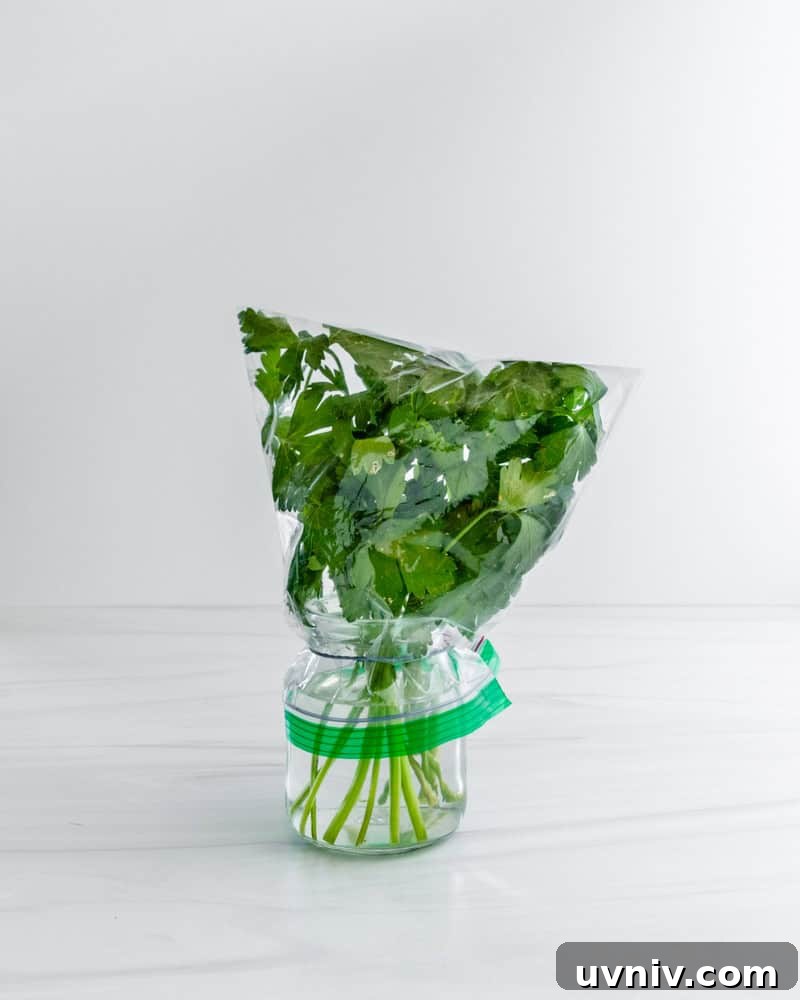
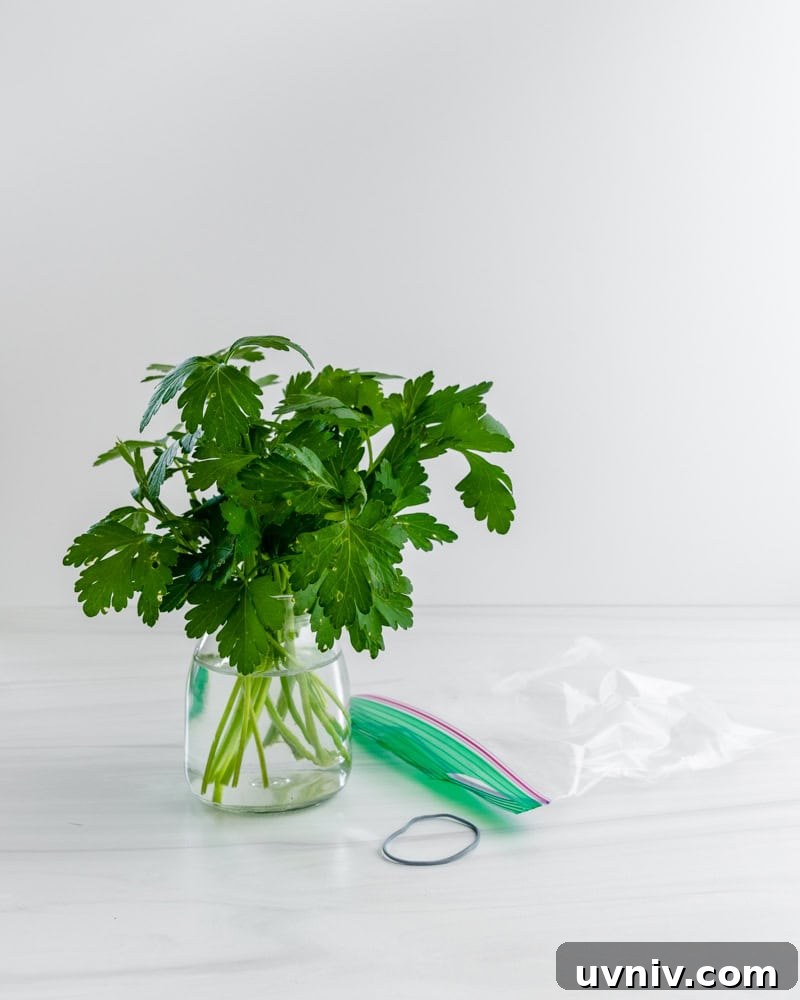
- Place in a jar with water: Add 1 to 2 inches of clean water to a jar so only the stems sit in water, not the leaves.
- Cover the bunch: If the jar is tall, lightly cap it without crushing the herbs. Otherwise, place a clear plastic bag over the top and secure it with a rubber band to limit airflow and slow drying.
Tip: Change the water every 2–3 days and re-trim stems if needed. This method can extend the life of tender herbs from a few days to several weeks in many cases.
How To Store Fresh Basil?
Basil is tender but sensitive to cold and may bruise or blacken if refrigerated. For best results, assemble the basil bouquet as above but keep it on the countertop away from direct sunlight. Do not wash before storing if it will remain at room temperature, as excess moisture can promote spoilage.
How to Store Hardy Herbs
Hardy or woody herbs have tougher stems and hold up to a different approach. Examples include:
- Rosemary
- Thyme
- Sage
- Oregano
- Marjoram
- Chives (works with either method)
The damp paper towel method is generally best for these herbs:
- Wash and dry: Gently swish herbs in water, then dry thoroughly with a salad spinner or clean towel.
- Trim stems: Cut about an inch off the stems.
- Dampen paper towels: Make them lightly damp, not dripping. Use a spray bottle or wet a towel and squeeze out excess water. Use a couple of layers for each bundle.
- Wrap the herbs: Lay herbs in a single layer on the damp towel and roll or fold to wrap them.
- Store airtight: Place wrapped bundles into a zip-top bag or airtight container to limit oxygen exposure, which speeds wilting.
- Keep refrigerated: Store in the crisper drawer for the most consistent temperature and humidity.
Tip: Re-dampen or replace the paper towels every 2–3 days if they dry out. Properly stored, hardy herbs often last several weeks.
How Long Will Herbs Last?
Shelf life depends on initial freshness and storage conditions. With proper care, most tender and hardy herbs will last 2–3 weeks. Some differences to expect: chives often last 7–10 days, mint and basil roughly 2 weeks, and many woody herbs 2–3 weeks or more.
How Do I Know if Herbs Have Gone Bad?
Signs of spoilage include darkened or slimy leaves, wilted or limp stems, visible mold on stems, and a loss of the fresh herbal aroma. If herbs show these signs, discard them.
FAQs
Herbs spoil quickly when exposed to too much oxygen, light, incorrect moisture levels, or temperature extremes. Some herbs, like basil and mint, darken when chilled, while others yellow or dry out under light. Proper storage balances moisture and airflow and keeps herbs at the right temperature.
Washing removes dirt and microbes that could accelerate decay, but herbs must be dried thoroughly afterward. For basil kept at room temperature, skip washing until just before use to avoid excess moisture.
Yes, you can store compatible herbs together if they have room and aren’t overcrowded. Avoid mixing herbs with very different storage needs.
An ice bath (shocking stems and leaves in ice water for 15–60 minutes) can revive limp herbs. Afterward, drain and dry them thoroughly before using or storing.
Yes, if herbs aren’t slimy, brown, or moldy you can still use them in cooked dishes like soups, stews, sauces, or blended into pesto and herb butters.
How To Freeze Fresh Herbs
Freezing is an excellent way to preserve herbs for months.
Hardy herbs: Wrap damp bundles in plastic or prepare paper-towel-wrapped bundles and freeze them in a zip-top bag. You can also portion sprigs in plastic wrap and store in a freezer bag with air removed.
Tender herbs: Chop or pulse herbs and spoon them into an ice cube tray. Fill the wells with water or oil and freeze. Once solid, transfer cubes to a freezer bag—drop them directly into soups, sauces, or sautés from frozen.
Basil: Blanch basil briefly, pat dry, freeze in a single layer on a tray, then transfer frozen leaves to a freezer-safe bag for best color and flavor retention.
Frozen herbs keep well for about 3–6 months; herbs preserved in oil often retain quality longer.
Drying Fresh Herbs for Long-Term Storage
Drying herbs is a reliable way to store them for many months. Two common methods are air-drying and using a dehydrator or oven.
Air-Drying Herbs:
Bundle small bunches (3–5 stems) with kitchen twine and hang them upside down in a warm, dry, well-ventilated spot out of direct sunlight. Depending on the herb and humidity, drying can take several days to two weeks.
Dehydrator or Oven Dry:
Spread herbs in a single layer on a dehydrator tray or parchment-lined baking sheet. Dry at low heat—about 95–115°F (35–46°C)—for 2–5 hours, checking periodically until leaves are brittle. If your oven’s lowest temperature is higher, use the lowest setting and prop the door open slightly to reduce heat.
You can also dry small amounts in a microwave between paper towels using short bursts (30 seconds) until brittle, but watch carefully to avoid burning.
How To Store Dried Herbs?
Store fully dried herbs in airtight jars, such as mason jars, away from direct sunlight. Properly dried and stored herbs maintain flavor for up to a year.