Before anything else — CLICK HERE to download my FREE guide for picky eaters, which includes a daily schedule and the simple chart I recommend ALL parents of picky eaters fill out to get your little one on the right track.
If your child refuses new foods, drops foods they used to eat, or is becoming increasingly difficult to feed, you’re in the right place. Today I’ll outline where to begin when dealing with a picky eater. It can feel overwhelming and confusing, but small consistent steps make a big difference.
Speaking from experience as both a parent of a picky eater and a registered dietitian who works with picky children, I’ll guide you toward practical, evidence-informed strategies that are simple to implement at home.

Step 1: Rule out medical causes
If you have ongoing concerns about your child’s eating, schedule a visit with your pediatrician. It’s important to confirm that picky eating isn’t due to an underlying medical issue and to review growth measurements—weight and height—so you know your child is on a healthy trajectory.
Many parents feel their child “hardly eats,” yet the child’s growth chart falls within an appropriate range. It’s normal for children, especially between ages 2 and 5, to have smaller appetites than they did as infants. Still, a pediatrician can help ensure there are no medical reasons for the change in intake and reassure you about your child’s growth.
Step 2: Establish a meal and snack routine
Frequent grazing can reduce a child’s appetite for meals; conversely, some kids learn to skip meals because they expect a “better” snack later. Setting a predictable routine for meals and snacks helps reset hunger cues and gives meals a clear purpose.
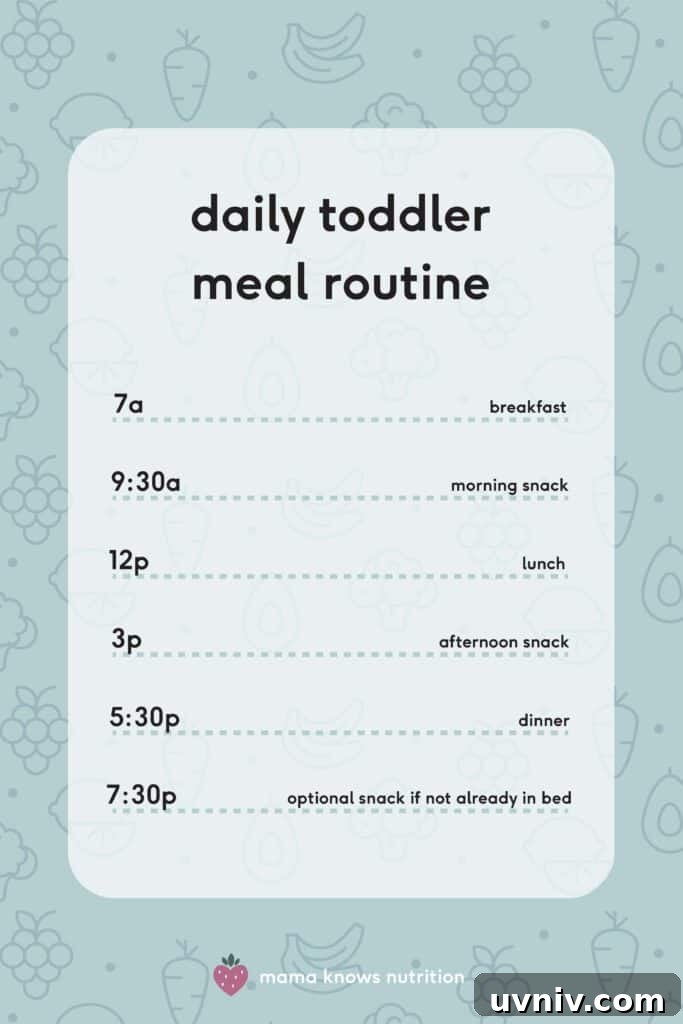
I prefer the term “routine” over “schedule” because timings will vary day to day—consistency matters more than exact minutes. Most children ages 1–5 do well with three meals and two snacks. If dinner is more than two hours before bedtime, a third snack after dinner can be included.
Below is an example of a typical day to use as a guide. Adjust times to fit your family’s rhythm and activities.
Step 3: Adopt a policy of variety — don’t repeat the same foods two days in a row
Picky eaters often narrow their diet to a few familiar items. One effective approach is a household rule: don’t serve the exact same foods two days in a row (milk is an exception). Even young children can understand a simple family rule about variety.
This rule encourages you to keep offering different foods and helps prevent the diet from shrinking too much. Consistently introducing new items—even if your child only tastes them—supports acceptance over time.
Use a simple chart to track foods across meals and ensure at least one item from each food group is offered regularly. If a food group is consistently missing from your child’s intake, talk with your pediatrician or a dietitian about how to address potential nutrient gaps.
Step 4: Remember that it’s not your fault
Parents often feel guilty when a child refuses food, but feeding young children is challenging and sometimes unpredictable. Picky eating is common and rarely the result of anything a parent has done wrong. Be kind to yourself: you are doing your best, and a child’s refusal to eat is not a reflection of your abilities as a caregiver.