I was meant to post this a month ago for the Baking Eggless group challenge, but my brother’s wedding and a busy blogging marathon delayed me. If you follow my blog you might know about the Baking Eggless group: a bunch of bloggers convert an egg-based recipe into an eggless version, one dish each month. The August challenge was Danish pastry.
Danish pastry is similar to croissant dough — a yeasted dough laminated with butter to produce crisp, flaky layers with a soft interior. It usually includes a filling, and many variations exist. Although its origins trace back to Denmark, it’s now enjoyed worldwide. I once bought a Danish at a cinema, but it wasn’t anything like the pastry I made at home; the layers were missing and the texture was off. One advantage of food blogging is learning about authentic techniques and how store-bought items often differ from the real thing.
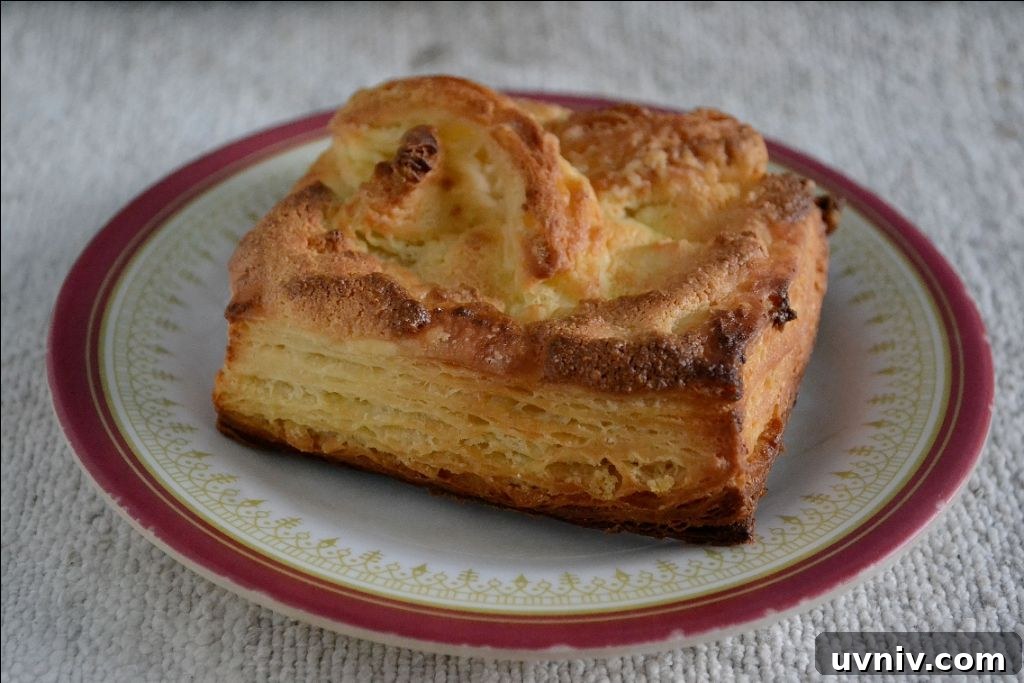
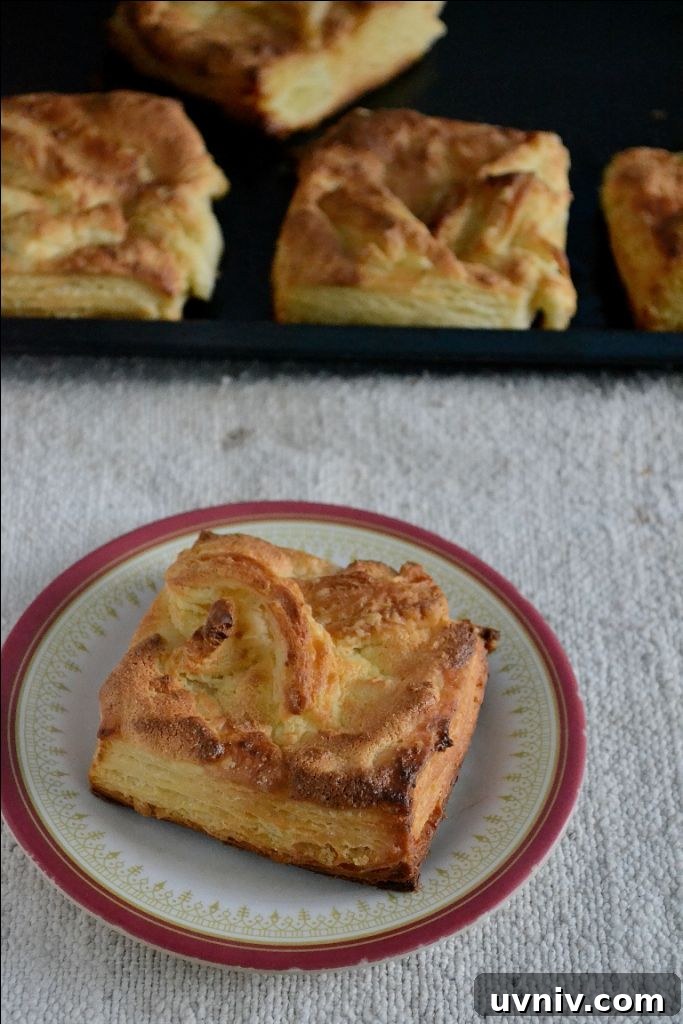
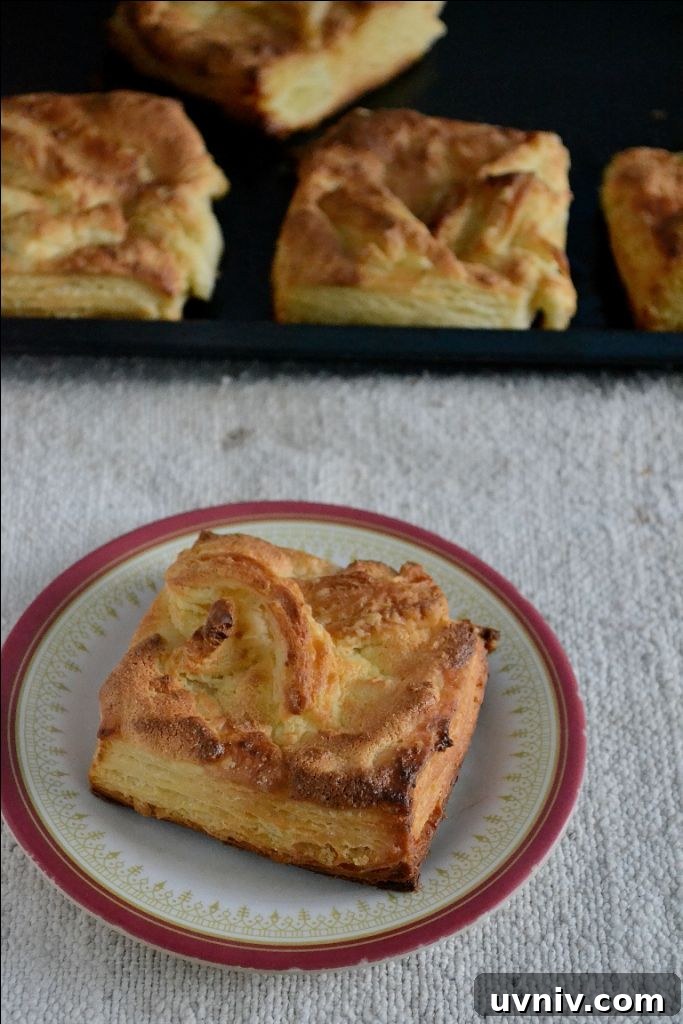
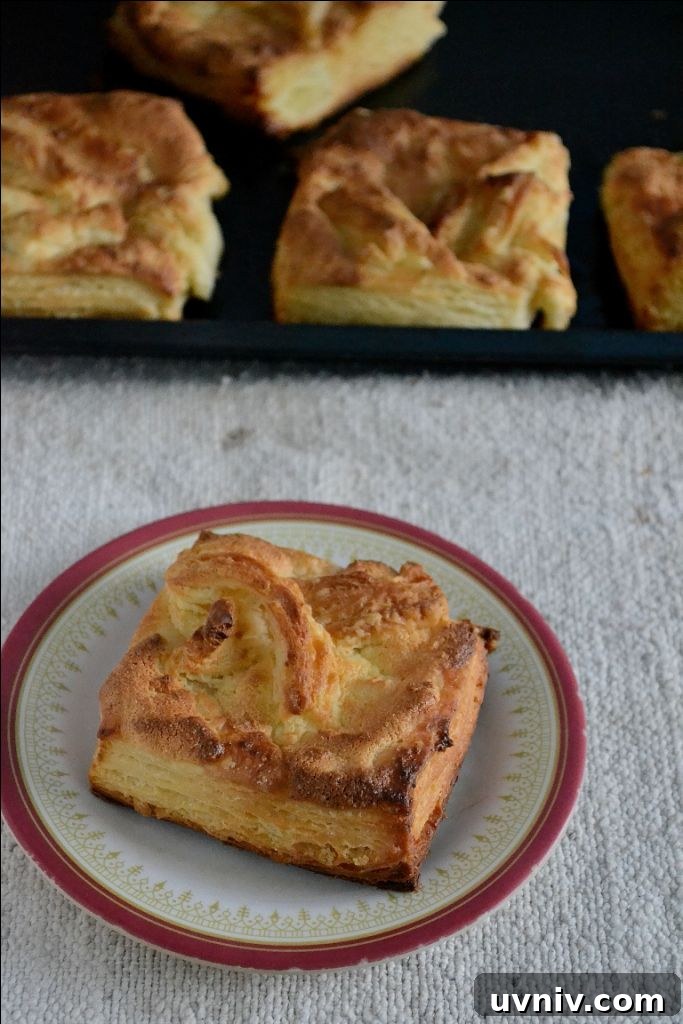
When I shaped my danishes I tried to make a decorative form, but because this is a yeasted dough it rose quickly and lost some of the delicate shaping, flattening out into squares. Regardless of shape, the taste was excellent: buttery, flaky, and soft inside. I especially liked the paneer filling. This was my fourth time working with laminated dough. The first attempt (puff pastry) had problems — butter leaked — but I managed to salvage it and was proud of the result. The second and third times I made croissants and improved each time; by the third batch I felt more confident handling laminated dough. By the time I made the Danish, the process felt much easier and I didn’t have issues with butter oozing out. If your first attempts don’t turn out perfect, don’t be discouraged: laminated dough takes practice.
Recipe source: Joe Pastry (adapted)
Makes: 8 squares
Ingredients
- Milk – 2/3 cup
- Sugar – 2 tbsp
- Instant yeast – 1 1/2 tsp
- All-purpose flour (maida) – 2 cups
- Salt – 1/2 tsp
- Curd (yogurt) – 1/4 cup
For the butter layer
- Butter – 1 cup
- Flour – 2 tbsp
For the paneer filling
- Crumbled paneer (cottage cheese) – 1 cup
- Sugar – 6 tbsp
- Butter – 3 tbsp
- Milk – 1/4 cup
- Pinch of salt
- Orange zest – 1 tsp
Procedure
- Cream together the butter and flour until smooth. Shape the mixture into a rectangle on baking paper, cover, and refrigerate until firm.
- To make the dough: in a large bowl combine flour, sugar, yeast, salt, and curd. Add milk and form a soft dough.
- Knead for about 5 minutes, then cover and let rest for 30 minutes.
- Punch the dough down and roll it into a rectangle roughly twice the size of the butter rectangle.
- Place the chilled butter rectangle on one half of the dough, fold the dough over, and seal the edges.
- Using a rolling pin, press the dough thoroughly so no air pockets remain between the butter and dough. Trapped air can cause the butter to escape during rolling.
- Roll the dough into a long rectangle, then fold it like an envelope. With the overlapped edges facing you, roll again into a rectangle and fold into thirds. Place on lightly floured baking paper, close, and refrigerate until firm.
- Repeat the rolling and folding process two more times, refrigerating between sets of folds. Cooling between turns helps the butter and dough remain similar in consistency.
- Prepare the filling: blend the paneer, sugar, butter, milk, salt, and orange zest into a thick paste.
- Roll the laminated dough into a thin rectangle and cut into eight equal squares. Place a portion of filling in the center of each square, fold the corners toward the center, and use the leftover dough strips to make a decorative criss-cross along the sides.
- Cover and let the shaped pastries rest for about 15 minutes. Preheat the oven to 175°C.
- Bake the pastries until golden brown. Remove from the oven and serve warm or hot.
Tips
The key to successful laminated dough is keeping the dough and butter at the same consistency. Refrigerate between rolling and folding — I chill after every fold because my kitchen is warm. If the butter is harder than the dough, let it warm slightly on the counter before rolling so it won’t cut through the dough. If the butter is too soft, it may ooze through gaps and make the dough messy.