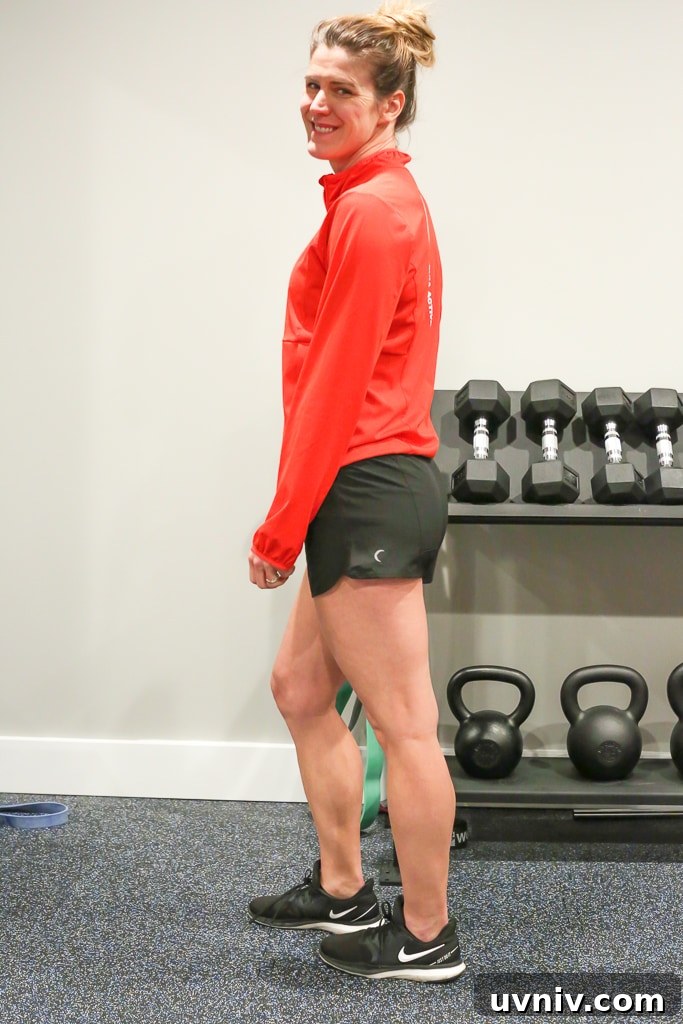
This leg workout you can do at home targets all major muscles in the legs and glutes without any special equipment. Like the At-Home Circuit Workout, it’ll leave you feeling that satisfying, productive soreness.
 Activewear shown. Use weights or resistance bands to increase difficulty if desired.
 Activewear shown. Use weights or resistance bands to increase difficulty if desired.
Hey, hey — it’s leg day! Strength training your legs makes them stronger and more resilient.
Why build stronger legs? Strong legs improve athletic performance in many activities like running, support better balance and mobility, and can help reduce back discomfort. Toned legs are a nice bonus, but strength brings real functional benefits.
This full leg routine can be done at home. No special equipment required, though dumbbells or resistance bands are easy ways to progress the moves. Photos show the basic versions suitable for beginners; optional intensity notes are included where helpful.
Leg Workout at Home
Workout designed by trainer Anthony Dodds.
Round 1
Round 1 alternates wall sits and reverse lunges. Wall sits are an isometric hold that challenges quads, hamstrings, glutes, calves, and inner thigh muscles. Reverse lunges target quads, hamstrings, and glutes while promoting balance.
1. Wall Sit
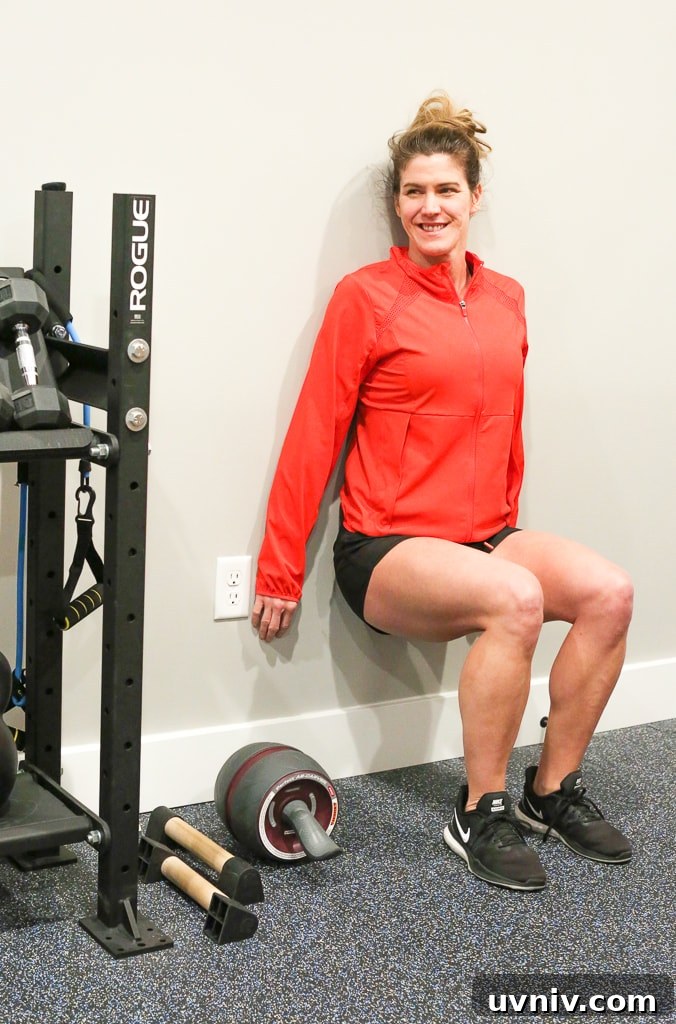
Hold for 30 seconds
Back flat against the wall, feet about shoulder-width and roughly two feet from the wall. Bend knees until you reach a comfortable 90-degree angle or close to it. Keep weight in your heels and breathe steadily.
2. Reverse Lunge
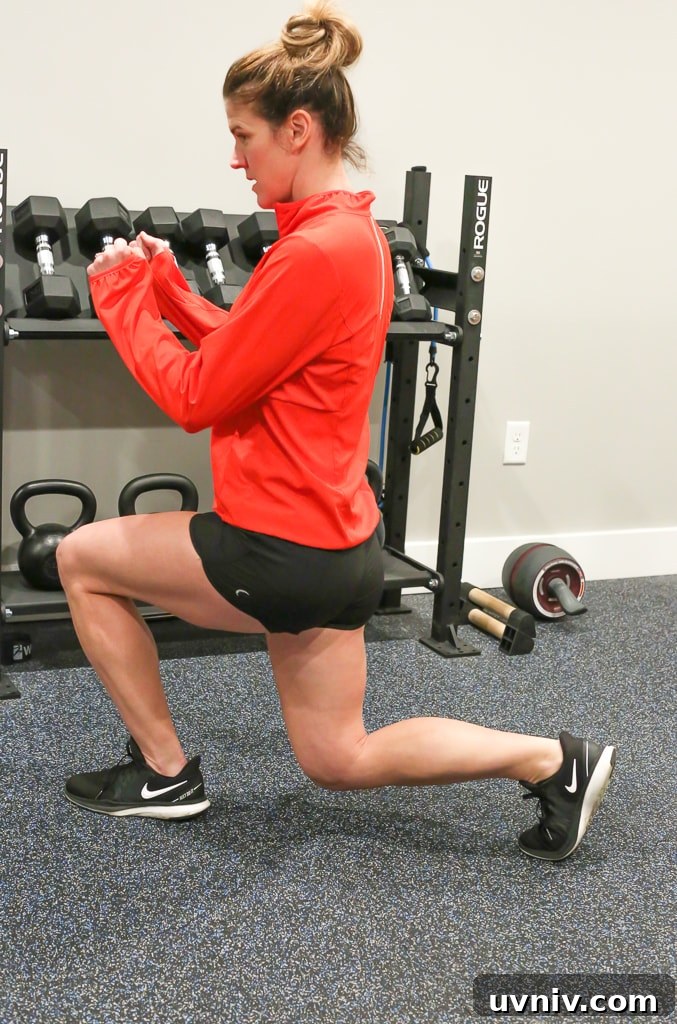
x 20 total (10 each leg)
Stand tall with hands on hips. Step one foot back and lower hips until front thigh is parallel to the floor and the front knee stays above the ankle. For more challenge, hold dumbbells.
3. Wall Sit
Hold for 25 seconds
Same form as before: back against the wall, feet shoulder-width, knees bent near 90 degrees. Focus on steady breathing and posture.
4. Reverse Lunge
x 20 total (10 each leg)
Repeat the reverse lunge set. Maintain control as you step back and return to standing.
5. Wall Sit
Hold for 20 seconds
Keep your back flat against the wall and hold the position, keeping tension in the legs and glutes.
6. Reverse Lunge
x 20 total (10 each leg)
Finish Round 1 with a final set of reverse lunges. Focus on form rather than speed.
Round 2
Round 2 alternates elevated single-leg lunges and squats. Elevated lunges increase range of motion and target quads, hamstrings, and glutes. Squats engage quads, glutes, hamstrings, and calves while also recruiting the core.
1. Feet Elevated Single-Leg Lunge
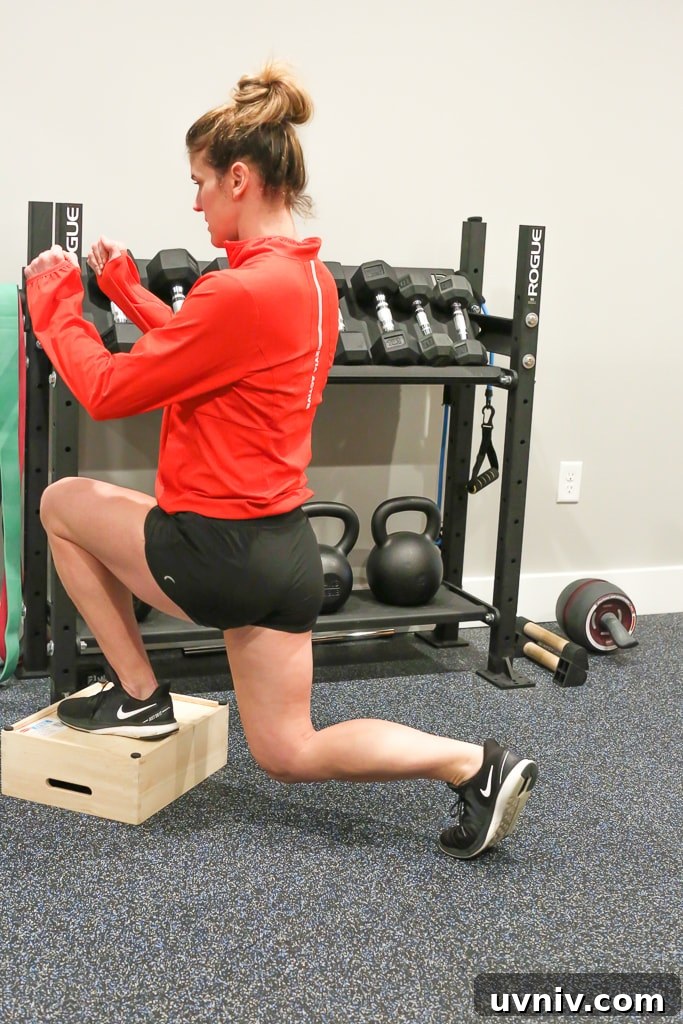
x 20 total (10 each leg)
Use a low step, bench, or sturdy box. Stand a few feet behind it and place one foot on the elevated surface. Bend the supporting leg to complete 10 controlled lunges, then switch sides. Keep knees aligned over ankles; if knees drift past toes, step your foot further forward.
2. Squat
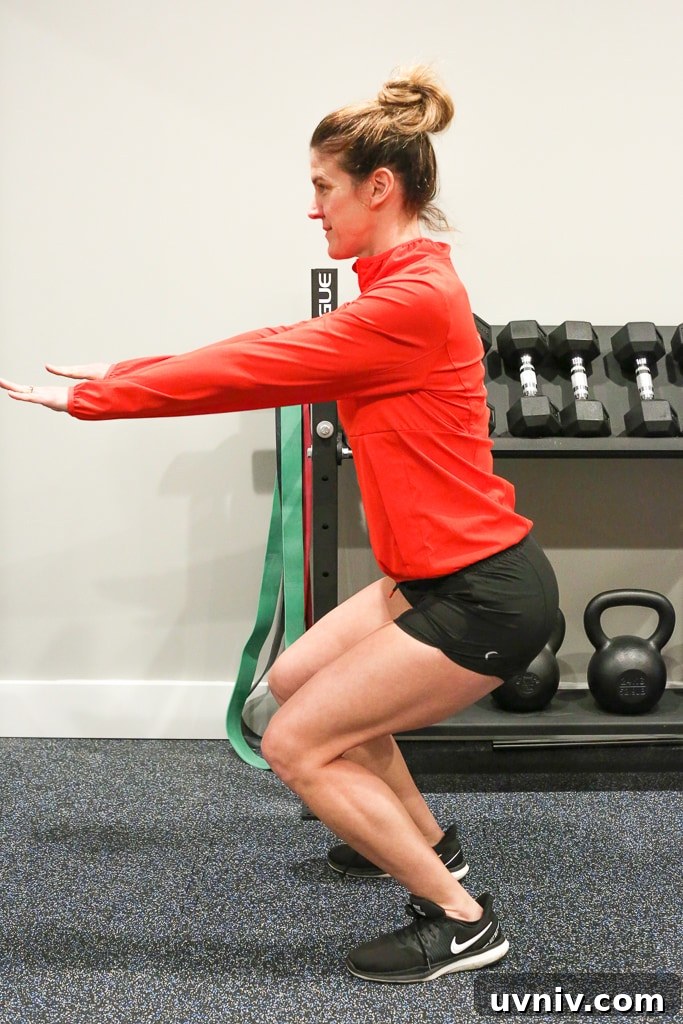
x 20
Feet shoulder-width apart, sit back into an imaginary chair while keeping your chest lifted and gaze forward. Lower until thighs are as parallel to the floor as comfortable, knees tracking over ankles, then press through the heels to return. Add dumbbells to increase intensity.
3. Feet Elevated Single-Leg Lunge
x 20 total (10 each leg)
Repeat the elevated lunges, focusing on stability and a full range of motion on each rep.
4. Squat
x 20
Repeat the squats. Maintain controlled tempo and full depth while protecting the knees by keeping weight in the heels.
5. Feet Elevated Single-Leg Lunge
x 20 total (10 each leg)
Complete a final set of elevated lunges to further challenge single-leg strength and balance.
6. Squat
x 20
Finish Round 2 with a final squat set. Pause briefly at the bottom of the last rep to maximize muscle engagement.
Round 3
Round 3 focuses on leg lifts and donkey kicks. Leg lifts improve hip mobility, stability, and lateral strength. Donkey kicks activate and sculpt the glutes while improving core stability.
1. Side Single Leg Lift
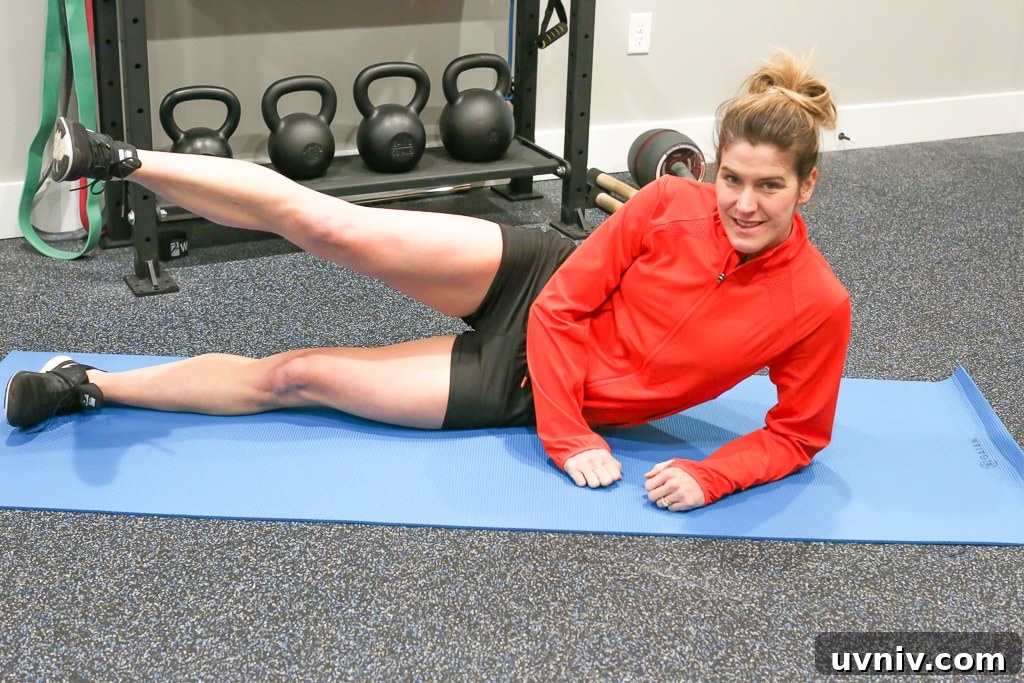
x 10 each side
Lie on your side with toes pointed forward. Lift your top leg with control and lower slowly. For added resistance, place a band around the ankles.
2. Double Leg Lift
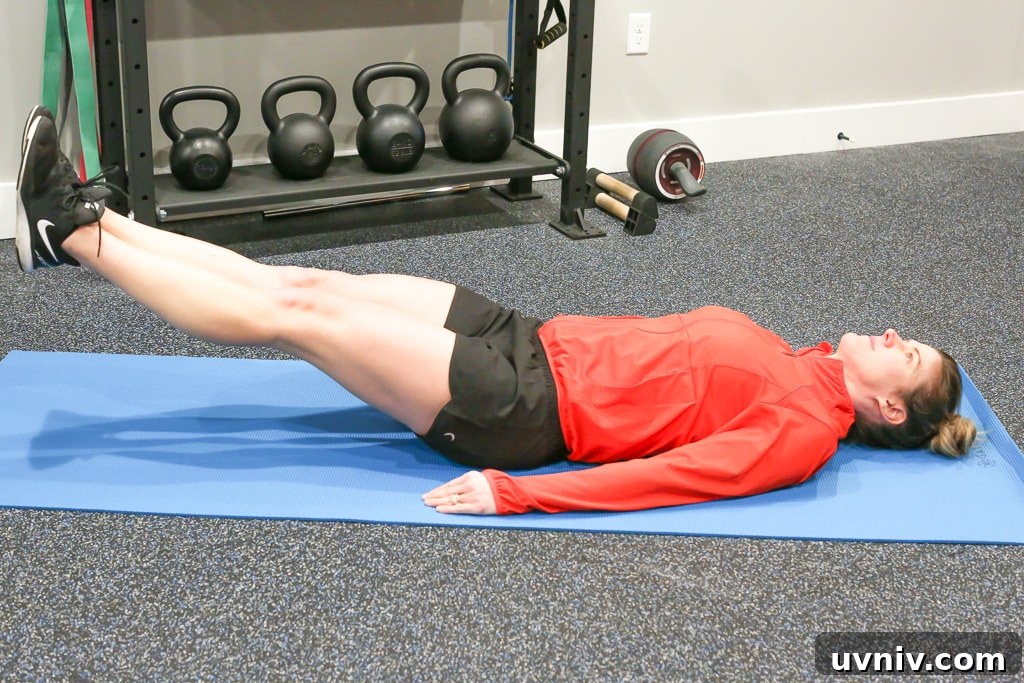
x 10
Lie on your back and lift both legs straight up toward the ceiling. Lower slowly with control. To make it harder, stop short of touching the floor on the descent or add a resistance band around the ankles for continuous tension.
3. Side Single Leg Lift
x 10 each side
Switch sides and repeat the side leg lifts, focusing on steady movement and hip stability.
4. Double Leg Lift
x 10
Repeat the double leg lifts, keeping your core engaged to protect the lower back.
5. Side Single Leg Lift
x 10 each side
Complete a final set of side lifts to fatigue the outer hips and glutes.
6. Double Leg Lift
x 10
Finish the leg lift sequence with one more double-leg set, maintaining controlled tempo.
7. Donkey Kicks
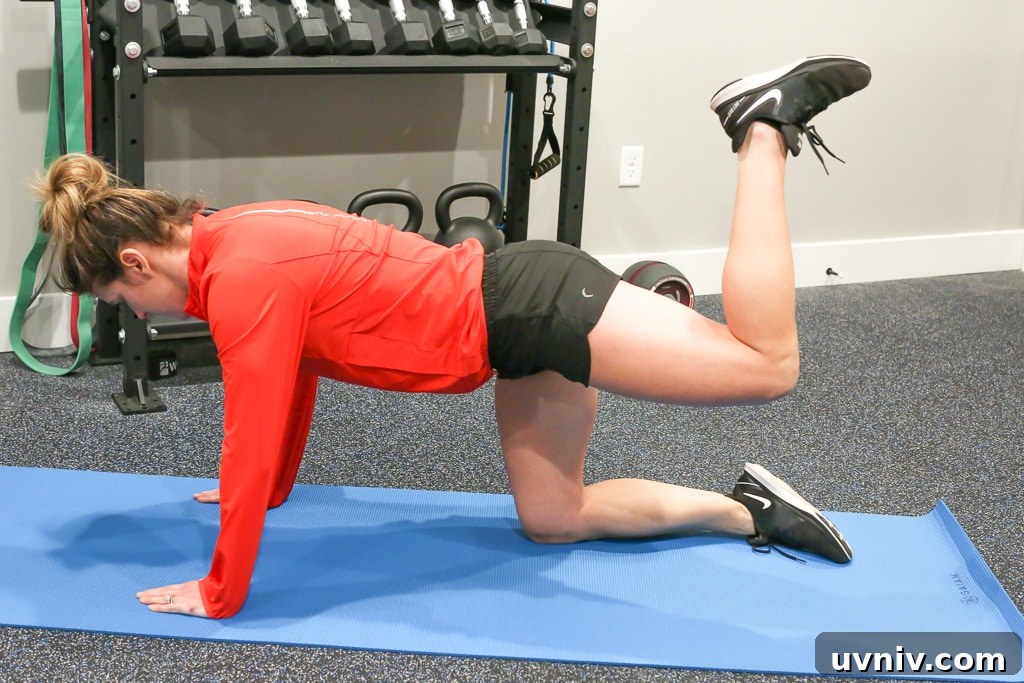
x 20 total (10 each leg)
Start on hands and knees. Kick one heel toward the ceiling, squeezing the glute at the top for a two-second contraction, then return with control. Alternate legs.
8. Donkey Straight Leg Kicks
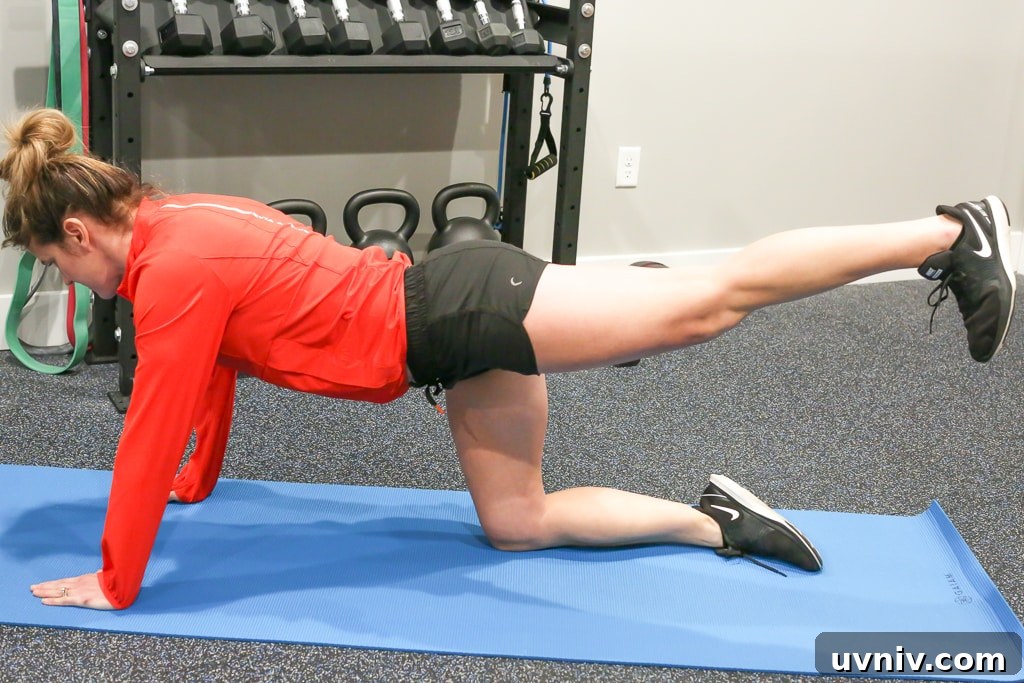
x 20 total (10 each leg)
From a hands-and-knees position, extend one leg straight and lift as high as comfortable, controlling the descent. This variation emphasizes the entire posterior chain and core stability.
9. Donkey Kicks
x 10 total (5 each leg)
Perform a shorter set of standard donkey kicks, maintaining a strong squeeze at the top of each rep.
10. Donkey Straight Leg Kicks
x 10 total (5 each leg)
Finish with straight-leg kicks, focusing on smooth control and a full range of motion.
Well done — you completed the workout! If you enjoyed this routine, consider repeating the circuit or adding light weights to increase intensity. Adjust repetitions and holds based on your fitness level, and always prioritize proper form.
Explore more workout options for variety: upper-body strength routines, targeted glute sessions, and quick core workouts are great complements to leg days. Keep moving and listen to your body as you progress.