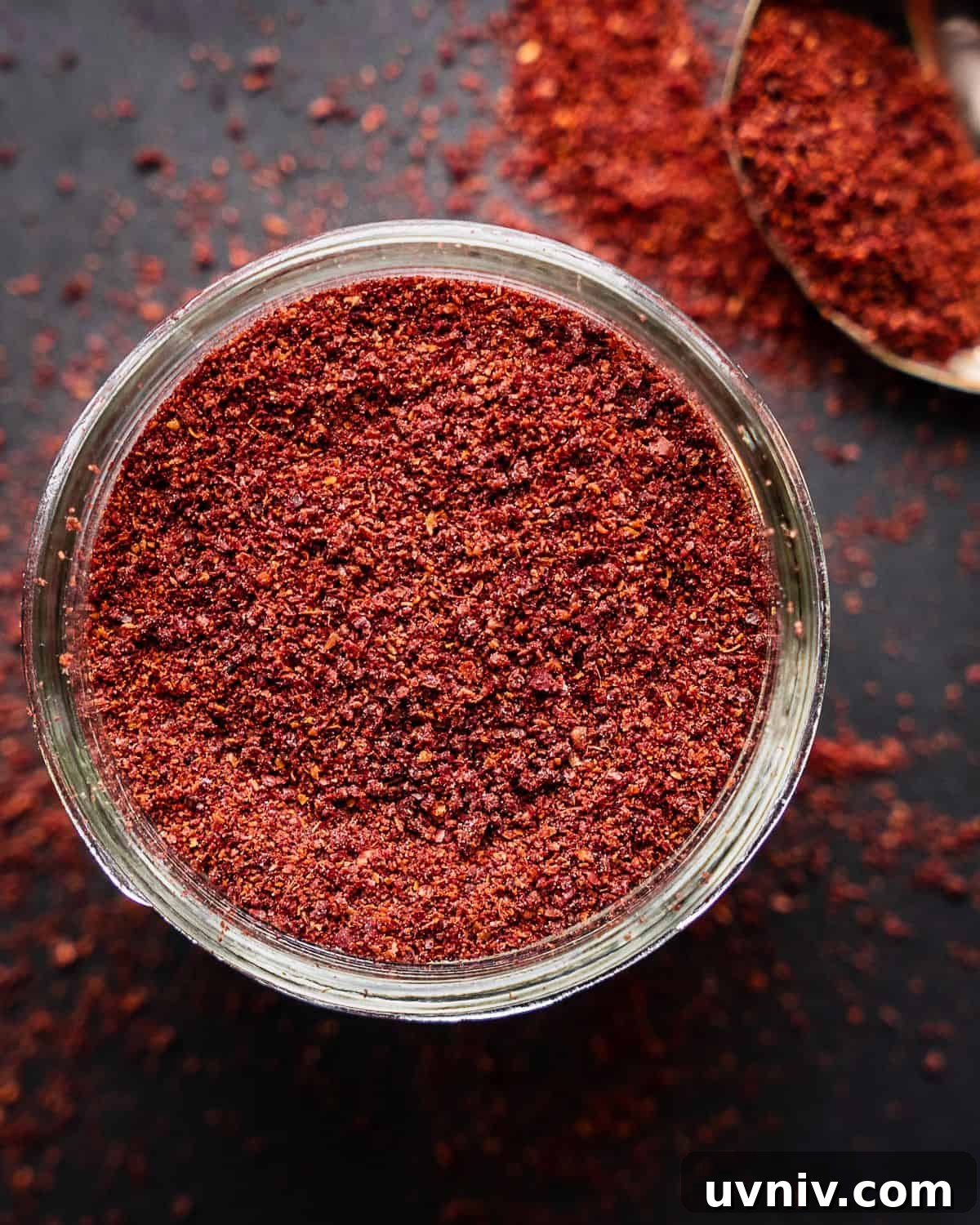
Sumac is a fragrant, tangy spice long used across the Middle East. Valued for its bright, lemony acidity and deep red color, sumac is a staple in regional kitchens and a key component of za’atar blends. Though once little known outside its native area, sumac is increasingly appreciated worldwide for its versatility.
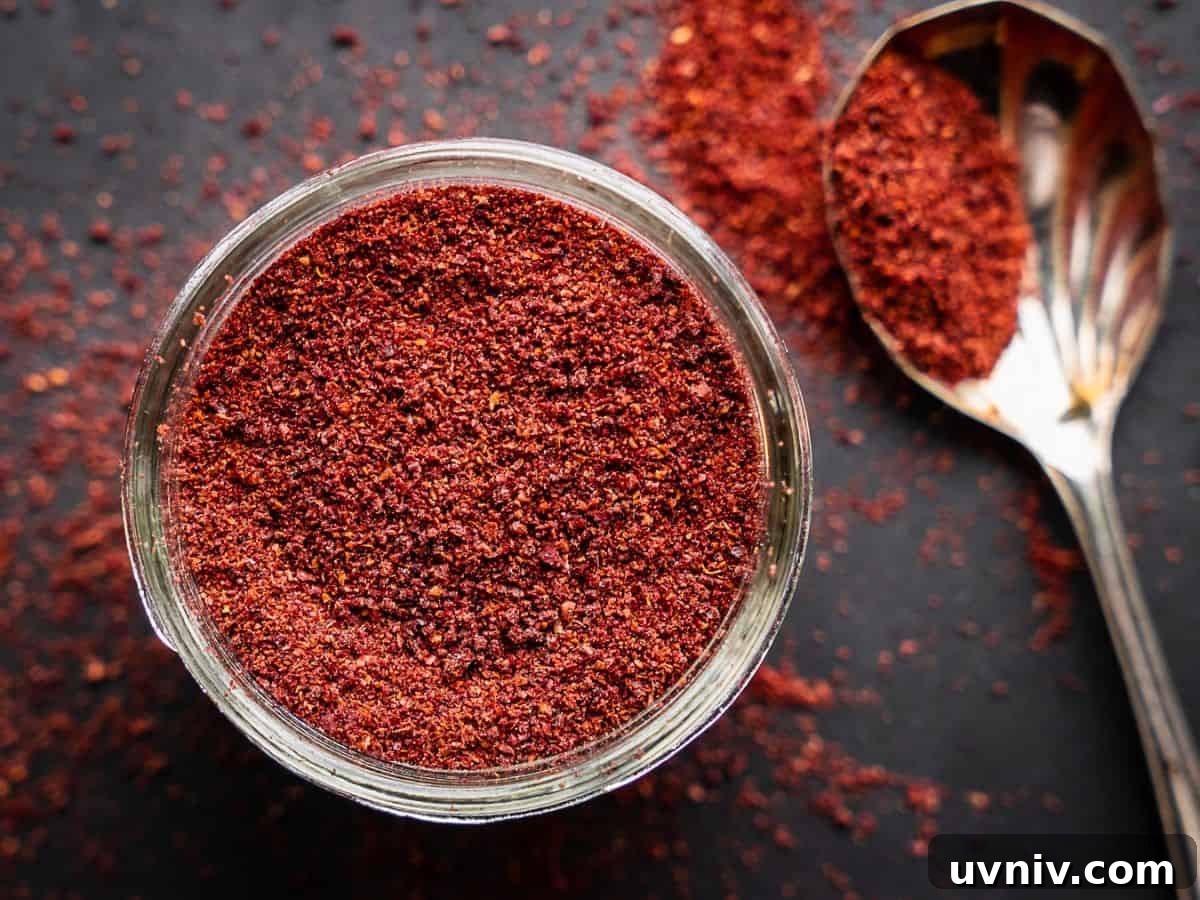
Table of Contents
- Plant information and history
- How to use Sumac
- Recipes that feature Sumac
- Other uses
- Nutritional information
- Where to buy
- How to Store
- Poison Sumac
Sumac brings a bright, citrus-like tartness without adding liquid, making it ideal for finishing dishes, seasoning proteins, or brightening salads and dips. This article summarizes its botany, culinary uses, health notes, storage, and safe identification.
Plant information and history
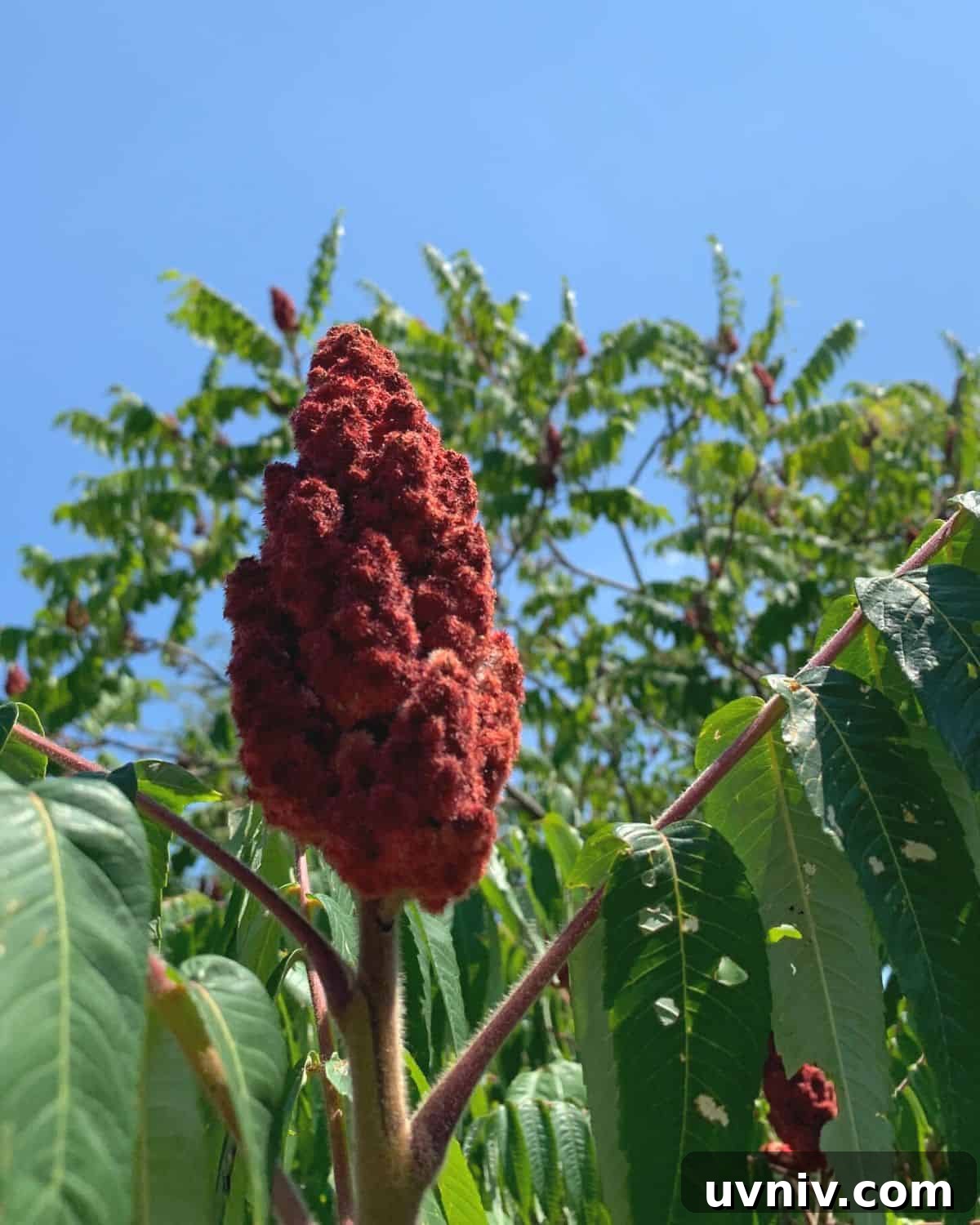
Sumac (genus Rhus) belongs to the Anacardiaceae family, which also includes cashews, mangoes, and poison ivy. Native to the Mediterranean and Middle East, it thrives in warm, dry climates and is commonly cultivated in countries such as Turkey, Syria, and Iran. Wild varieties also grow across North America, often along roadsides and in open fields.
The plant is recognizable by its compound leaves and dense clusters of small, red berries. The berries are harvested, sun-dried, and ground to produce the coarse, ruby-colored spice known in Arabic as سماق (sumāq), which means dark red. Traditional processing methods involve careful drying and gentle grinding to preserve the spice’s vibrant color and tart flavor, while commercial producers use cooled mills to prevent heat degradation.
Because of its tangy profile, sumac is often used as a dry substitute for lemon or vinegar when a concentrated, non-wet acidity is desired.
How to use Sumac
Sumac is a cornerstone of Levantine cuisine and appears in many traditional dishes. It seasons grilled meats like kebabs, brightens salads such as fattoush, and is tossed into dips like mutabal and hummus variations. Sumac is also mixed into za’atar blends and used to flavor rice, roasted vegetables, and labneh preparations.
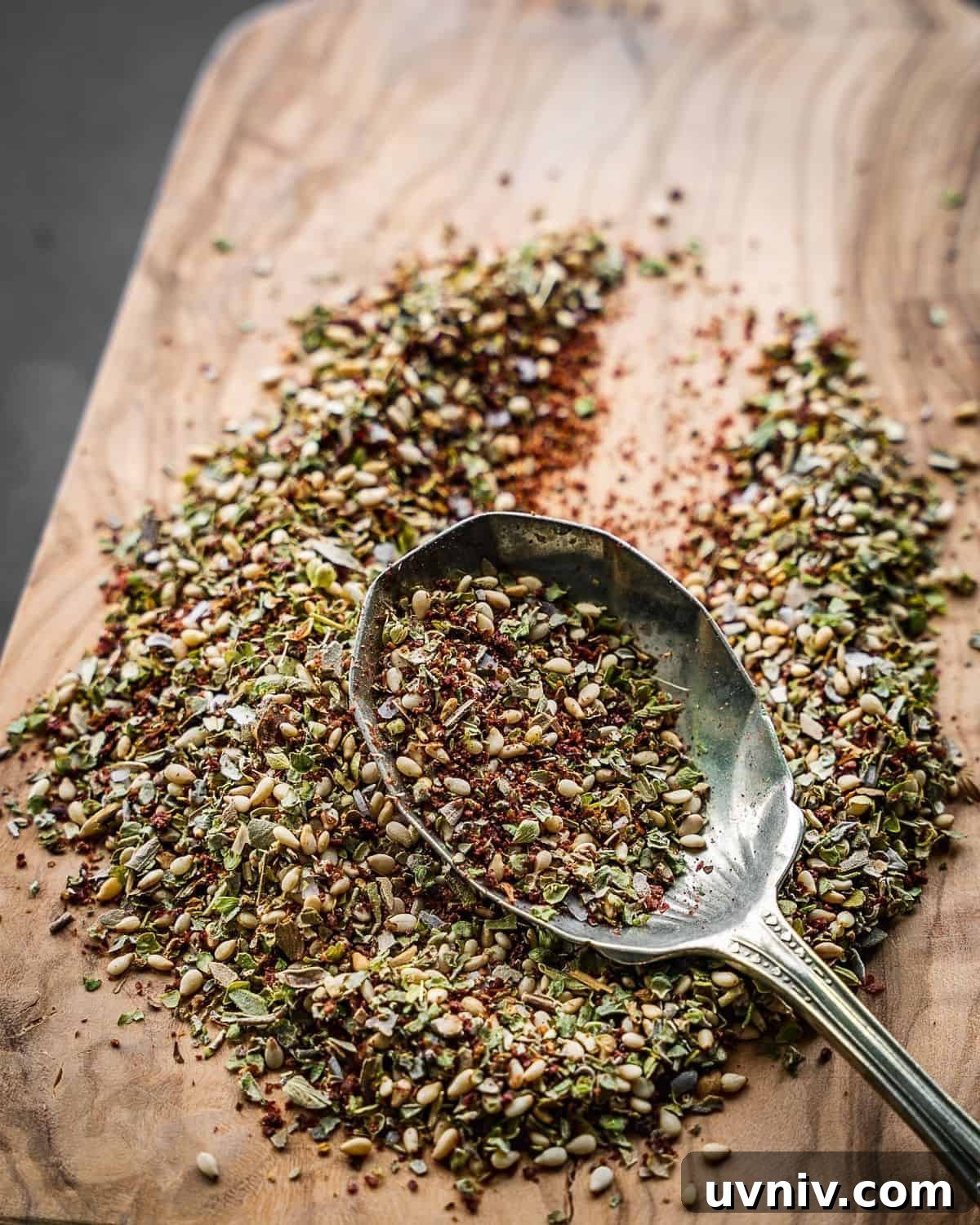
Unlike some herbs that benefit from cooking, sumac offers its vibrant, citrusy kick whether added before or after cooking. Sprinkle it over grilled meats, fish, roasted vegetables, or flatbreads; fold it into dressings and marinades; or use it as a finishing seasoning for soups and stews to add brightness without extra moisture.
Classic uses include musakhan (sumac chicken), za’atar-spiced chicken, sumac onions for sandwiches, and fattoush salad. It also pairs beautifully with yogurt-based sauces and labneh, where its acidity balances rich dairy.
Recipes that feature Sumac
Try incorporating sumac into recipes to experience its range. It works well in spice blends, dressings, rubs, and as a final garnish. Examples include za’atar, labneh balls, za’atar chicken thighs, and caramelized eggplant hummus.
Recipes
Za’atar Spice Blend
Levantine Recipes
Labneh Balls (Shanklish)
Main Dishes
Za’atar Chicken Thighs
Levantine Recipes
Caramelized Eggplant Hummus
Other uses
Beyond the kitchen, sumac has a history of traditional medicinal use where it was applied for digestive complaints, infections, and skin issues. Some research suggests antioxidant and anti-inflammatory properties, though you should rely on evidence-based medical advice for health concerns.
Sumac has also been used historically as a natural dye and in leather tanning processes.
Nutritional information
As a spice, sumac contributes small amounts of vitamins and minerals. It contains vitamin C and vitamin E and provides trace minerals such as iron and potassium. Used in typical culinary quantities, it adds flavor more than significant nutrition.
Where to buy
Sumac is available at Middle Eastern and Mediterranean grocery stores, specialty spice shops, and many online retailers. You can buy it as a ground powder or as whole dried berries. If you don’t see it locally, check international markets or well-stocked grocers.
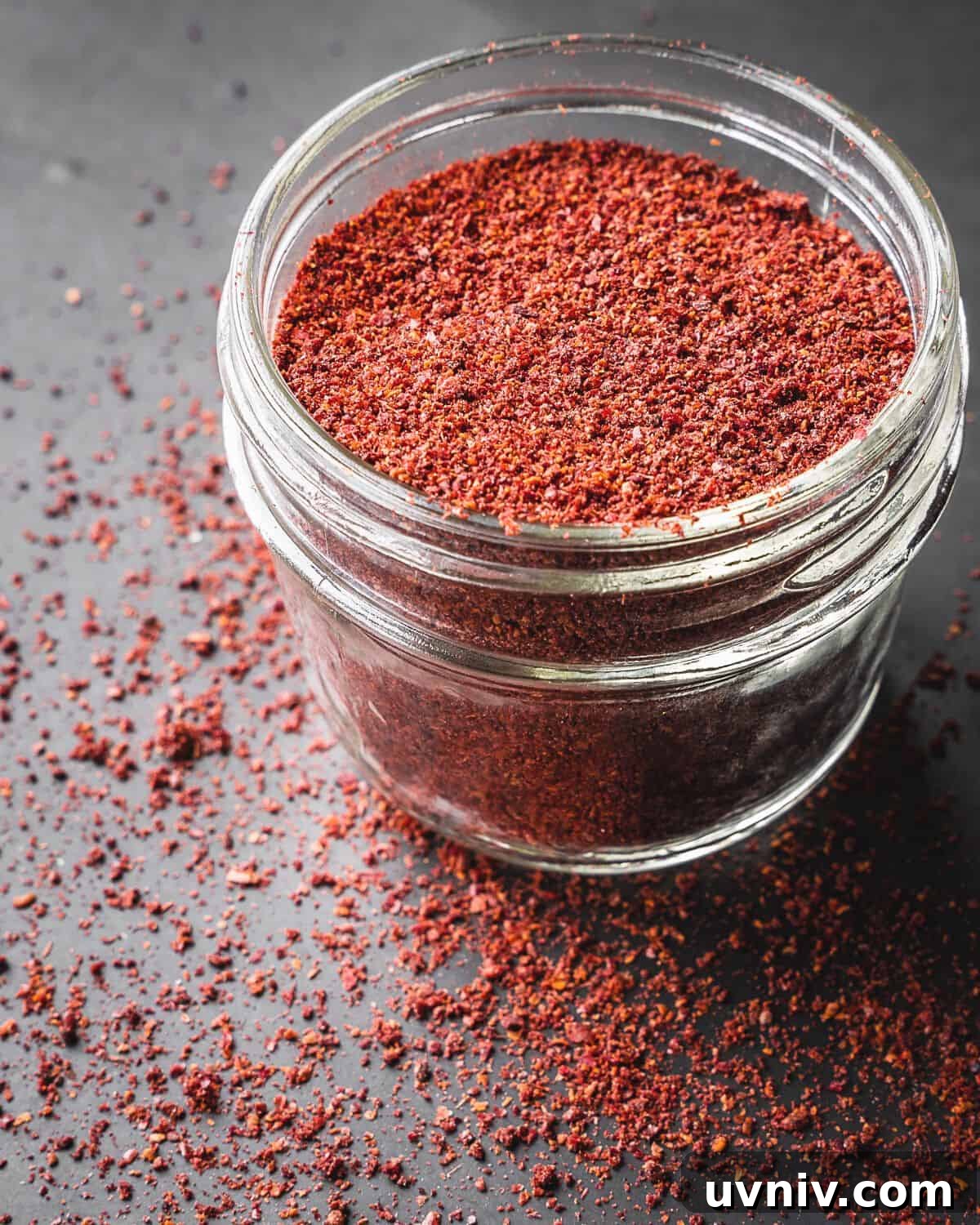
How to Store
Store ground sumac in an airtight container in a cool, dark pantry away from heat and humidity. It does not require refrigeration. For best flavor, use within six months; if you use sumac infrequently, buy smaller quantities to maintain freshness.
Poison Sumac
Poison sumac (Toxicodendron vernix) is a different species that grows in wet, swampy areas and produces white or greenish berries. It contains urushiol, the same oily allergen found in poison ivy, and can cause severe skin reactions. The edible Rhus species used for spice are distinct, but if you plan to forage, consult a trusted field guide to be certain of identification.
Sumac is an easy way to introduce bold, tangy flavor to many dishes without adding liquid. Its bright acidity, appealing color, and culinary flexibility make it a valuable spice for both traditional and modern kitchens.