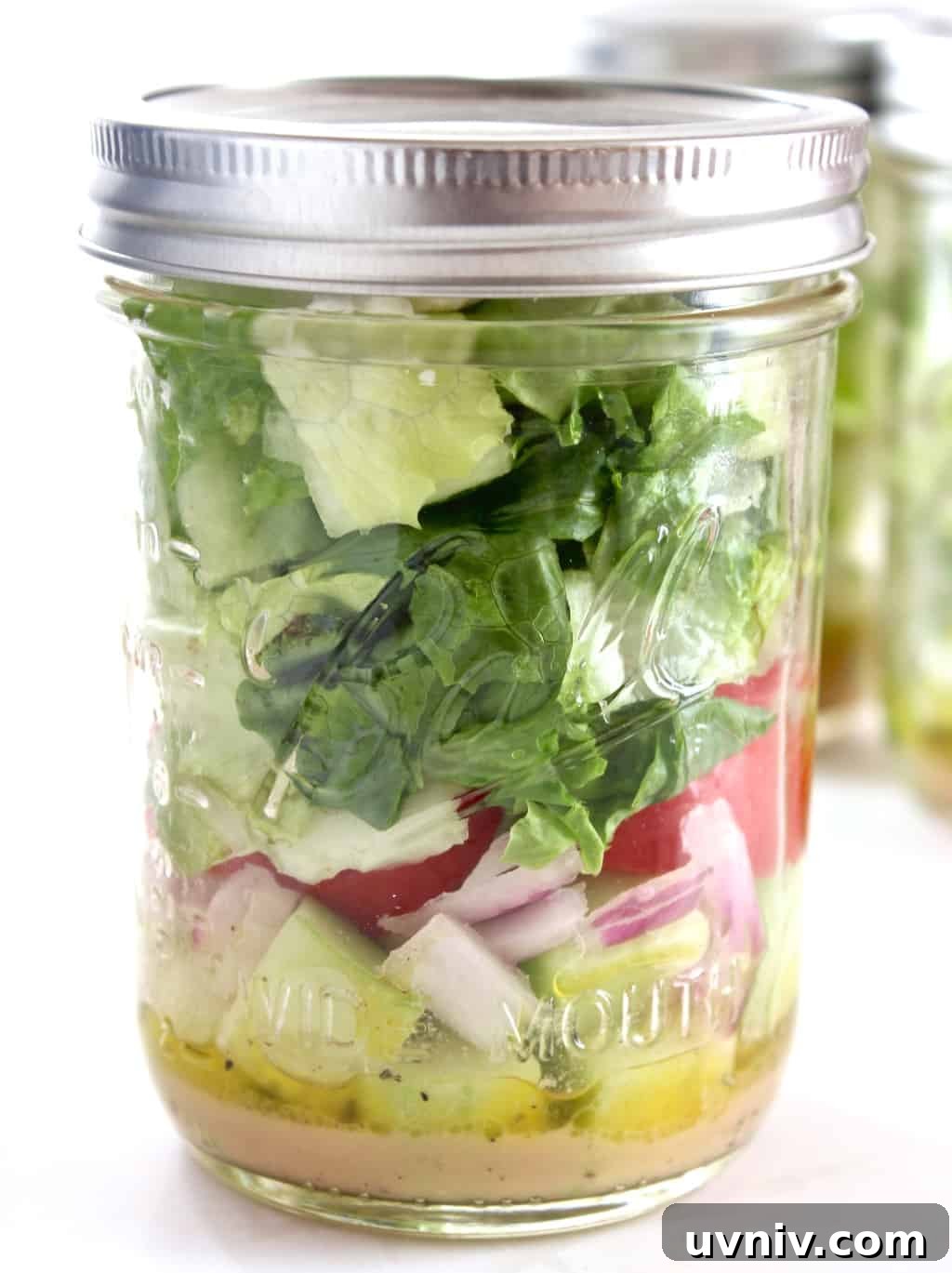
Over the past few months I kept hearing about salads made in jars. As a skeptic, I wondered why anyone would use jars instead of everyday plastic or glass containers. After hearing about them enough, I tried a few—and was pleasantly surprised at how convenient and tasty they are.
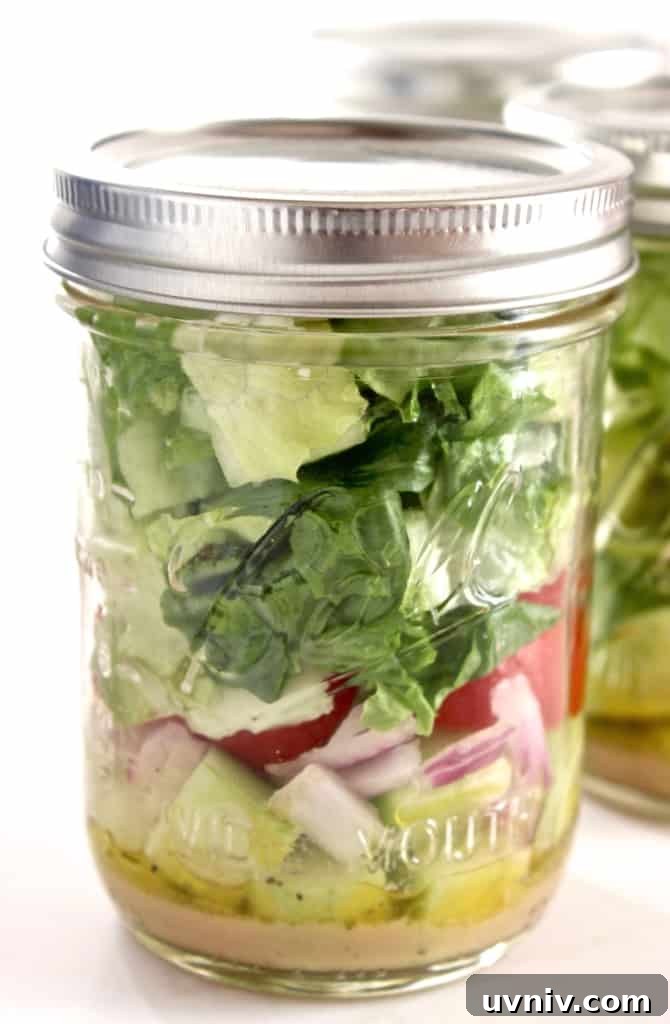
Why use a mason jar?
– The tall, narrow shape keeps dressing at the bottom near the firm vegetables, while delicate greens and proteins stay at the top where they won’t get soggy.
– Glass jars avoid concerns about BPA and other plastics (though BPA-free plastic options exist).
– Mason jar salads can stay fresh for 5–6 days in the fridge, so you can prepare several lunches at once—often longer than salads stored in typical Tupperware.
– The clear glass displays the colorful layers of fruits and vegetables, making healthy food look appealing and more likely to get eaten.
Where to buy them
I bought a dozen wide-mouth pint mason jars at my local Walmart for about $13. Wide-mouth jars are important because they make filling and packing easier. You can also find them at grocery stores, hardware stores, and online.
What to put in them
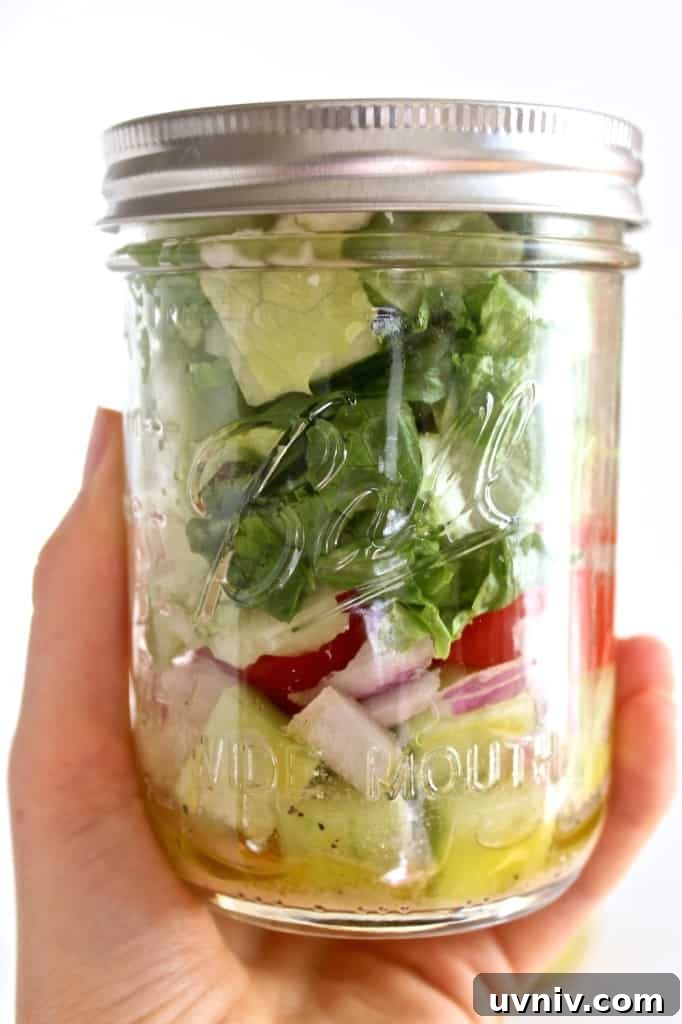
There are many possible combinations. The main rule is: liquids on the BOTTOM, delicate ingredients on the TOP. Below is a step-by-step for a Greek-style mason jar salad and general layering guidance.
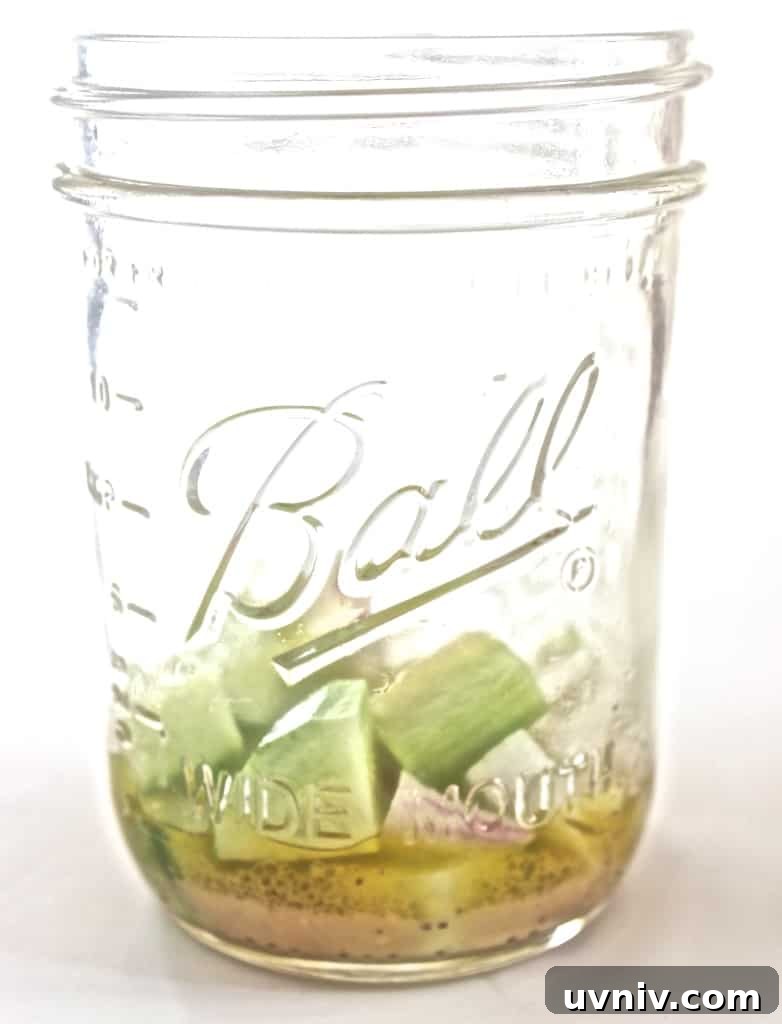
Layer 1: Pour 1–2 tablespoons of dressing into the bottom of a wide-mouth pint jar.
Layer 2: Add beans or other proteins if desired, then the firm, least absorbent vegetables. For a Greek salad, use red onion and cucumber. Chickpeas or bell pepper slices also work well.
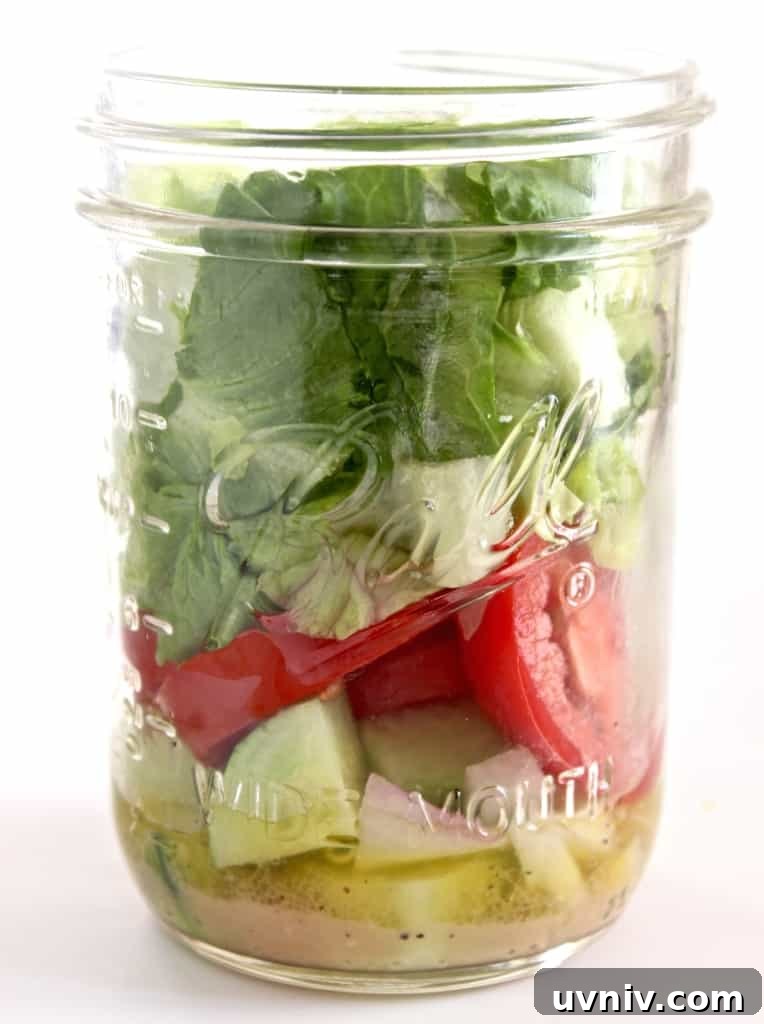
 Layer 3: Add softer vegetables if you plan to eat the salad that day. I added sliced tomatoes; if the salad will sit for several days, wait to add tomatoes until the day you eat it. Olives are another great option.Step 4: Pack most of the remaining jar with greens. Romaine, mixed greens, spinach, or kale all work.
 Step 5: Add proteins and soft cheeses on the day you plan to eat the salad. Pack the jar tightly before screwing on the lid to keep layers in place. In my Greek salad I topped with feta and grilled chicken.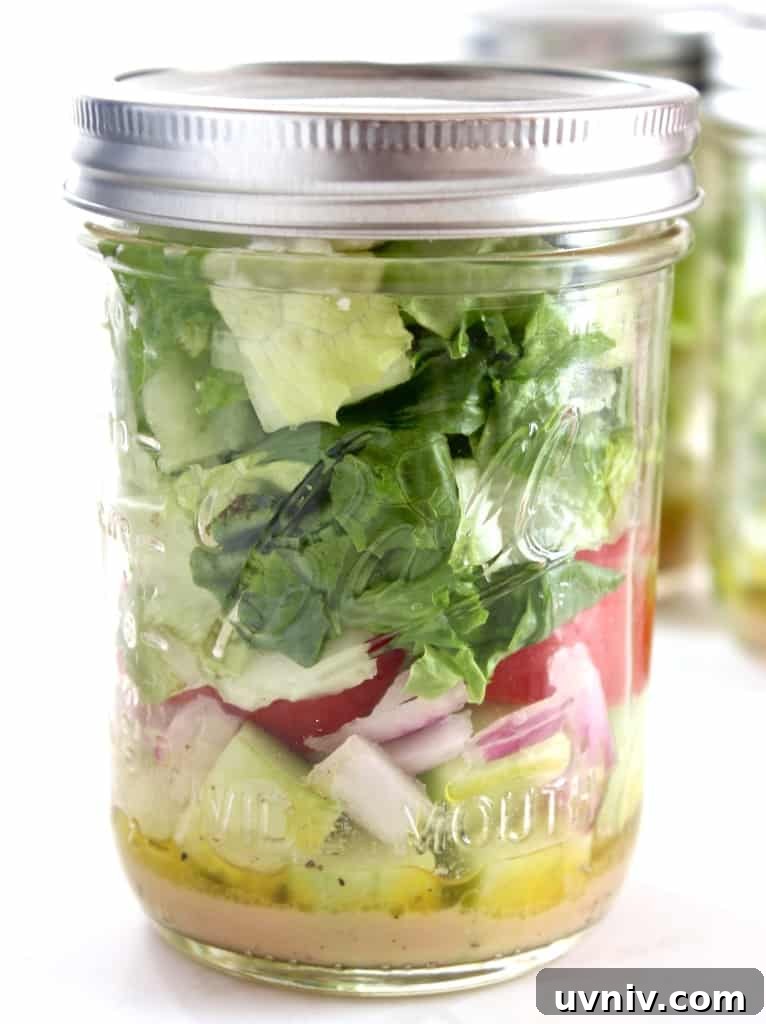
Mason Jar Salad Variations I’ve Tried
Southwestern
1. 1–2 tablespoons spicy dressing or salsa
2. Black or kidney beans
3. Corn, cucumber, bell pepper
4. Cooked quinoa or another grain (optional)
5. Greens
Day of: tomatoes, chicken or other protein, avocado or guacamole
Greek
1. 1–2 tablespoons Greek dressing
2. Chickpeas or another protein (optional)
3. Cucumbers, red onion, bell pepper, olives (optional)
4. Cooked quinoa (optional)
5. Greens
Day of: sliced tomatoes, chicken or other protein, feta cheese
Apple, Walnut & Cranberry
1. 1–2 tablespoons poppyseed dressing or balsamic vinaigrette
2. Dried cranberries
3. Diced apples (they may brown but remain tasty for several days)
4. Diced celery
5. Chopped walnuts
6. Greens
Day of: chicken or other protein, feta or preferred cheese
Printable version
Print
Pin
Make Your Own Mason Jar Salads
Ingredients
- Wide-mouth pint mason jars
- Salad dressing
- Beans, vegetables, grains, nuts or seeds
- Greens
- Proteins and cheeses (add the day-of for best freshness)
Instructions
-
Layer 1: Salad dressing.
-
Layer 2: Beans or other sturdy toppings (black beans, kidney beans, chickpeas).
-
Layer 3: Firm vegetables—raw carrots, cucumbers, bell peppers, red onion, corn, peas, or broccoli florets.
-
Layer 4: Grains (optional): cooked barley, rice, or quinoa.
-
Layer 5: Nuts or seeds—almonds, walnuts, sunflower seeds, etc.
-
Layer 6: Softer fruits and vegetables—avocado, tomatoes, berries, or roasted vegetables. Add avocado or berries the day you eat the salad for best texture.
-
Layer 7: Salad greens—romaine, kale, or spinach.
-
Layer 8: Cheese and proteins—feta, diced chicken, tuna, or hard-boiled eggs. If preparing ahead, wait to add these until the morning you plan to eat the salad.
-
Storing: Screw on the lid and refrigerate for up to 5–6 days. If using cheese, meat, or soft fruits, add them the day you’ll eat the salad.
-
To eat: Unscrew the lid, invert and shake the jar into a bowl or dump into a bowl and toss to distribute dressing evenly.