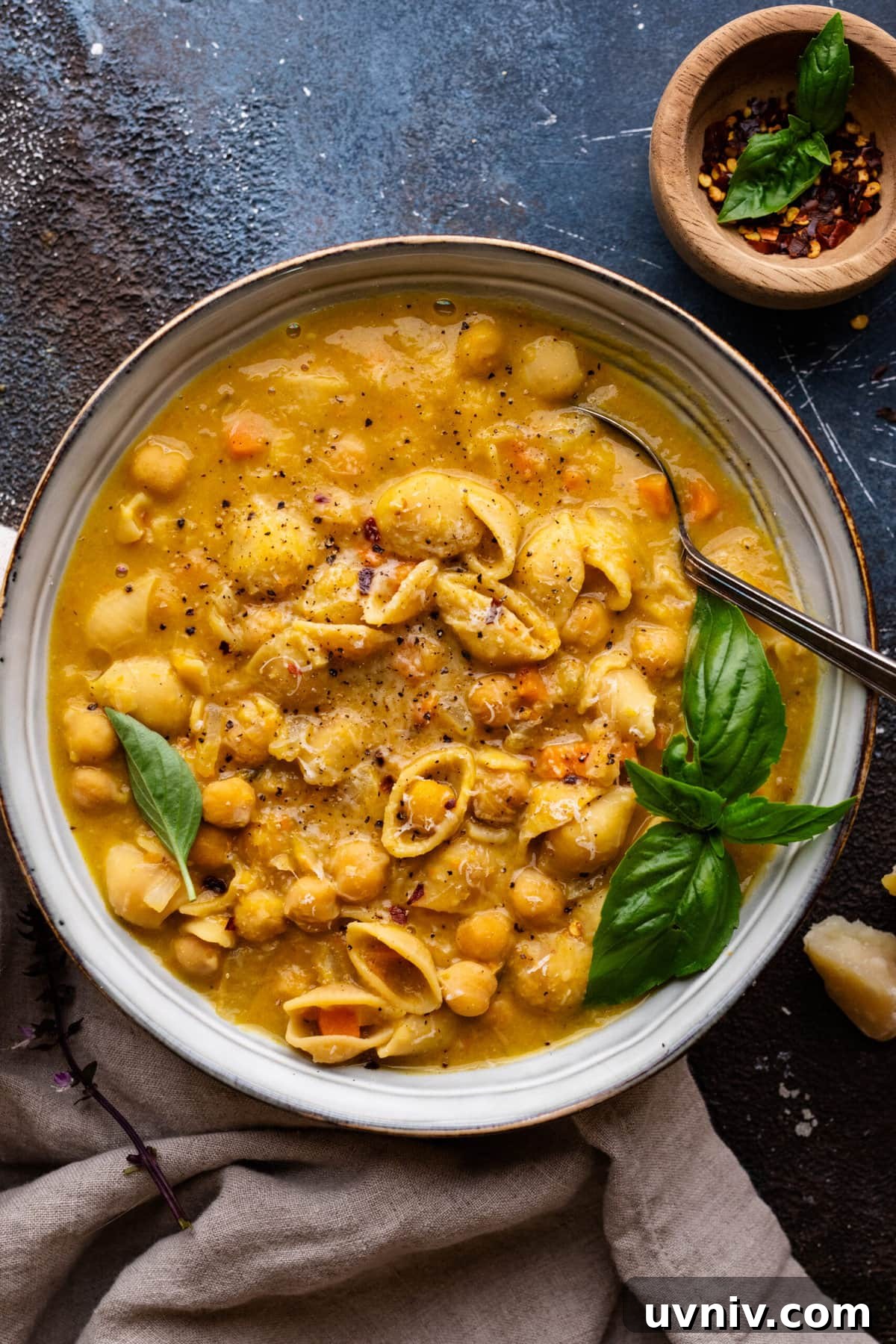
Pasta e Ceci is a comforting Italian stew of pasta and chickpeas. Simple ingredients take center stage, but fresh herbs and a simmered Parmesan rind give the soup deep, savory flavor. The result is hearty, cozy, and incredibly satisfying.
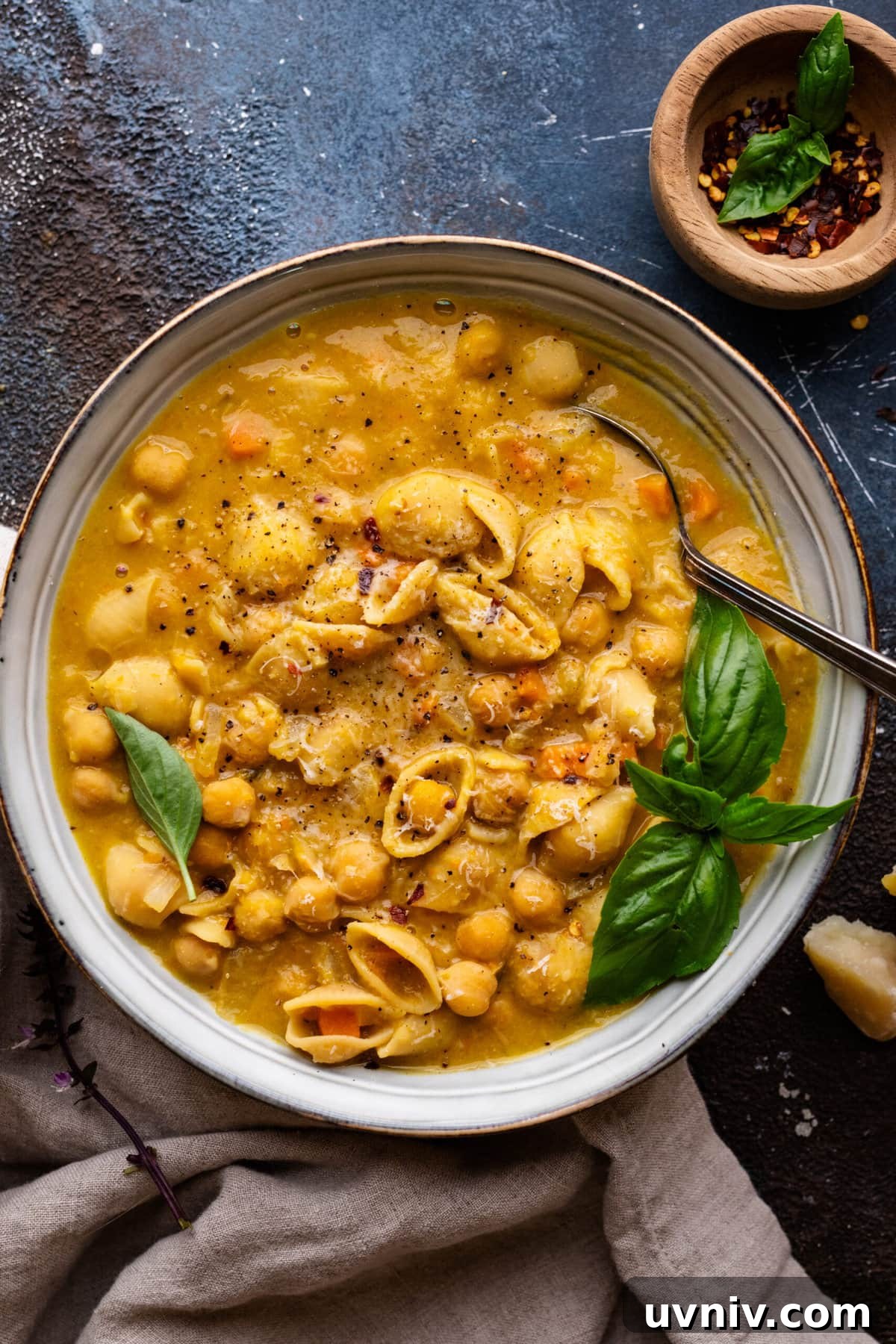
If you enjoy the combination of pasta and chickpeas, you’ll love this Pasta e Ceci (pronounced “pasta eh che-chi”), which literally means pasta and chickpeas. It’s similar in spirit to pasta e fagioli but focuses specifically on chickpeas and a few well-chosen ingredients to create a rich, warming bowl—perfect for cool weather.
Why This Recipe Works
This version keeps the traditional simplicity but boosts flavor and texture in a few easy ways. Instead of only water, the recipe uses half vegetable broth and half water for more depth. To thicken the soup naturally and create a creamy mouthfeel, half of the soup is pureed and returned to the pot. Fresh herb sprigs—rosemary and sage—and a Parmigiano-Reggiano rind simmer in the pot, infusing the broth with savory, nutty notes. Using chickpea-based or other small, sturdy pasta adds nutrition without losing the familiar pasta texture.
Ingredients – What You Need
Here’s everything you’ll need to make Pasta e Ceci:
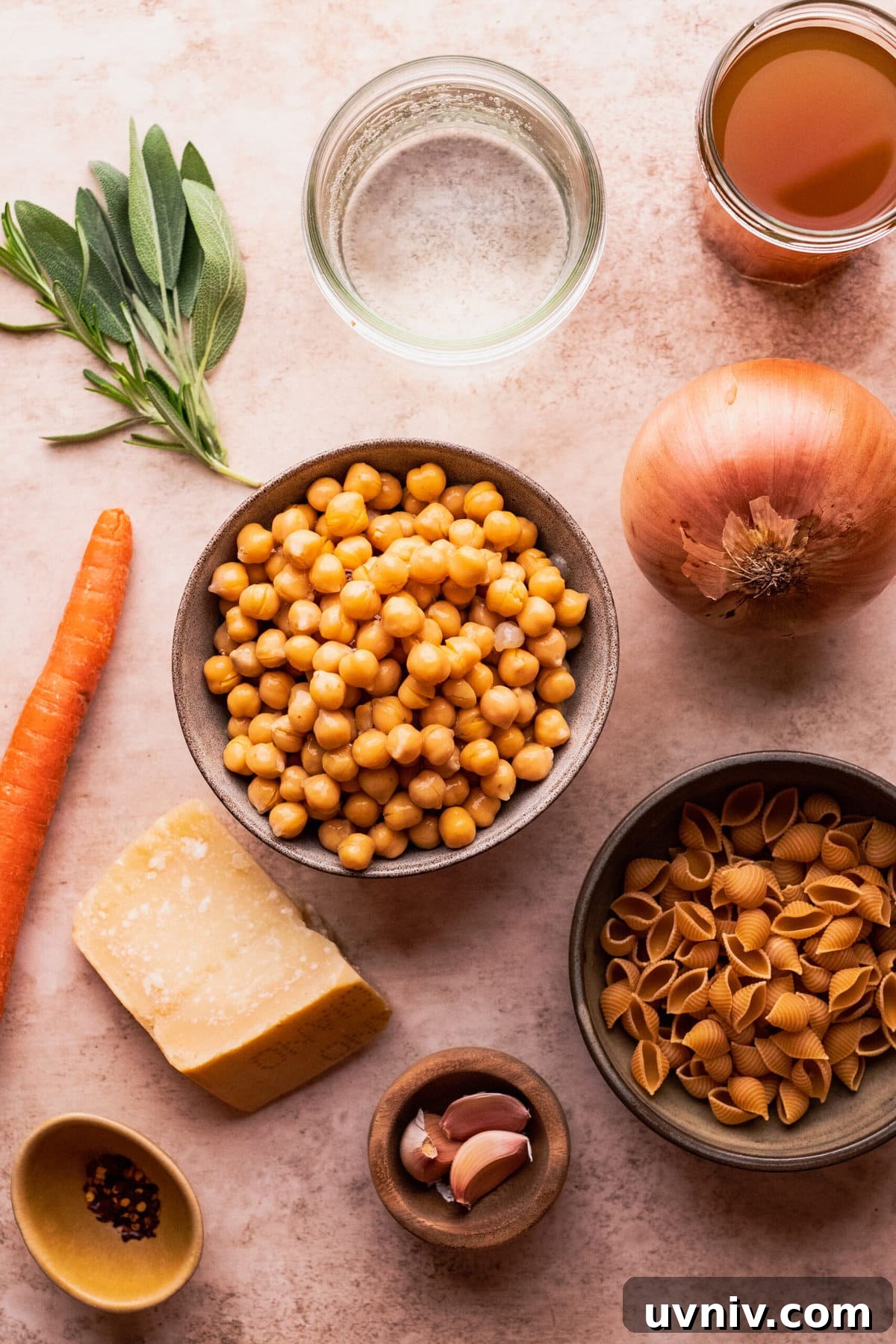
Pasta: small shapes like shells or ditalini work best; chickpea shells are a nutritious, gluten-free option.
Chickpeas: cooked chickpeas are the star.
Onion: a yellow onion gives gentle sweetness.
Carrot: adds flavor and subtle sweetness.
Garlic: fresh garlic with a touch of garlic powder boosts savory depth.
Broth: low-sodium vegetable broth for the base.
Water: combined with broth to keep the soup balanced.
Red pepper flakes: a pinch for a gentle warmth.
Fresh sage & rosemary: whole sprigs to infuse flavor, removed before serving.
Parmigiano Reggiano + rind: freshly grated cheese for topping and the rind to simmer with the soup for richness.
Step-by-Step Instructions
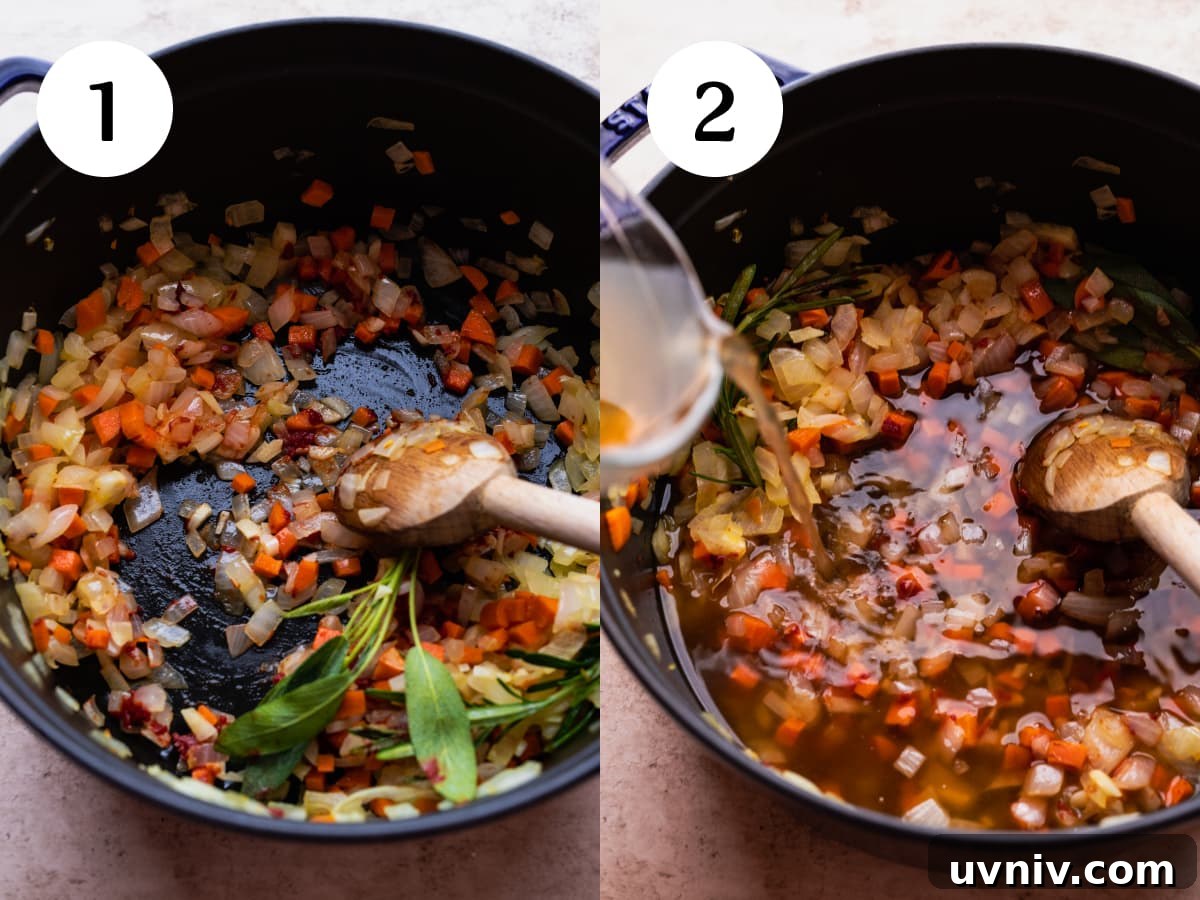
Step 1 – In a large pot, sauté diced carrot and onion in olive oil over moderate heat until softened. Add minced garlic and cook 30 seconds, then add rosemary, sage, and red pepper flakes and stir briefly to release their aroma.
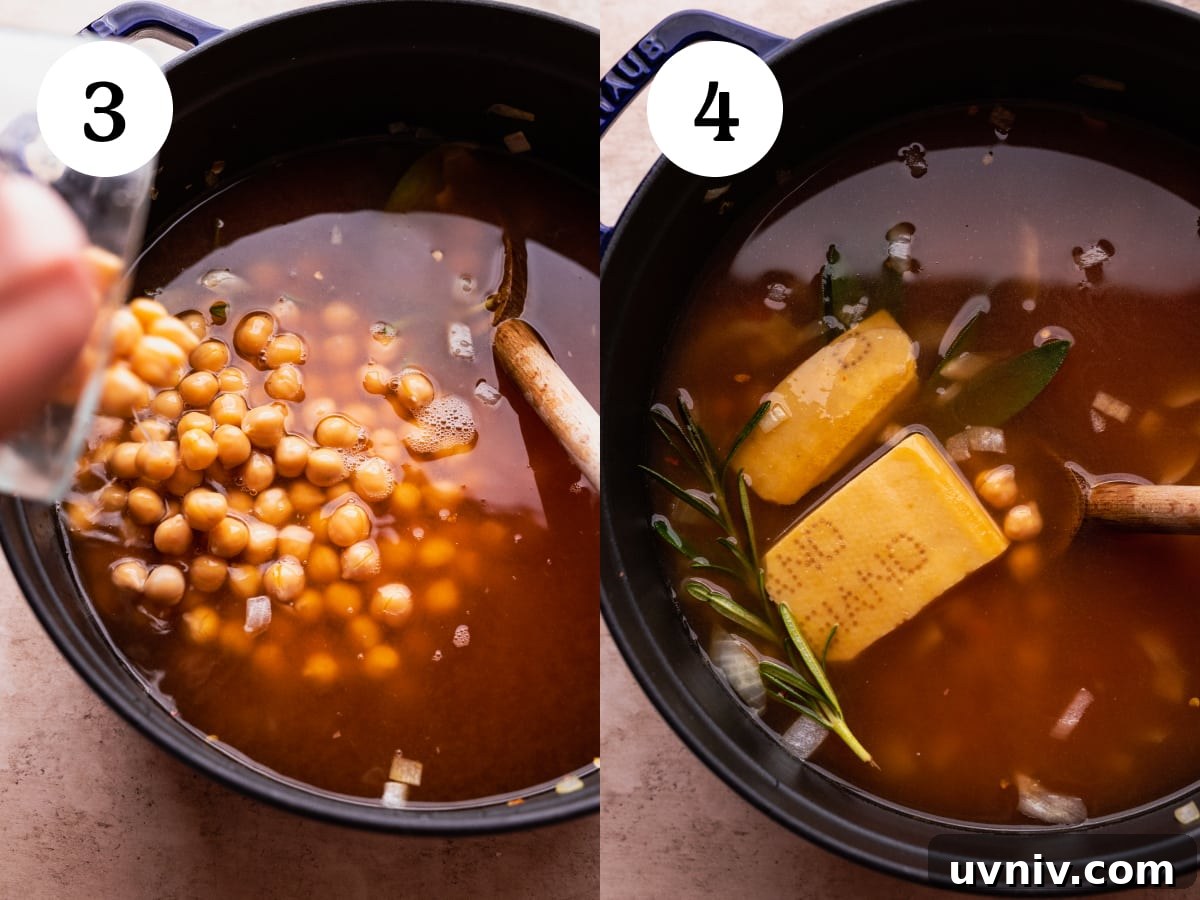
Step 2 – Pour in the vegetable broth and water, then add the chickpeas. Season with garlic powder, salt, and black pepper, and tuck in the Parmesan rind.
Steps 3 & 4 – Partially cover the pot and simmer gently for 20–25 minutes, stirring occasionally to prevent sticking and to allow the rind to soften and flavor the broth.
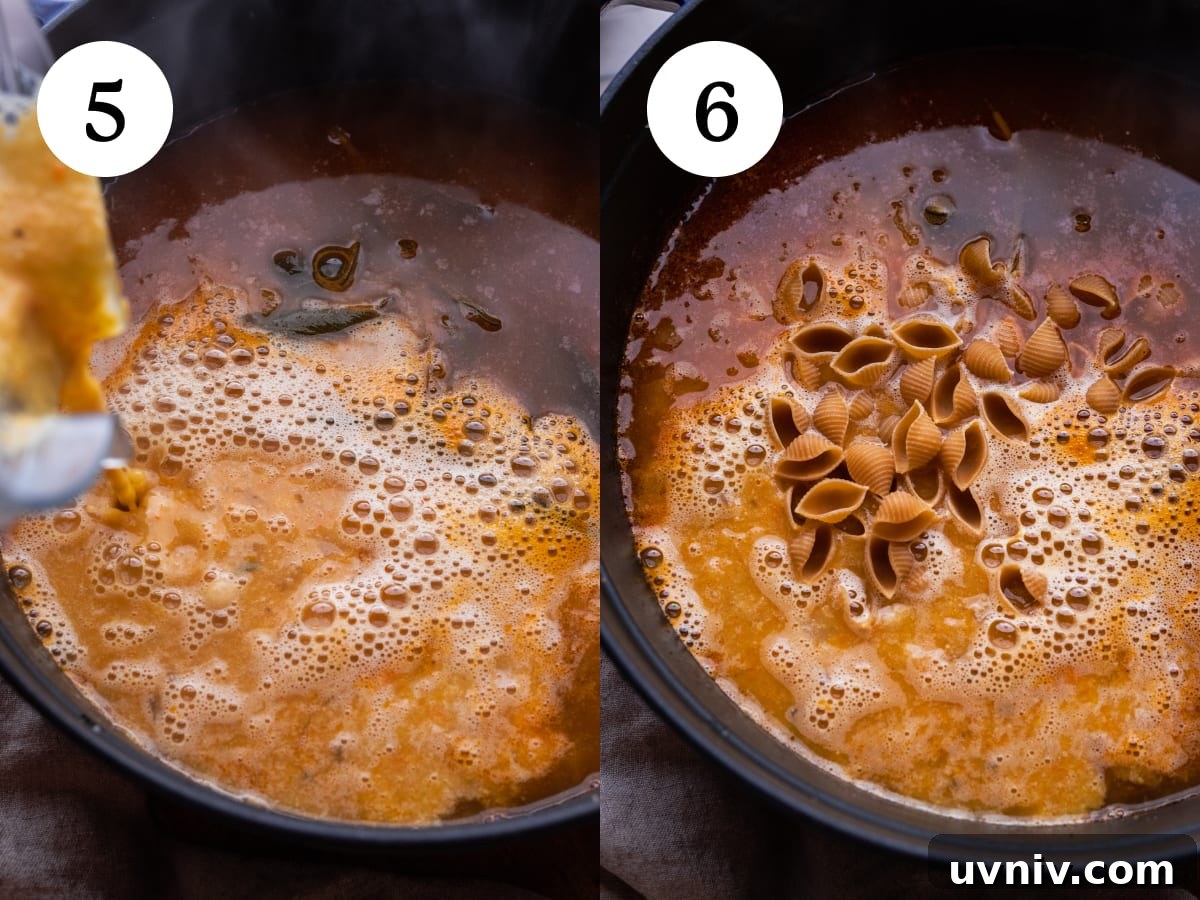
Step 5 – Use a ladle to remove about 2 cups of soup (avoiding herb sprigs and the cheese rind) and puree it in a blender until smooth. Return the purée to the pot to naturally thicken the soup.
Step 6 – Add the dry pasta shells to the simmering soup and cook until al dente. Because the soup simmers at a lower temperature than typical boiling pasta water, the pasta may take a few minutes longer than package directions. Stir frequently to prevent sticking. When the pasta is done, discard the herb sprigs and Parmesan rind, taste and adjust seasoning with salt and pepper, and serve topped with freshly grated Parmigiano Reggiano.
Tips for Success
Best pasta shapes: Small noodles like small shells or ditalini work well; leftover broken pasta is fine for a rustic feel. Chickpea pasta is a nutritious alternative that still tastes great.
Don’t skip the Parmesan rind: Simmering the rind adds a deep savory note. Authentic rinds soften and enrich the broth rather than fully melting away.
Use fresh herbs: Whole fresh sprigs of sage and rosemary bring bright, aromatic flavor that dried herbs can’t match in this simple soup.
Broth vs. water: Using both broth and water gives balanced flavor. If you only have water, add extra seasoning and garlic powder to compensate.
Blending options: Partially blending the soup creates creaminess. Use an immersion blender briefly or transfer a measured portion to a high-powered blender for better control.
If the soup becomes too thick: Thin it with a little broth or water until you reach the desired consistency.
How to Freeze & Store Leftovers
Leftovers: Refrigerate in an airtight container for 3–4 days.
Freezing: Transfer to freezer-safe containers or bags, remove excess air, and freeze for up to one month. Thaw at room temperature and reheat gently on the stovetop, adding broth if needed to restore consistency.
Serving Suggestions
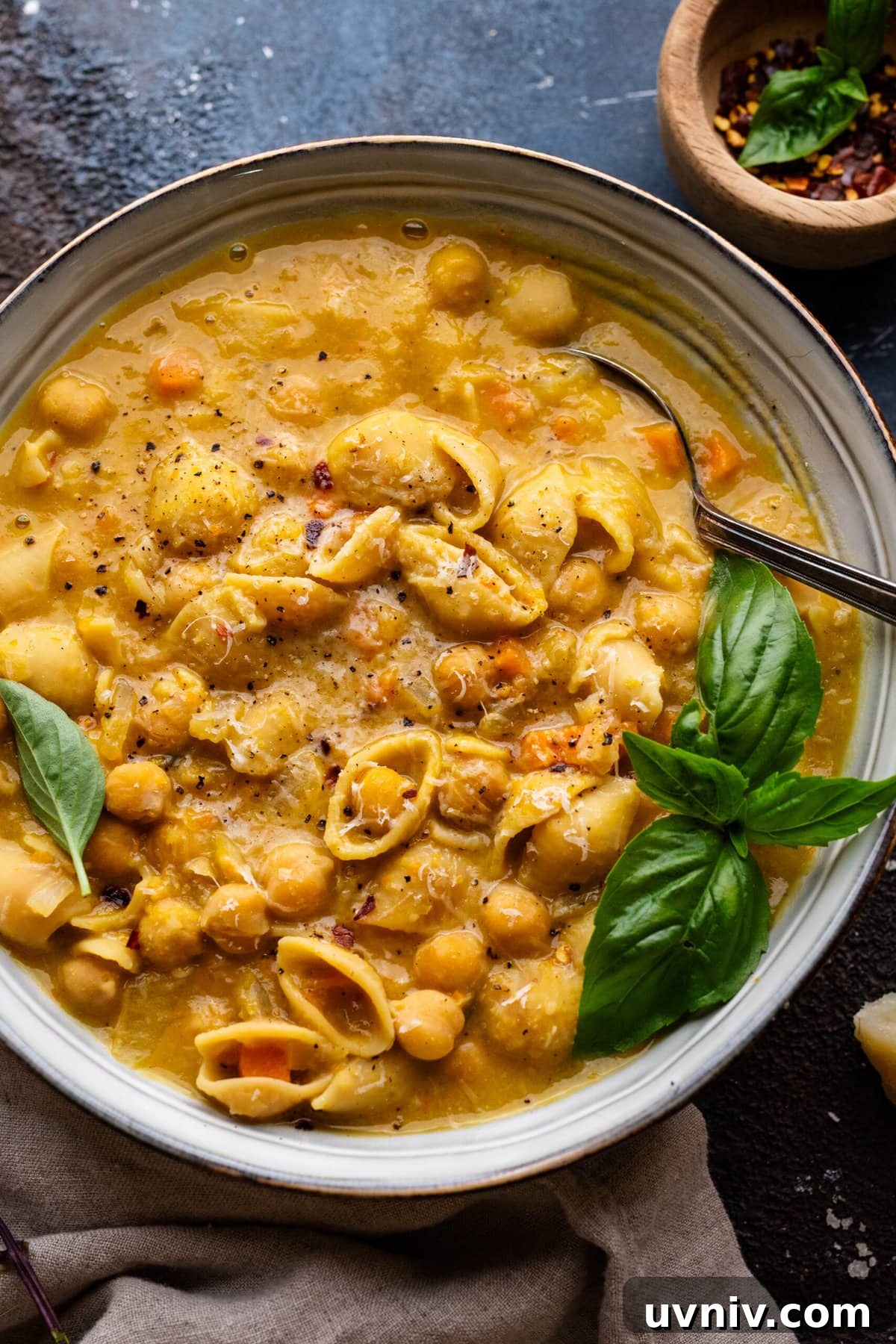
Pasta e Ceci pairs beautifully with crusty bread—homemade or store-bought. A side salad also complements the soup well for a complete meal. Serve with an extra grating of Parmigiano Reggiano for finishing richness.
Pasta e Ceci (Italian Pasta and Chickpeas)
Ingredients
- 1 Tablespoon olive oil
- 1 medium to large yellow onion, diced
- 1 large carrot, diced
- 4 garlic cloves, minced
- 3 cups cooked chickpeas
- 1 cup dried pasta shells
- 3 cups low-sodium vegetable broth
- 3 cups water
- 1/4 teaspoon red pepper flakes
- 1/4 teaspoon garlic powder
- 1 small bundle or sprig of fresh sage
- 1-2 fresh rosemary sprigs
- 1/2 teaspoon salt
- 1/4 teaspoon black pepper
- 1 Parmigiano Reggiano rind
- freshly grated Parmigiano Reggiano, for serving
Instructions
-
Saute aromatics: In a large pot, sauté the diced onion and carrot in oil with a pinch of salt for about 3 minutes over moderate heat. Avoid browning—just soften. Add minced garlic and cook 30 seconds, then add rosemary, sage, and red pepper flakes and stir briefly.
-
Add liquids: Add the vegetable broth, water, chickpeas, garlic powder, salt, black pepper, and the Parmesan rind. Stir to combine.
-
Simmer: Partially cover and simmer gently for 20–25 minutes, stirring occasionally to prevent sticking and to let the rind infuse flavor.
-
Blend part of the soup: Carefully transfer about 2 cups of soup (avoiding herb sprigs and the rind) to a blender and puree until smooth. Return the purée to the pot to thicken the soup naturally.
-
Cook the pasta: Add the dry pasta and simmer until al dente. Because the soup simmers at a lower temperature than boiling pasta water, cooking may take a few extra minutes. Stir frequently to prevent sticking.
-
Serve: When the pasta is cooked and the soup has thickened, remove the rind and herb sprigs. Taste and adjust seasoning, then serve topped with freshly grated Parmigiano Reggiano. If the soup is too thick, thin with a splash of broth or water.
Notes
Parmesan rind: Simmering the rind adds concentrated savory flavor—don’t skip it.